
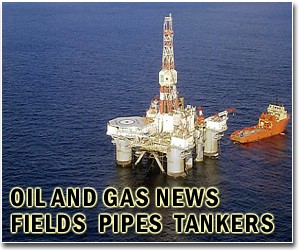
Offshore oil drilling group Transocean claimed Tuesday that it had a set a world record for deep water drilling at an ocean depth of 3,107 metres (10,194 feet) off the coast of India.
The depth was achieved by the ultra-deepwater drillship Dhirubhai Deepwater KG2, surpassing the previous record of 10,011 feet, also set by Transocean in 2003 in the Gulf of Mexico, the group said in a statement.
It set "what the company believes is a world record for the deepest water depth by an offshore drilling rig of 10,194 feet of water while working for Reliance Industries offshore India."
Transocean owned the BP-leased Deepwater Horizon rig that exploded last year in the Gulf of Mexico, killing 11 rig workers and triggering a huge spill along the southern US coast.
The disaster also highlighted the growing exploitation of hard to reach and costly deep water fields beneath on the ocean floor, driven by dwindling resources and higher oil prices.
By comparison North Sea fields have been largely exploited at water depths of around 100 metres.
earlier related report
New Zealand navy monitors Greenpeace oil dispute
Wellington (AFP) April 12, 2011 –
New Zealand has sent a naval vessel to ensure a high-seas dispute between Greenpeace activists and a Brazilian-owned vessel exploring for oil does not escalate, police confirmed Tuesday.
In recent days, swimmers from a Greenpeace flotilla have entered the water in Raukumara Basin, off New Zealand's East Cape, forcing a vessel from the Brazilian state-owned oil company Petrobras off course and disrupting its work.
Police superintendent Barry Taylor said he had several officers on board the navy ship Pukaki, which is now in the area monitoring the protest.
Prime Minister John Key said the area is within New Zealand's Exclusive Economic Zone and the police had the right to uphold the law there and could call on the navy for assistance if required.
"My expectations are that the police would balance the rights of people to peacefully protest, but also with the rights of the company to carry out the seismic activity in the Raukumara Basin that we granted them," Key said.
"How they balance those rights on the high seas is clearly an operational matter for the police.
"The police have had a long-standing memorandum of understanding in operation with the navy that, if and when required, they can use naval assets in conducting police work."
Greenpeace climate campaigner Steve Abel said protesters were sending an "emphatic message" to the government that deep sea oil drilling would not be tolerated in New Zealand waters.
"If we don't stop this initial deep sea oil exploration, rigs could be off coasts all around New Zealand in the near future, each one increasing the risk of spills and fuelling climate change as the oil is burnt."
Key said balancing the rights of Petrobras and the protesters at sea was no different from a protest on land.
He added the government believed there were opportunities for New Zealand in the oil and gas exploration and that was why Petrobras had been granted an exploration licence.
Superintendent Taylor said police had been in contact with Greenpeace and Petrobras and assured both sides "that safety and the lawful right to protest and to conduct the lawfully permitted survey work is paramount."
Share This Article With Planet Earth
