
UN atomic watchdog chief Yukiya Amano said Monday he had "no doubt" that the current nuclear crisis in Japan would be "effectively overcome".
The International Atomic Energy Agency "is working at full stretch, together with other countries and international organisations to help Japan bring the crisis to an end and ensure the effects are mitigated as much as possible," Amano told a special one-day meeting of the IAEA's 35-member board of governors here.
"And I have no doubt that this crisis will be effectively overcome."
The crisis at the stricken Fukushima nuclear power plant "has still not been resolved and the situation … remains very serious," said Amano.
The IAEA chief paid a short visit to Japan last week to see how the Vienna-based watchdog could best help the authorities dealing with the world's worst nuclear disaster since Chernobyl.
His agency has come under heavy fire for its response to the disaster, with critics accusing it of being too slow and not providing timely or accurate information about the unfolding catastrophe.
"It is difficult for us here in Vienna to imagine the conditions in which (the emergency response teams on the ground) are working," the Japanese diplomat said.
Fukushima has been seriously damaged by flood water, buildings damaged by explosions, there has been no electrical power and radiation levels are elevated.
"It is no exaggeration to describe the work of the emergency teams as heroic," Amano said.
The main message of his visit to Tokyo last Friday — where he met Prime Minister Naoto Kan, Foreign Minister Takeaki Matsumoto, Economy Minister Banri Kaieda, and the vice president of the plant's operator, Tokyo Electric Power Company — was "'You are not alone'," he said.
Japan was facing a "very serious situation, but can count on the full support of the international community, both practical and moral, in overcoming it," he said.
Amano said that the criticism of the IAEA was "mot always justified" because it was based on "widepread misconceptions in the media about the IAEA's role in nuclear safety."
"We are not a 'nuclear safety watchdog'," he insisted, and responsibility for nuclear safety lies with member states.
Nevertheless, one lesson to be learned from the crisis was that "the current international emergency response framework needs to be reassessed," Amano continued.
"It was designed largely in the wake of the Chernobyl disaster in 1986, before the information revolution. It reflects the realities of the 1980s, not of the 21st century," he said.
But Amano told a news conference afterwards that all such considerations would be for the post-accident phase.
Everyone's immediate concern was "to concentrate on today's issue and restore the safety of the reactors," he said.
"There will be a stock-taking process, but that will be in the future."
Nuclear power would remain an "important and viable option for many countries as a stable and clean source of energy" even if some countries were reviewing their plans in the light of Fukushima, Amano said.
The IAEA's role "in nuclear safety may need to be re-examined, along with the role of our safety standards.
"It is already clear that arrangements for putting international nuclear experts in touch with each other quickly during a crisis needs to be improved."
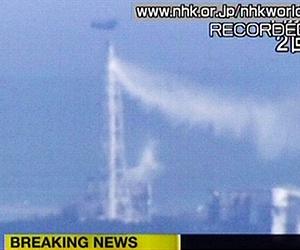
Amano made his speech as Japan's nuclear safety agency NISA said that white smoke was seen rising from the number two reactor at Fukushima, after an earlier plume prompted the evacuation of workers.
Engineers at the damaged facility, located 250 kilometres (155 miles) northeast of Tokyo, are racing to fix disabled cooling systems and bring them onstream, as fire trucks spray water to help cool reactor fuel-rod pools.
Prime Minister Naoto Kan said earlier that the country was making "slow but steady progress" in its battle to bring the situation under control, according to a government spokesman.
In Vienna, Amano said: "I reiterate that the situation at Fukushima remains serious, but we are starting to see some positive developments."
He fully understood people's worries about the possible dangers to human health, environmental contamination and risks to foodstuffs," Amano said.
"The agency is doing all it can to provide accurate and factual information," he said.
A spokesman for World Health Organization told AFP Monday that spinach and milk found to have been contaminated with radiation in Japan amid the country's nuclear emergency were safe to eat and drink.
Share This Article With Planet Earth
