
Washington (AFP) March 22, 2011 –
The US-led surge of troops in Afghanistan is proving successful, with the Taliban on the defensive despite persistent bloodshed, the UN envoy to the country said Tuesday.
The assessment by Staffan de Mistura, the UN special representative in Kabul, contrasts with weariness among the public in the United States about the country's longest war which will reach the 10-year mark later this year.
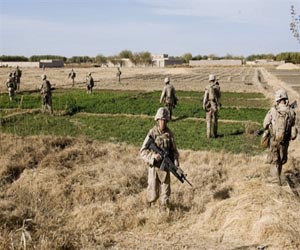
General David Petraeus leads about 100,000 US troops in Afghanistan, part of a strategy laid out in December 2009 by President Barack Obama to scale up the war launched after the September 11, 2001 attacks.
"The fact is that the surge by General Petraeus… is working," de Mistura said at the Middle East Institute, a Washington think-tank.
De Mistura, a friend of Petraeus since they served together in Iraq, acknowledged that violence in Afghanistan "looks very bad." But he said the Taliban were attacking away from areas where they were under pressure — and alienating Afghans through indiscriminate killings.
"These are mistakes produced by the feeling that there is a need to produce a counter-narrative to the reversal of the momentum" of the Taliban, de Mistura said.
De Mistura said it would be critical to see if the Taliban are able to regroup with the arrival of spring and launch an offensive.
But it is even more important to make progress this year on negotiating a political solution, he said.
"The military aspect alone cannot be an indicator of any sustainable success because we have all agreed — everyone, and in my opinion, even the Taliban have agreed with themselves — that there is no military victory in Afghanistan," he said.
Obama hopes to start reducing troop numbers in July and to withdraw most US forces by the end of 2014.
In a boost for the plan, President Hamid Karzai said Tuesday that Afghan forces would take over security this summer from NATO in areas including Helmand, a southern province where violence has dropped sharply.
US Secretary of State Hillary Clinton welcomed the news, saying in a statement: As transition proceeds and Afghan leadership strengthens across the country, a process of political reconciliation to end the conflict will become increasingly viable."
De Mistura said he was offering UN support for efforts at reconciliation in Afghanistan and envisioned an eventual US role in sitting down with Taliban defectors.
Clinton, in a major speech last month on Afghanistan, also put an emphasis on seeking a political solution and hoped to split rank-and-file Taliban away from Al-Qaeda extremists.
But polls have shown that most Americans believe that the Afghan campaign is going badly, with concerns about the mounting financial and human costs.
Representative Mike Honda, a member of Obama's Democratic Party from California, said that it was ineffective and financially unsustainable to wage a heavy military campaign against a band of guerrillas.
"In the last year, we witnessed the greatest number of US casualties, the greatest single-year spike in insurgent attacks, the most devastating of Afghan civilian deaths (an air strike on nine kids gathering wood), an Afghan majority that says their basic security and basic services have worsened substantially, and majority populations in America and Afghanistan that want the troops to leave," Honda said.
"Ten years into this war, and what do we have to show it? Every two or three years, the Pentagon comes up with a new strategy to justify another round of funding and forces," he said.
The United Nations said that 2010 was the deadliest yet for civilians in Afghanistan with 2,777 deaths — 75 percent caused by insurgents.
Share This Article With Planet Earth
