The United States on Wednesday said it would support talks to draw up a treaty regulating the use of cluster munitions, but remained opposed to any outright ban.
Speaking at a meeting of states in the United Nations Convention on Certain Conventional Weapons (CCW), US ambassador Ronald Bettauer said Washington was no longer opposed to talks on expanding the treaty to cover cluster munitions.
"While we have taken no position yet as to the outcome of negotiations on this topic, we did determine that we should support the initiation of a negotiation on cluster munitions within the CCW framework," Bettauer said.
Some 68 nations have voiced their support for a Norwegian initiative for an international treaty to ban cluster bombs by 2008.
But Bettauer said on Wednesday that the United States still believed cluster munitions were "legitimate weapons when employed properly and in accordance with existing international humanitarian law."
"We should not now prejudge the negotiations themselves. We need to agree on a negotiating mandate that is broad, general, and brief," the US ambassador said.
Diplomatic sources said that only Russia now remained opposed to talks leading to a possible treaty.
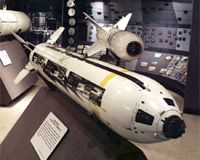
Cluster bombs, dropped from aeroplanes or fired as artillery, contain hundreds of bomblets, also known as submunitions, which scatter over wide areas.
Many of the bomblets do not explode on impact, and lie dormant for years or decades. In many cases, they blow up when children pick them up to play with them.
The bombs are largely found in the Middle East, where they are used by Israel; in southeast Asian countries, where the United States deployed them in the 1970s; and in the former Yugoslavia.