
US rocket engineers are currently checking all Russian-made RD-180 engines following the determined anomaly that caused premature booster shutdown in the March 22 launch of the Cygnus spacecraft, United Launch Alliance (ULA) announced in a release on Friday.
"The ULA engineering team has reviewed the data and has determined an anomaly with the RD-180 Mixture Ratio Control Valve (MRCV) assembly caused a reduction in fuel flow during the boost phase of the flight," the release stated. "In addition to analysis and testing, all RD-180 engines are being inspected."
The ULA explained that during the March 22 launch, the system experienced a premature first stage shutdown, however, the Centaur upper stage compensated for the first stage anomaly. Thus, the Cygnus was successfully delivered into the desired orbit.
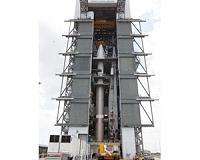
Cygnus is an unmanned spacecraft that carries cargo to the International Space Station. Cygnus was launched on an Atlas V, a two-stage rocket that uses the Russian-made RD-180 rocket engine and a Centaur rocket as its second stage.
According to the release, a new launch of the Atlas V is targeted for early summer, but the date has not been set yet.
"The impact to the remainder of the Atlas V manifest is in review with new launch dates being coordinated with our customers," the release said. "All missions manifested for 2016 are expected to be successfully executed by the end of the year, including OSIRIS-REx, which will remain in early September to support its critical science window."
The ULA is a joint venture owned by Lockheed Martin and the Boeing Company. It brings together two of the launch industry's most experienced and successful teams – Atlas and Delta – to provide reliable, cost-efficient space launch services for the US government.
Russian Rocket Engine MakerNot Commenting on USLauncher's Anomaly
The United Launch Alliance (ULA) determined earlier on Friday that an anomaly with the RD-180's device regulating the fuel-to-oxidizer ratio entering the rocket's thrust chamber, or the Mixture Ratio Control Valve (MRCV), was behind the March 22 early shutdown of the Cygnus spacecraft's booster.
"The NPO Energomash created an internal committee to clarify the causes of the engine control system failure. NPO Energomash does not comment on the ULA statement before clarifying all the circumstances," the official told RIA Novosti.
The Atlas V launcher's first stage RD-180 engine cut off 6 seconds earlier than planned, triggering a longer burn by the Centaur upper stage to compensate for the loss of thrust and velocity.
The Atlas V was nonetheless able to carry the Cygnus cargo ship to the required orbit and deliver supplies to the International Space Station.
The United States has been relying on Russia-made RD-180 rocket engines to put its national security satellites into orbit, despite efforts to reduce dependence on Russian technology in the use of launch vehicles. On Thursday, the US Congress armed services committee voted to double the purchase of the RD-180s to 18 rocket engines.
