
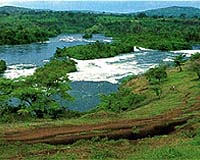
The World Bank has agreed to loans of 360 million dollars for Uganda to build a hydropower station on the River Nile, in one of the country's most ambitious power projects, officials said on Friday. Despite opposition to the project from environmentalists, the World Bank said it was supporting the dam to help close the country's energy supply gap, which "seriously constrains social and economic development", the bank's Kampala office said in a statement.
"Uganda's workforce is expected to double over the next 15 years, making the creation of jobs through expanded industry, tourism, and commercial services critical," said Judy O'Connor, World Bank Country Director for Uganda, in the statement.
"These sectors are energy intensive and will therefore rely on a consistent, affordable, and expanding power supply," she said.
The cost of the project at Bujagali, on the River Nile, has been revised upwards from an initial 550 million dollars to almost 800 million.
Private company Bujagali Energy Ltd is due to construct the dam with further funding from sources to be guaranteed by the World Bank.
The project ran into trouble in 2003 after environmentalists argued that it would destroy a network of waterfalls — a major tourism and water rafting attraction, and a site of special spiritual significance to the local population.
On completion, the power project would increase Uganda's capacity to export power to Kenya, Rwanda and Tanzania, as well as generate up to 250 megawatts, in addition to the 380 megawatts produced at two existing hydroelectric plants.
