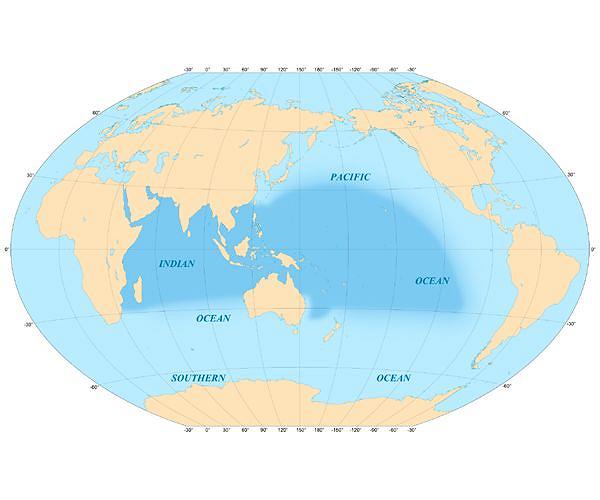
The 20th annual Southeast Asia Cooperation and Training exercise ended Friday after 10 days of engagements with 21 Indo-Pacific partner nations in Singapore and virtually.
Led by the U.S. Navy, the exercise included international organizations and non-governmental organizations working to enhance collaboration on shared maritime security in the region.
Participants used standardized tactics, techniques and procedures to address crises, contingencies and illegal activities.
"Integrating U.S. Navy personnel and liaison officers from across the region and beyond, the multilateral collaboration required during SEACAT continues to build on well-established relationships in the maritime domain," Capt. Tim LaBenz, deputy commander of Destroyer Squadron 7, said in a news release.
"Exercises like these showcase the daily strides and highlight our shared focus to promote maritime security, all in support of a free and open Indo-Pacific."
LaBenz served as the officer in tactical command, overseeing the operations in Singapore.
Changi Naval Base in Singapore served as a centralized hub for the exercises, which included tracking merchant vessels contracted to simulate suspicious vessels of interest.
Participating countries used maritime domain awareness tools, maritime patrol, reconnaissance aircraft and surface assets to track, find and simulate boarding suspicious vessels in the seas throughout Southeast Asia.
"As the U.S. Department of Defense lead agency for counter-narcotics in the Indo-Pacific, Joint Interagency Task Force West remains honored to participate in SEACAT year after year," Rear Adm. Charles Fosse, director of JIATF West said in the news release.
"SEACAT 2021 strengthened our intelligence-sharing partnerships with other military and law enforcement operational centers, enabling a unified effort to maintaining a free and open Indo-Pacific."
This year's exercise was the largest since SEACAT began in 2002, with 10 ships and more than 400 personnel.
Participants from the U.S. Navy included USS Tulsa, staff of DESRON 7, P-8A Poseidon aircraft assigned to Task Force 72, and personnel from Task Forces 73, 76, U.S. 7th Fleet, U.S. Pacific Fleet, Defense Threat Reduction Agency and JIATF West.
The United Nations Office of Drugs and Crime, EU Critical Maritime Route Wider Indian Ocean and Global Fishing Watch also were involved. Women, Peace and Security principles were applied.