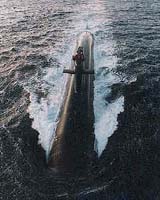
France placed an order worth 7.9 billion euros (10.4 billion dollars) for six nuclear-powered but conventionally armed Barracuda class attack submarines on Friday, marking one of the main French weapons programmes for coming decades. The programme "will enable France to strengthen its status as a front-ranking naval power", ministry of defence spokesman Jean-Francois Bureau told a press conference.
He said: "The extent of the programme, its importance, including acceptance by the state of a certain number of financial risks show the state's determination to see it through."
The submarines will be put into service from 2016 to 2027 and the contract was placed with state-controlled DCN shipyards and power company Areva-Technicatome which will provide the nuclear power units.
The work will involve about 100 small and medium-sized companies and generate work for several thousand people.
The submarines will replace Rubis class submarines. Some of these boats have been in service for 20 years and will have served for 30 years when they are retired.
The ministry said that the Barracuda class had been designed to "master vast maritime areas, accompany aircraft carriers, participate in the safety of the (nuclear) ocean dissuasion force and deliver precision blows against ground targets".
Captain Guillaume Martin de Clausonne of the navy high command, said that the submarines would be able to go into action with little warning and "with great acoustic discretion".
All materials used in the construction of the boats would be traceable and this would be used when they were eventually broken up he said.
France has had high profile problems and embarrassment in arranging for its old aircraft carrier Clemenceau to be broken up, because of the danger of disposing of asbestos in the hull.