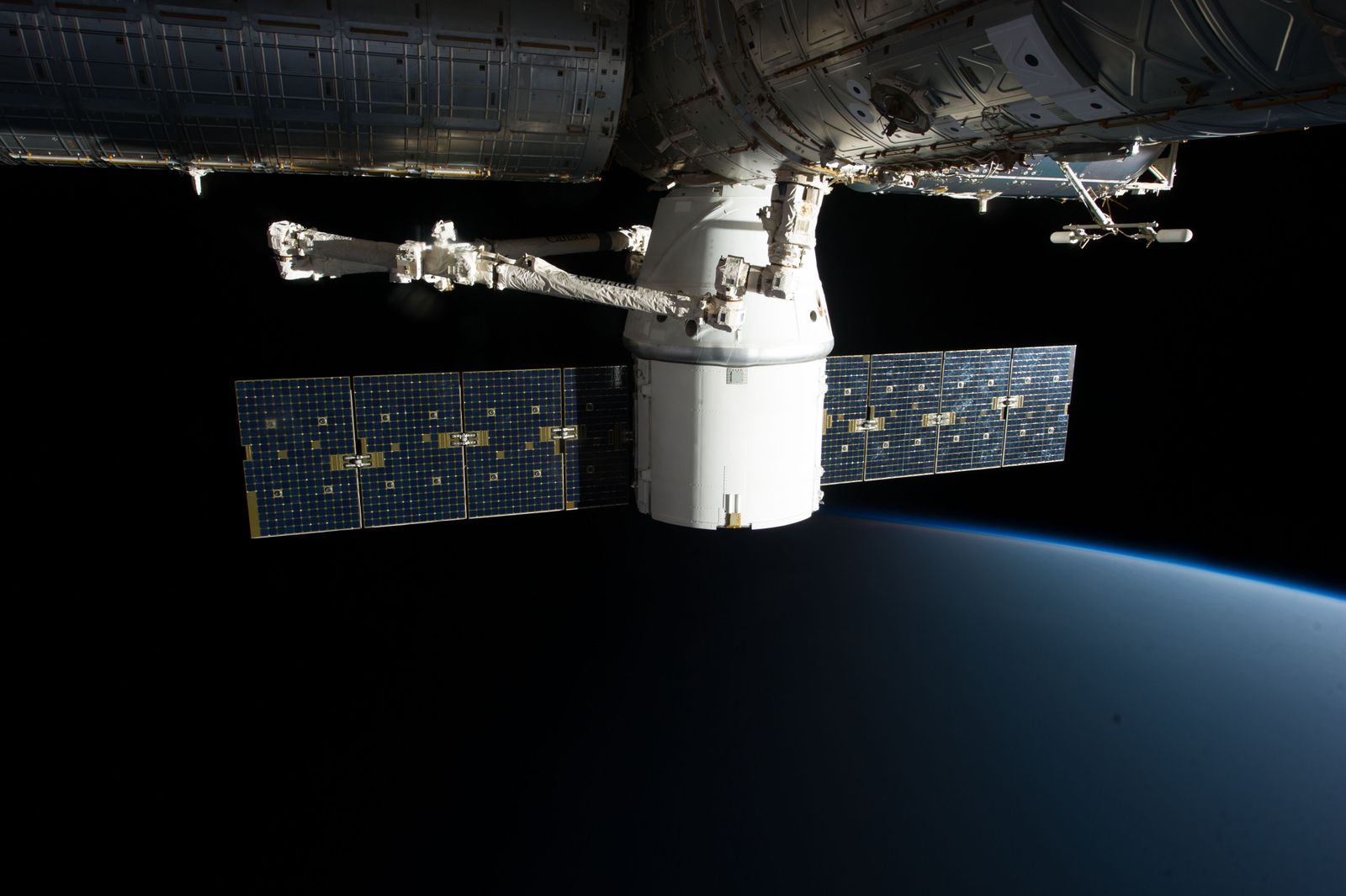
Spend a week on the International Space Station and your spinesheets out like a folding ruler released from its case. Astronauts on long-duration missions have measured themselves up to 5 centimetres taller within days of reaching orbit, because the intervertebral discs between their vertebrae, no longer squeezed by 1 g of gravity, quietly rehydrate and expand. Back on Earth, the opposite process is grinding on inside almost everyone reading this. From roughly the age of 30, those same discs begin losing water, and most people shorten by about a centimetre per decade.
Gravity is the slowest injury of a human life.
You cannot feel it happening. But by the time a person hits 70, that quiet compression has usually taken 3 to 5 centimetres off the frame they had at 25 — enough to change how a jacket sits on the shoulders, how far the hand can reach into a top cupboard, how a driver’s seat needs to be adjusted year after year.
The disc, and what water does inside it
Between each pair of vertebrae sits a small, tough cushion about the size of a hockey puck. Anatomists call it the intervertebral disc. Its outer ring, the annulus fibrosus, is made of concentric layers of collagen wound like the plies of a car tyre. Its centre, the nucleus pulposus, is a gel — roughly 80 percent water at birth, laced with proteoglycans that pull water molecules in by osmotic pressure.
Under load, the gel resists. Squeeze a disc between two vertebrae and the water inside pushes back, spreading the force evenly so that bone never grinds against bone. That is why you can jump off a kerb without shattering your spine.
The trouble is that the disc has no direct blood supply. Nutrients seep in through the vertebral endplates, and by the third decade of life the supply is already thinning. Research on degenerative disc disease notes that dehydration of the nucleus pulposus is an early change in disc degeneration. Many people over 50 show radiographic signs of it. Disc degeneration is a widespread condition affecting hundreds of millions of people worldwide each year.
Not all of them feel it. Most do not. But every one of them is, quietly, getting shorter.
A centimetre a decade, and where it goes
The arithmetic is straightforward. A human spine has 23 discs. If each loses a fraction of a millimetre of height per year — through water loss, collagen fatigue, and micro-tears in the annulus — the losses stack. Add in a mild forward curvature of the thoracic spine, which tends to increase with age, and the total loss can reach several centimetres over a lifetime.
Osteoporosis accelerates the drop. According to the Indian Express, medical professionals note that patients with osteoporosis experience back pain and height loss as vertebrae compress and sometimes fracture. In India alone, more than 10 million people live with the condition.
The centimetre-per-decade figure is a rough average across healthy adults. Smokers lose more. Sedentary workers lose more. People who spend eight hours a day slumped over a laptop compress the anterior edge of their lumbar discs slightly more than the posterior edge, encouraging the annular fibres to bulge backward — the mechanical setup for a herniated disc.
You are also shorter in the evening than in the morning. Overnight, freed from vertical load, the discs draw water back in and the spine lengthens by about 1 to 2 centimetres. Every morning is, in miniature, a return from orbit.
The Soyuz seat problem
Which brings the story to a plaster cast on a factory floor outside Moscow.
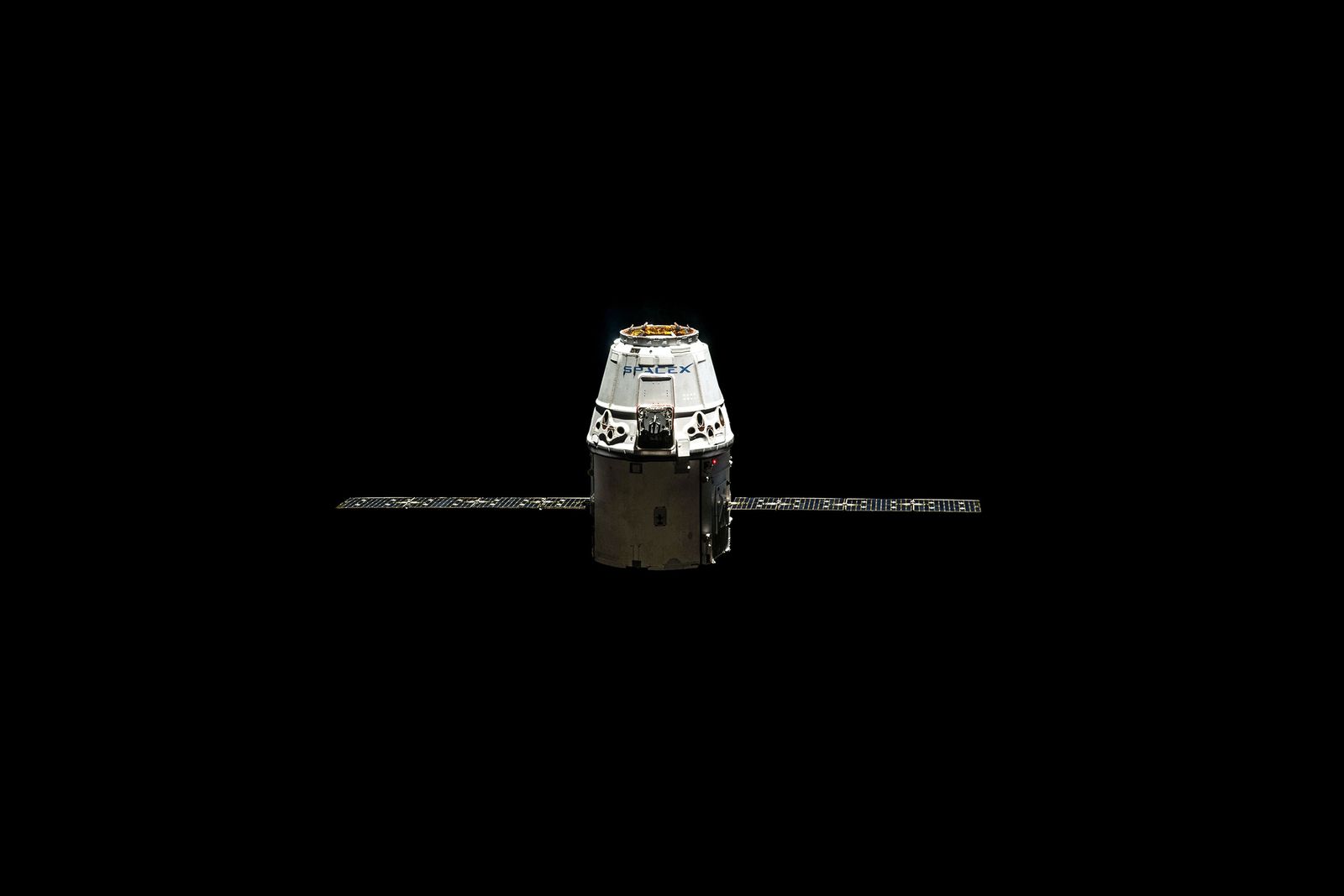
Before any astronaut launches to the ISS aboard a Soyuz capsule, Russian engineers make a custom-fitted return couch, moulded from a full-body plaster impression taken weeks before the flight. The seat is not a comfort feature. It is a survival device. The Soyuz descent module lands hard — a controlled crash under parachutes, with retro-rockets firing a metre above the Kazakh steppe — and the couch must cradle the spine to keep vertebrae from being driven into each other on impact.
But an astronaut who has lived six months in microgravity is no longer the same shape. On the ISS, with no gravitational load, the intervertebral discs re-inflate to something close to their fully hydrated state. As the BBC has reported on the physiology of long-duration spaceflight, crew members typically grow between 3 and 5 centimetres taller during a stint in orbit. A seat cast for their Earth-shaped spine would no longer fit.
So Roscosmos re-checks. Astronauts are re-measured before return. And engineers, according to accounts of the Soyuz couch-fitting process, adjust the liner to account for the elongated frame that will splash down onto the steppe.
What the astronauts feel
Growing taller sounds pleasant. It is not.
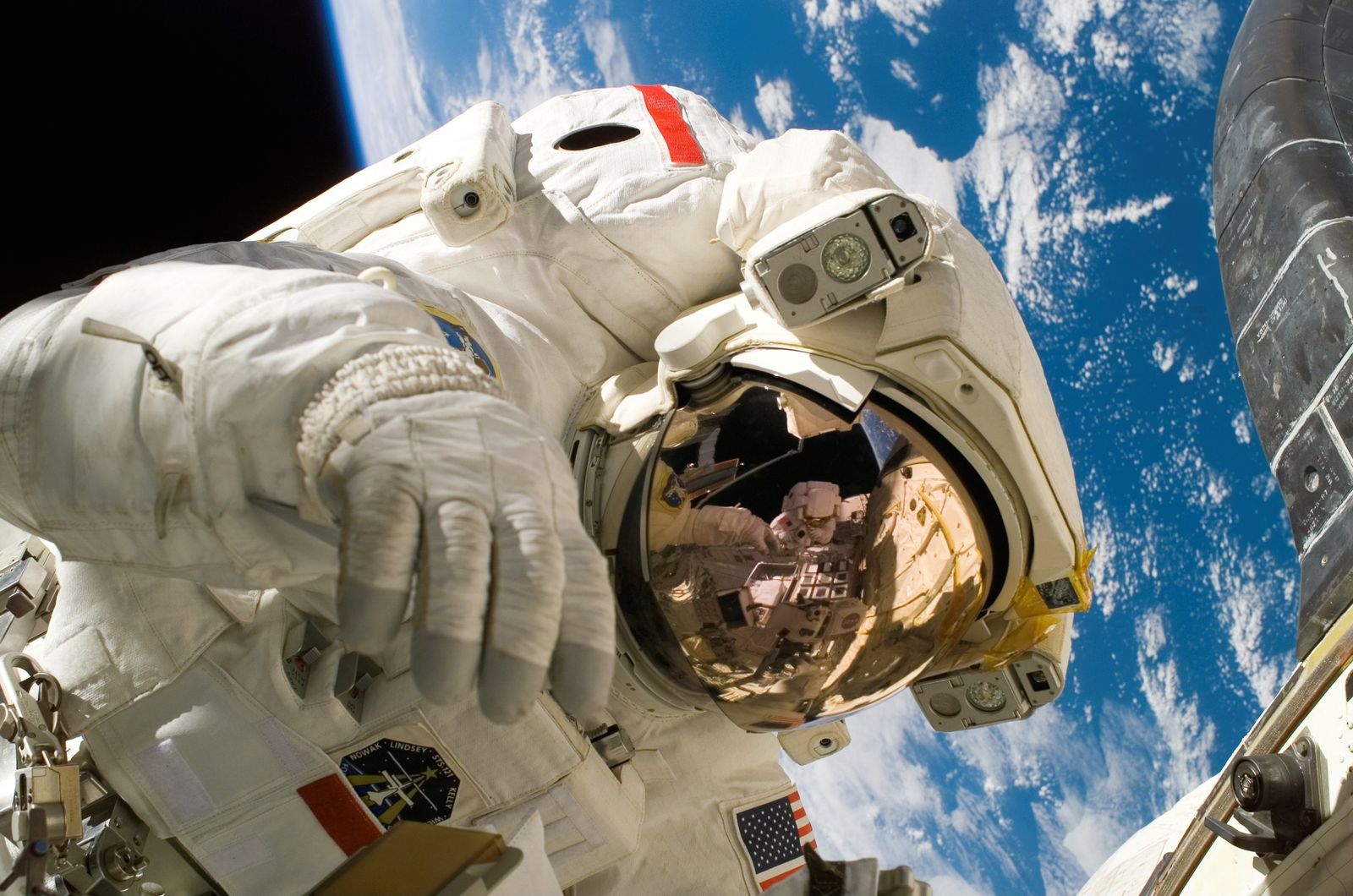
Crew members on the ISS have reported back pain in the first days of flight — the kind of ache that comes when muscles and ligaments, tuned to a shorter spine, are suddenly stretched. Nerve roots that pass out through small openings between the vertebrae can find those openings subtly rearranged. Some astronauts describe sciatica-like symptoms in orbit that they never had on Earth.
Astronaut Scott Kelly, who spent 340 days aboard the station, has spoken publicly about the strange bodily experience of a spine unspooling in weightlessness, and about the pain of gravity reasserting itself on return. Astronauts have described the physical work of readapting to Earth’s pull after missions — the way even simple posture becomes an act of muscular remembering.
The taller-in-space effect has been documented for decades. The height gain is not evenly distributed across the spine — the lumbar region, which carries the most load on Earth, tends to expand the most. Astronauts also lose the natural S-curve of the spine slightly, drifting toward a straighter, more neutral shape that engineers sometimes call the neutral body posture — the same posture the human body assumes when floating relaxed in a swimming pool.
The MRI evidence
NASA and its partner agencies have imaged astronauts before and after long missions using magnetic resonance scanners. The pictures show what the tape measure suggests: discs plumper, taller, brighter on the T2-weighted sequences that light up water content. Some crew members return with disc bulges that were not visible pre-flight, as the rehydrated nuclei push slightly against the annulus.
Herniated discs after spaceflight are a documented occupational hazard. Astronauts have been found to have a significantly higher risk of disc herniation in the first year after landing compared to the general population. The mechanism is thought to be a combination of muscle atrophy in the deep spinal stabilisers, disc geometry changes, and the sudden re-loading of a spine that has spent months without axial compression.
Chinese taikonauts aboard the Tiangong station face the same physiology. Coverage of the Shenzhou-16 mission notes the extensive medical monitoring built into the crew’s daily routine — a reminder that no space programme, regardless of flag, has solved the problem of what microgravity does to the human column of bone and gel.
Why 30 is the turning point
The age at which disc water loss becomes measurable is not arbitrary. Around the third decade, several biological curves cross. Proteoglycan synthesis in the nucleus pulposus slows. The vertebral endplates begin to calcify, thinning the pathway through which nutrients diffuse into the disc. Collagen cross-linking in the annulus increases, making the tyre-wall less elastic. And the small blood vessels that supplied the outer annulus in childhood have mostly regressed by adulthood, leaving the disc as one of the largest avascular tissues in the body.
The disc is, in a sense, running on reserves laid down before puberty. When those reserves start to deplete, the cushion begins to flatten.
Exercise slows the process, though it cannot stop it. Walking, swimming, and resistance training pump fluid in and out of the discs through the endplates, keeping the diffusion pathway open. Sitting for hours does the opposite. So does smoking, which constricts the small vessels supplying the vertebral bone and starves the disc from the outside in.
The only real reprieve
There is only one environment in which the human spine gets a genuine holiday from gravity. It is 400 kilometres straight up, moving at 27,600 kilometres per hour, in a pressurised aluminium can that has been continuously occupied by humans since November 2000.
Even there, the reprieve is temporary. Bones lose calcium at roughly 1 percent per month in microgravity — a rate similar to that of a post-menopausal woman with untreated osteoporosis. Muscles atrophy. The heart, no longer pumping against gravity, becomes rounder and slightly weaker. The discs plump up, but the skeleton that houses them is quietly demineralising.
Little Earth, a small stuffed toy that arrived at the ISS in 2019 as a zero-g indicator, has floated inside the station for years now — never falling, never compressed, never aging in quite the way a body on the ground would age. The plush is a joke, but also a lesson. Objects that never feel gravity keep their shape. Bodies that do, do not.
The measurement everyone can take
Stand against a wall first thing in the morning. Mark the height. Do it again just before bed. The difference is almost always at least half a centimetre, sometimes more than a full one. That is the day’s worth of compression, gravity’s small tax collected in twelve hours.
Repeat the measurement once a year, on the same date, at the same time of day, and the slow drift becomes visible. A centimetre in ten years. A centimetre in the next ten. By the fourth decade of doing it, the wall will have quietly recorded the passage of a body through time — the same body, but a little less of it, folding down toward the floor at a rate you could not feel but can now, if you squint at the pencil marks, actually see.
The astronauts on the ISS this morning are floating above all of that, momentarily exempt. Their discs are drinking water. Their spines are lengthening by fractions of a millimetre a day. And somewhere in a Russian factory, a plaster cast is being trimmed to fit whoever they will be when they come back down.