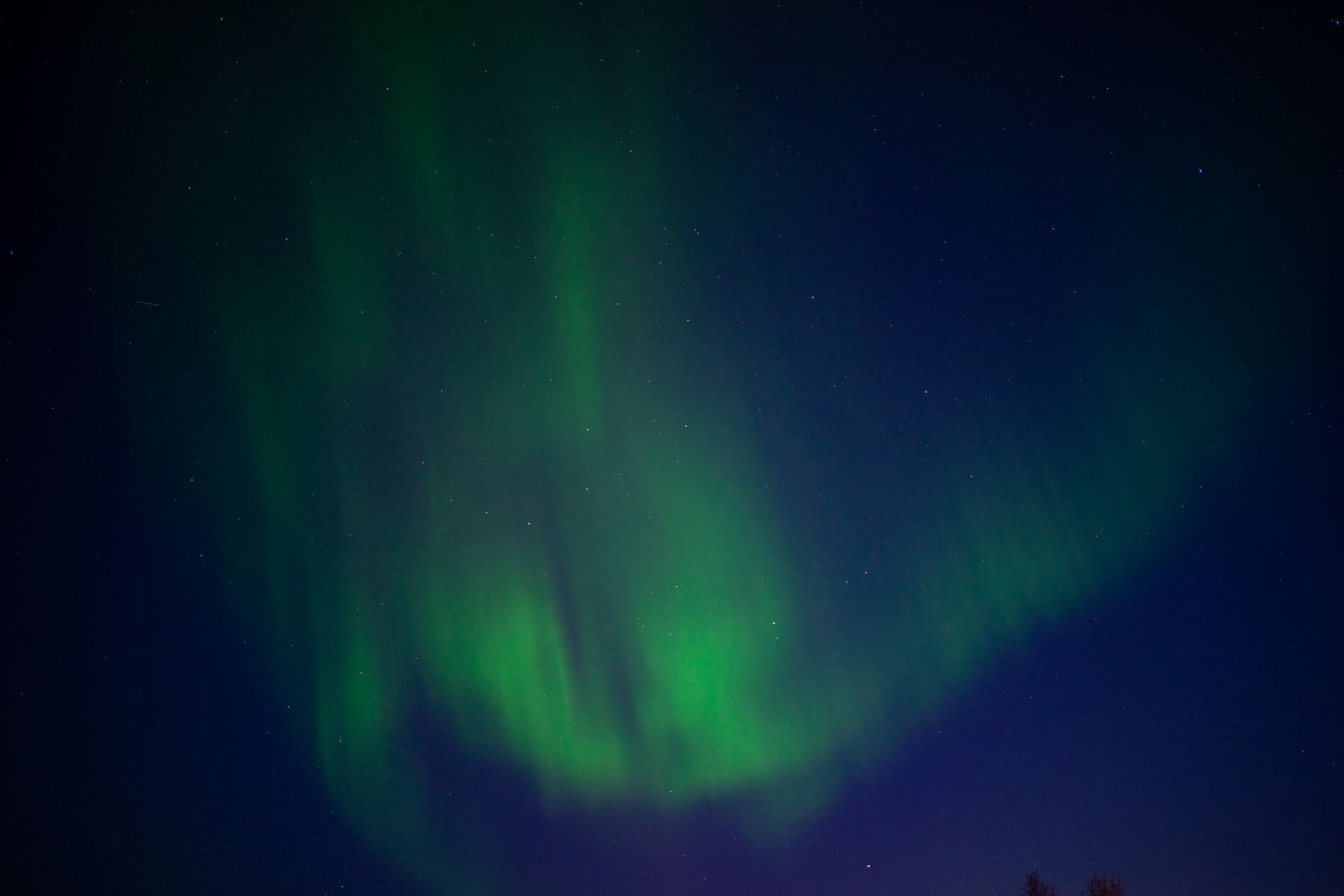
On the night of September 2, 1859, telegraph operators reported working with their batteries disconnected. The wires, strung across New England countryside, were carrying enough current on their own — pulled from the sky by the largest geomagnetic storm ever recorded — to send signals cleanly. Sparks leapt from the brass keys. The paper tape smouldered. And the operators kept working, powered by the aurora.
Accounts from the period describe operators asking colleagues to cut their batteries off entirely. The reply came back: mine is off too. We are working with the auroral current alone. How do you receive my writing?
Fine, came the answer. Better than with the batteries on.

The flare that had no name yet
The storm was triggered by a solar flare observed the previous morning by Richard Carrington, an amateur astronomer sketching sunspots from a private observatory in Redhill, just south of London. On the morning of September 1, Carrington observed extremely bright white light erupting from a large sunspot group. The flare lasted about five minutes. Carrington was the first person in history to witness one, and he understood, almost immediately, that he had seen something new. A recently rediscovered portrait of Carrington shows a bearded young man with the slightly stunned look of someone who has just watched the sun misbehave.
Less than a day later, the coronal mass ejection arrived. That travel time is extraordinary. Most CMEs take several days to cross the 93 million miles between the sun and Earth. This one covered the distance in less than a day, moving at exceptional speed when it slammed into Earth’s magnetic field.
What the operators saw
Telegraph offices from Washington to Boston to Paris became, briefly, unlivable. Contemporary accounts catalog what happened next: paper tapes catching fire, operators knocked from their chairs by shocks, wires humming with induced currents strong enough to keep working after every power source in the building had been severed.
Operators reported flames flickering from equipment and electrical arcs jumping from instruments to their skin.
And then the aurora. It was seen at remarkably low latitudes — from the Caribbean to Hawaii, with the southern lights pushing toward the equator from the other side. In some regions, witnesses reported the sky glowing so brightly in the middle of the night that birds and roosters behaved as though dawn had arrived. Newspapers reported auroral light bright enough to read by.

Why the wires stayed alive
The mechanism is now well understood, and it is the same mechanism that keeps modern power-grid engineers awake at night. When a coronal mass ejection collides with Earth’s magnetic field, it compresses and distorts that field. A shifting magnetic field, by the basic physics of induction, produces a voltage in any long conductor lying inside it. In 1859, the longest conductors on the planet were telegraph lines — copper wire strung on wooden poles across entire continents.
The currents pushed through those lines were enormous by the standards of 19th-century electronics. The batteries the operators used to power their transmitters were suddenly redundant. The sky was doing the work.
Some operators found the auroral current so steady that they could send cleaner messages with the batteries disconnected than with them wired in. The battery current, mixed with the auroral current, produced garbled interference. Pull the battery, and the sky-signal came through clear.
The Miyake ghost
The Carrington Event is often called the largest solar storm on record, and in the instrumental record it is. But ice cores tell a longer story. In tree rings and Antarctic ice from around A.D. 774, scientists have found a spike in carbon-14 — the radioactive isotope produced when cosmic rays hit the upper atmosphere — that dwarfs anything from 1859. Named the Miyake Event after the Japanese researcher Fusa Miyake who identified it, the 774 storm left a significantly larger signature in the geological record than Carrington.
A smaller storm in A.D. 993 shows up too. Analysis suggests that major solar events hit Earth roughly once every few centuries. The last one was 166 years ago.
What a repeat would cost
In 1859, the damage was measured in scorched paper and singed eyebrows. The telegraph network was thin, unshielded, and disposable. The transformers of a 21st-century power grid are none of those things.
A March 1989 storm — considerably weaker than Carrington — collapsed the Hydro-Québec grid in 90 seconds, leaving millions without electricity for nine hours. Estimates suggest that a full Carrington-class event today would cause between $600 billion and $2.6 trillion in damage in the United States alone.
The specific danger is the extra-high-voltage transformer. There are only a few thousand of them holding the North American grid together. Most are custom-built, weigh several hundred tons, and are no longer manufactured in the United States. Typical replacement lead time is measured in years. A storm that destroyed dozens or hundreds of them at once would leave regions dark for months, possibly longer. Shielding the most vulnerable transformers with neutral blocking devices would require significant investment against a trillion-dollar risk.
The warning window
The Carrington CME reached Earth in less than a day. That is a fast CME. A slow one takes three or four days. Either way, the warning window for a modern civilisation is small, and much of it depends on satellites at the L1 Lagrange point upstream of Earth, which provide limited advance observation before the plasma cloud hits.
Beyond the grid, the collateral damage would ripple. Satellites in low Earth orbit would experience atmospheric drag as the upper atmosphere heated and swelled, pulling some down. GPS signals would degrade. Shortwave radio would black out for hours. Submarine communication cables — the physical backbone of the internet — would have induced currents run through them, potentially frying the repeaters that boost signals across ocean floors.
The same physics that makes Earth’s magnetic field a protective shield is what makes it a giant antenna for solar plasma. The field bends. The field ripples. Everything long and conductive underneath it hums.
Solar Cycle 25 and ongoing monitoring
The sun runs on an 11-year cycle of activity, and we are currently approaching the peak of Solar Cycle 25. Major sunspot regions continue to produce powerful flares that ionize the upper atmosphere and black out shortwave radio communications.
Space weather forecasters at the National Oceanic and Atmospheric Administration monitor active sunspot regions daily, watching for the specific magnetic contortions that precede a major eruption. The rating scale runs G1 (minor) to G5 (extreme). The Carrington Event would have been G5 with room to spare.
The relationship between the sun and everything humans build to run on electricity is one Spacewar has returned to, from the ancient objects drifting through our galactic neighbourhood to the physical toll of leaving Earth’s protective field. The Carrington story sits at the same intersection: a reminder that the sun is not a fixed lamp but a variable, occasionally violent, star.
The letter that survived
Richard Carrington himself lived only 16 more years after the flare. He inherited his father’s brewery, gave up serious astronomy, and died in 1875 at age 49. The sunspot group he sketched on the morning of September 1, 1859 has not been matched in size or magnetic complexity since — at least, not by anything that has hurled a CME straight at Earth.
The telegraph messages sent by auroral current that night were mostly routine — traffic orders, personal notes, wire-service dispatches. Nothing important. And yet, buried in the operator logs, is one of the strangest sentences in the history of communications: a request to please disconnect your battery, because the sky is sending your message better than you can.
Somewhere in the solar convection zone, magnetic field lines are twisting toward their next release. The wires overhead are longer now, and there are more of them, and they run through transformers built in Shenyang and Busan with four-year lead times. The next time an operator, somewhere, watches sparks jump from a piece of equipment they cannot switch off, the equipment will not be a telegraph key.