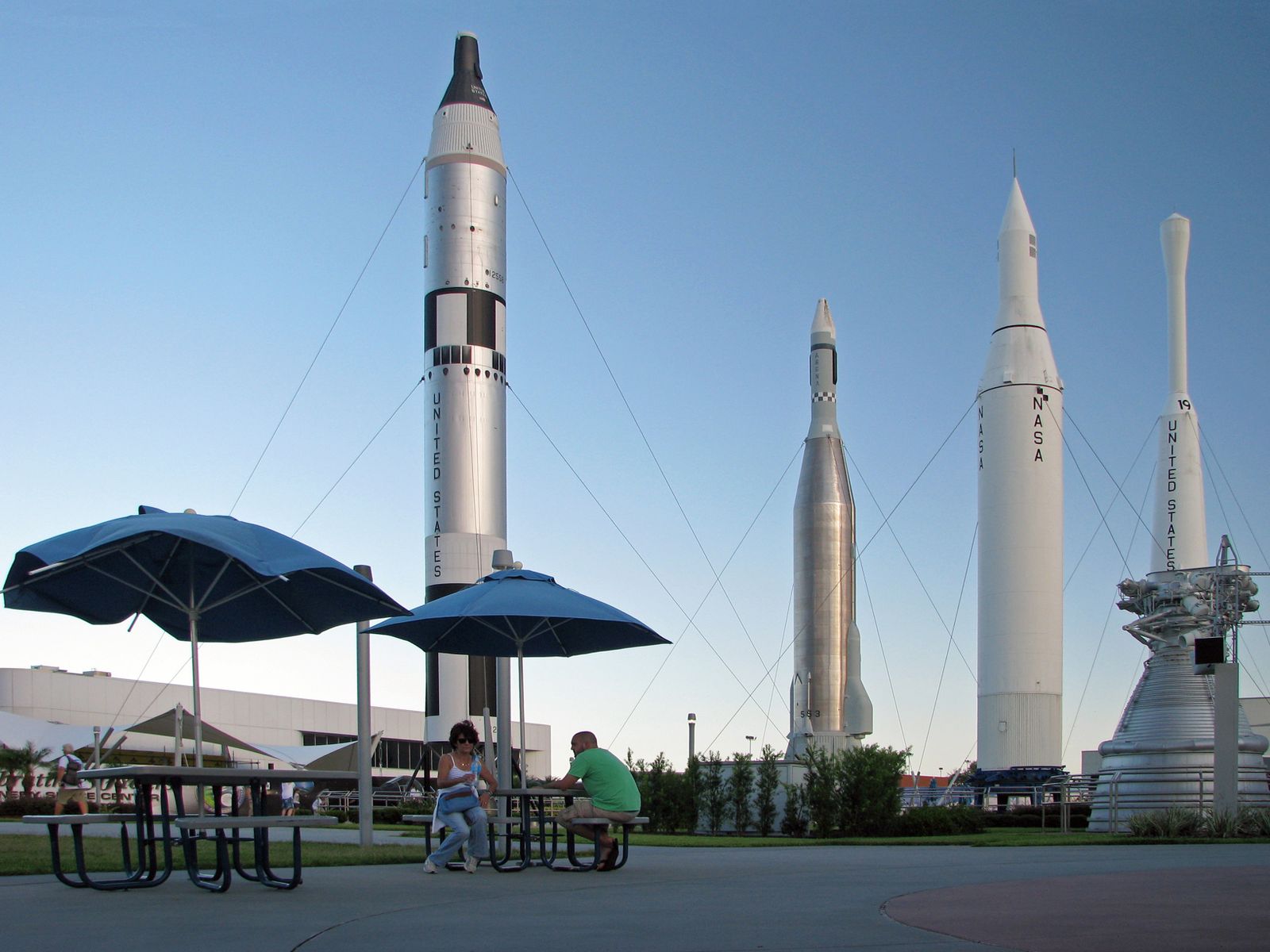
Before dawn on July 22, 1962, an Atlas-Agena B rose from Launch Complex 12 at Cape Canaveral carrying Mariner 1, NASA’s first attempt to send a spacecraft to Venus. Less than five minutes later, the launch vehicle was veering off course and the Range Safety Officer was preparing to destroy it.
NASA’s history of the launch places the destruct command 293 seconds after liftoff, only six seconds before the Agena upper stage and spacecraft were due to separate from the Atlas. The mission, commonly valued at about $18.5 million in 1962 dollars, ended over the Atlantic before Mariner 1 had left Earth’s immediate vicinity.
A first for the United States, not for humanity
Mariner 1 was a historic mission, but not for the reason some later accounts suggest. It was the first American attempt to send a spacecraft to another planet, not humanity’s first attempt at interplanetary flight.
The Soviet Union had already launched Venus probes in 1961. Venera 1 escaped Earth orbit and likely passed within roughly 62,000 miles of Venus after controllers lost contact, returning no data. NASA’s Mariner project therefore entered a competition that had already begun, although no spacecraft had yet completed a successful scientific encounter with another planet.
A Venus probe built from Ranger hardware
NASA’s Mariner 1 mission record describes it as the first of two spacecraft designed for the Venus opportunity. The spacecraft was derived from hardware developed for the Ranger lunar program, allowing the Jet Propulsion Laboratory to prepare an interplanetary probe on a compressed schedule.
Mariner 1 carried no camera. Its instruments included microwave and infrared radiometers, a magnetometer, a cosmic-dust detector, a solar-plasma spectrometer and particle detectors. The objective was to study Venus’s temperature and atmosphere while also measuring conditions in interplanetary space.
The United States was not alone in pursuing the planet. NASA’s Venus exploration timeline records Soviet attempts before Mariner 1 and now lists more than 40 missions launched to explore Venus, including failed launches, flybys, orbiters, atmospheric probes and landers.
The mark was an overbar, not a hyphen
The most famous version of the Mariner 1 story reduces the accident to a missing hyphen in computer code. That description is memorable, but technically wrong.
The missing mark was an overbar placed above the symbol R in a guidance equation. An overbar is mathematical notation rather than ordinary punctuation. In this case, it told the guidance logic how a value was to be treated when processing the rocket’s movement.
As Mental Floss explains in its account of the mission, leaving out the overbar changed how the ground computer interpreted incoming guidance information. The error had not caused disaster on earlier flights because the hardware condition that exposed it had not occurred.
Two failures met at the worst moment
NASA’s postflight account does not blame the loss on the equation alone. A guidance antenna on the Atlas booster lost its lock with the ground, a known problem that would normally have been handled by allowing the rocket to continue temporarily along a preprogrammed trajectory.
The omitted overbar meant the guidance system did not respond as intended when contact returned. Instead of filtering the signal correctly, the system issued steering instructions based on movements that did not represent the rocket’s true trajectory.
The Atlas followed those commands. Its path began to fishtail and drift far enough from the planned corridor that controllers feared it could threaten populated areas or busy Atlantic shipping lanes.
The decision at 293 seconds
The Range Safety Officer’s responsibility was not to save the mission. It was to protect people and property if a launch vehicle escaped its permitted flight corridor.
At approximately 293 seconds after liftoff, with only seconds remaining before the Agena and Mariner spacecraft separated from the Atlas, the destruct command was sent. The launch vehicle broke apart over the Atlantic, ending the first American attempt to reach another planet.
No one was killed. Mariner 1 continued transmitting briefly while falling toward the ocean, but the spacecraft and its scientific mission were lost.
How the hyphen became the legend
Newspaper reports and later retellings described the omitted overbar as a hyphen. The simplified version turned a complicated interaction between hardware, mathematical notation and guidance logic into a story that could be explained in one sentence.
That simplification also obscured the most important part of the failure. A correctly written equation would likely have allowed the system to survive the temporary loss of guidance lock. The hardware interruption might likewise have remained recoverable if the equation had been represented correctly. The mission was lost when the two faults met.
What the $18.5 million loss demonstrated
Mariner 1 is often presented as an early software disaster, although the failure crossed several boundaries. The missing mark originated in a guidance equation, affected the logic implemented in the ground system and became catastrophic only when launch-vehicle hardware stopped behaving normally.
The lasting lesson is therefore broader than “check the code.” Mathematical specifications, transcription, software behavior, hardware failure modes and operational safeguards must describe the same system. A small disagreement between them can remain invisible until an unrelated component fails.
Mariner 2 launched from the same pad
NASA had prepared a second spacecraft for the same Venus launch opportunity. Mariner 2 was not rolled to a different launch pad. It lifted off 36 days later, on August 27, 1962, from the same Launch Complex 12 at Cape Canaveral.
NASA’s Mariner 2 mission history records that it carried the same scientific equipment as Mariner 1. The guidance problems were corrected, the Atlas-Agena launch succeeded and the spacecraft entered a heliocentric trajectory toward Venus.
On December 14, 1962, Mariner 2 flew past the planet and became humanity’s first successful planetary science mission. Its instruments showed that Venus was intensely hot, found a dense cloud layer and detected no discernible planetary magnetic field from the flyby distance.
That wording matters. Soviet probes had already been launched toward Venus, and Venera 1 probably passed the planet without functioning communications. Mariner 2 earned its place in history because it completed the encounter and returned scientific measurements.
The Mariner program moved on
NASA’s history of the Mariner program lists ten spacecraft launched between 1962 and 1973 for missions involving Venus, Mars and Mercury. Mariner 1, Mariner 3 and Mariner 8 were lost, while their paired spacecraft succeeded.
The successful missions produced several genuine firsts, including the first successful planetary encounter, the first close images of Mars, the first spacecraft to orbit another planet and the first mission to explore Mercury. Those achievements grew from a program designed around relatively small spacecraft that could be built and flown in pairs.
Small details and enormous consequences
History often turns on details that look trivial outside their technical context. SpaceWar has examined a constructive example in the 1952 Hershey-Chase blender experiment, where carefully chosen radioactive labels helped distinguish the roles of DNA and protein.
Mariner 1 represents the inverse pattern. A single line above a symbol carried a precise instruction, and omitting it changed how a guidance system reacted when another part of the launch system faltered.
The line that was missing
Mariner 1 did not fail because a rocket could not fly or because a spacecraft could not survive the journey to Venus. It failed because a recoverable hardware interruption encountered an error in the mathematical logic controlling the launch.
More than 40 missions have since been launched to explore Venus. The spacecraft that followed did not all use Mariner 1’s guidance system or its corrected equation, but they inherited the larger lesson: in flight systems, notation is part of the machinery.
Mariner 2 reached Venus less than five months after Mariner 1 disappeared over the Atlantic. The difference between the two missions was not a mythical hyphen. It was a restored line, corrected logic and a second opportunity that worked.