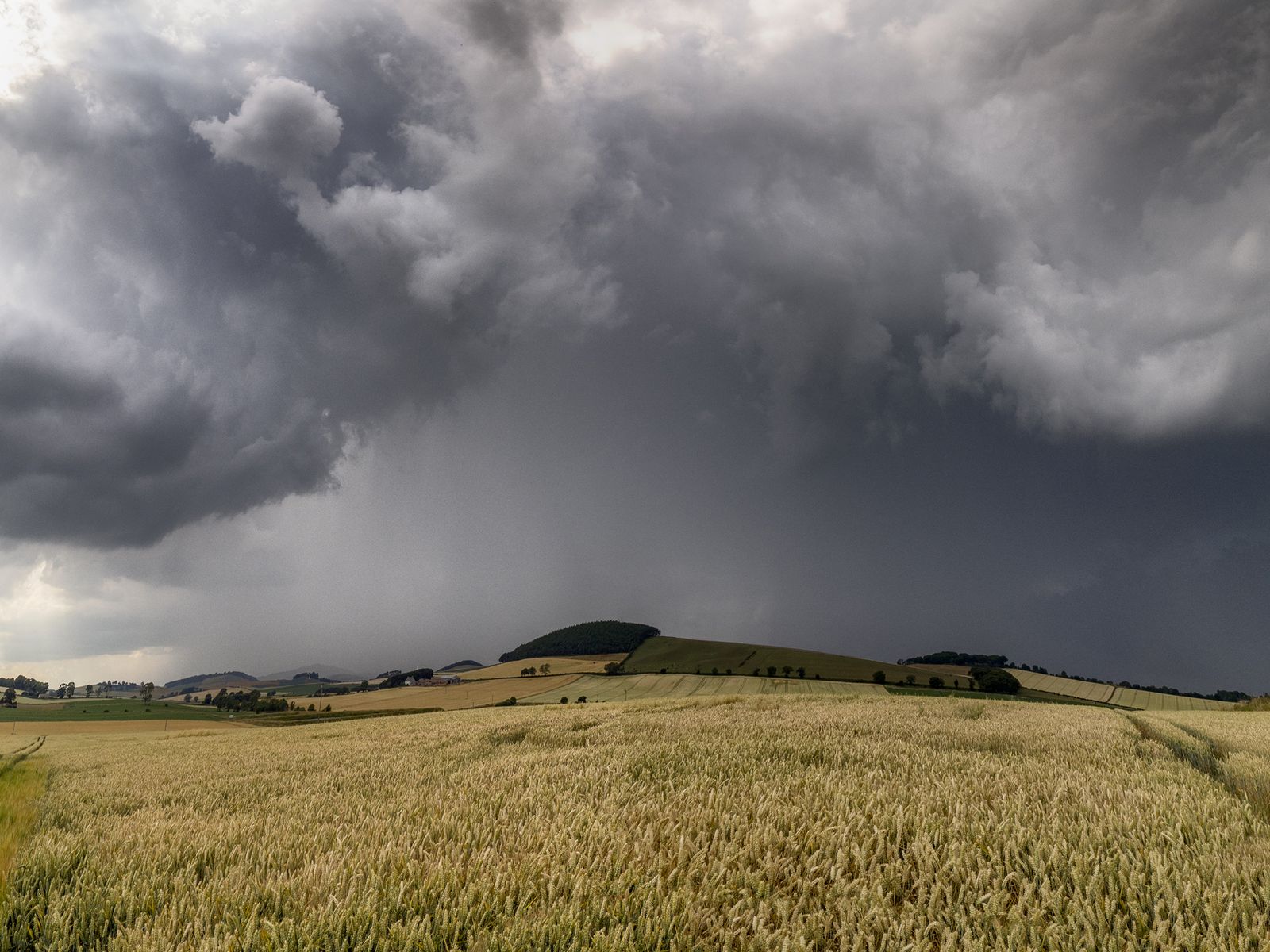
On 21 March 1935, a soil scientist named Hugh Hammond Bennett was testifying to a congressional committee in Washington DC about erosion on American farmland when dust lifted off the Great Plains reached the capital and dimmed the sky outside the hearing room. Bennett had been warned the cloud was coming and stretched his remarks until it arrived. Five weeks later, on 27 April 1935, President Roosevelt signed the Soil Conservation Act, creating the Soil Conservation Service inside the Department of Agriculture. The agency still exists, renamed the Natural Resources Conservation Service in 1994, and works today through more than 3,000 local conservation districts.
The timing was not quite the miracle it later became in the telling. Plains dust had already reached Washington twice that month. Clouds passed over the city on 6 March and again on 21 March, both times as Congress was opening hearings on a proposed soil conservation law. What Bennett supplied was not the weather. It was the decision to keep a room full of senators in their seats until the weather did the arguing.
When the light finally went, according to the National Weather Service account of the era, Bennett gestured toward the window and told the committee: “This, gentlemen, is what I’ve been talking about.”
The hearing Bennett stalled
Bennett was a North Carolina-born surveyor who had spent two decades warning anyone who would listen that American farmland was being farmed to death. His 1928 pamphlet Soil Erosion: A National Menace pushed Congress into funding the first federal soil erosion experiment stations the following year. He was six feet tall, roughly 200 pounds, and by 1935 he had given so many field demonstrations that crowds turned out to watch him dig.
Since September 1933 he had run the Soil Erosion Service, a temporary agency parked inside the Department of the Interior with money from the National Industrial Recovery Act. Its field funding was due to run out that June. Worse, the agency itself had become the object of a bureaucratic tug-of-war: Interior Secretary Harold Ickes wanted to keep it, the Department of Agriculture wanted to absorb it, and nobody in Congress was in a hurry.
So Bennett paced himself. He read out reports. He took the committee through erosion surveys in unhurried detail. Colleagues in the Midwest had wired him that a large dust cloud was tracking east, and he had worked out roughly when it would arrive over the Potomac.
What made the moment decisive was not the density of the dust. It was that the evidence walked into the building on its own. A chart showing tons of topsoil lost per acre is an abstraction. Grit settling on a committee table is not.
What the sky over the Capitol actually looked like
The dust that reached Washington was not the roiling black wall that would swallow Dodge City three weeks later. It was thinner and higher, a yellow-brown haze that dimmed the sun to the colour of an old penny and put streetlights on in the middle of the afternoon.
Nor was it unprecedented. A far larger storm on 11 May 1934 had carried fine plains soil over Washington and out over the Atlantic; ships hundreds of miles offshore reported Oklahoma dirt on their decks. Washington had already tasted the Great Plains once. It had simply not been paying attention.
The physics is the same one that still moves dust across oceans. Particles smaller than ten microns can stay aloft for days and travel thousands of kilometres, which is why Saharan dust regularly reaches the Caribbean and fertilises the Amazon with mineral nutrients every year. The 1935 dust was that mechanism running east instead of west.
Bennett’s advantage was that he understood the transit time. He was, in effect, reading a weather forecast as a legislative calendar.
The plow that made the dust
The southern plains had survived worse droughts before Europeans arrived. What they had not survived was the plow. In the first decades of the twentieth century, millions of acres of native prairie were broken for wheat, most of it during the boom that followed the First World War, when grain prices spiked and Washington encouraged farmers to plant fencerow to fencerow.
Buffalo grass and blue grama, the dominant species of the shortgrass prairie, root deep and knit the topsoil into a dense mat. Wheat roots are shallow. When the rains failed after 1932 and the wheat died, the mat was gone and the wind found bare dirt on a continental scale.
The storm counts tell the story on their own. Fourteen dust storms were recorded across the region in 1932, twenty-eight the following year, and the frequency kept climbing as ground cover disappeared. By 1935 the plains were producing black blizzards the way a healthy prairie produces grass.
Black Sunday, three weeks later
The worst of them arrived on Sunday 14 April 1935, three weeks after Bennett’s hearing. The morning was warm and clear. Families across the Oklahoma and Texas panhandles had opened their windows for the first time in weeks. Then a wall of dirt rolled in from the north and turned afternoon into pitch-black night across six states, from Nebraska down to Texas.
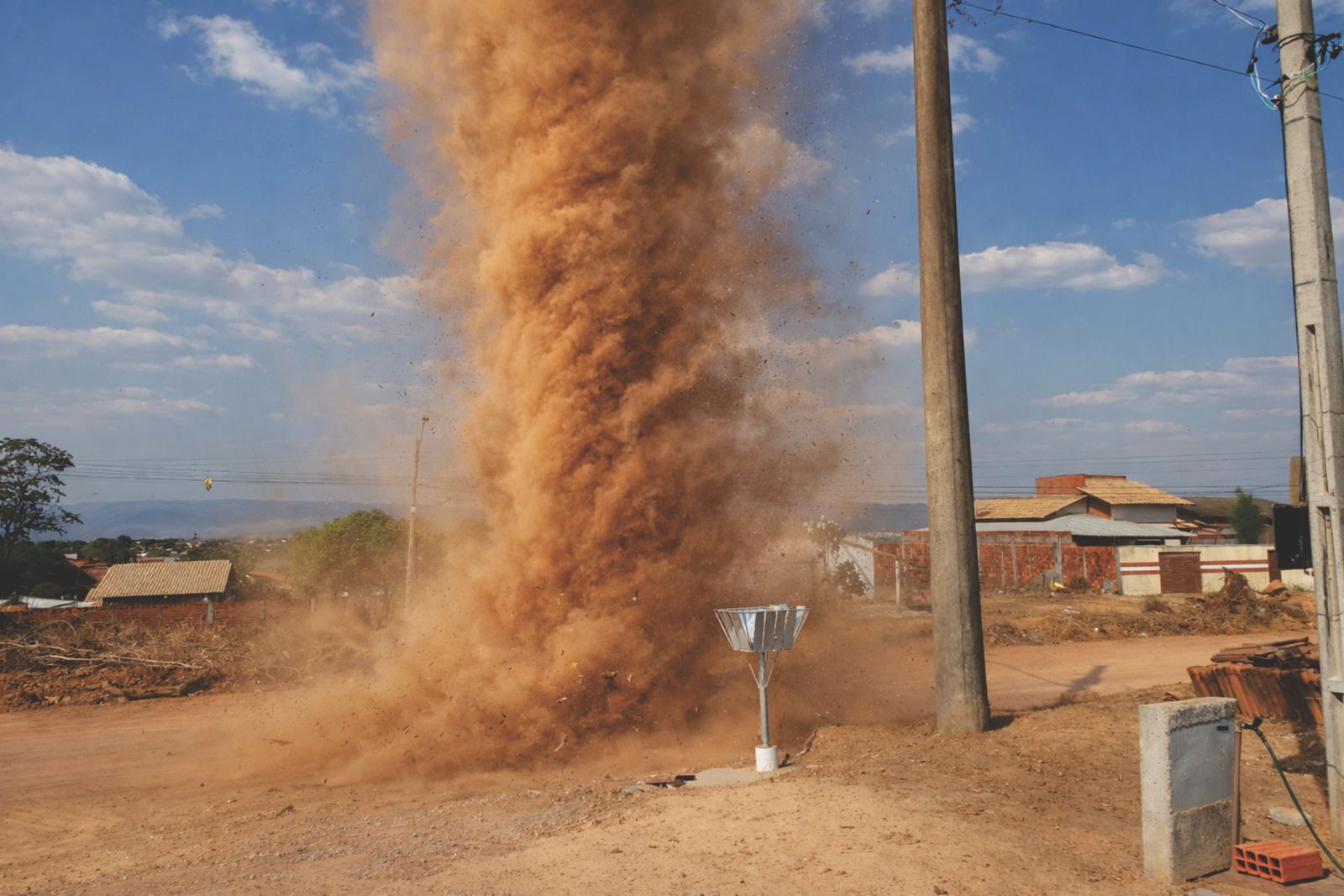
An estimated 300,000 tons of topsoil lifted off the prairie that afternoon. In Dodge City the visibility dropped to zero within minutes. Static electricity from the storm shorted out car ignitions and made lights stutter. Witnesses described a darkness in which, as Kansas Public Radio’s account puts it, almost nobody could see a hand held in front of the face.
The human cost is harder to pin down than the tonnage. Kansas alone reported twenty deaths from dust pneumonia and dust suffocation. Broader estimates of direct fatalities vary widely, and some accounts attribute hundreds of deaths across the region to dust pneumonia over the period. The particles that did the damage were the same fine fraction, under ten microns, that had reached Washington in March. Big grit stays in the nose and throat. The small stuff goes deep into the alveoli and stays there.
The following day, an Associated Press reporter named Robert Geiger filed a story from Boise City, Oklahoma, and used the phrase “dust bowl” to describe the region. The name attached itself to the whole decade. The Senate passed the soil conservation bill the day after Black Sunday; Roosevelt signed it on 27 April. Over the rest of the decade, as many as 2.5 million people left the plains, most of them heading west, in the exodus John Steinbeck fictionalised in The Grapes of Wrath.
What Bennett’s agency actually changed
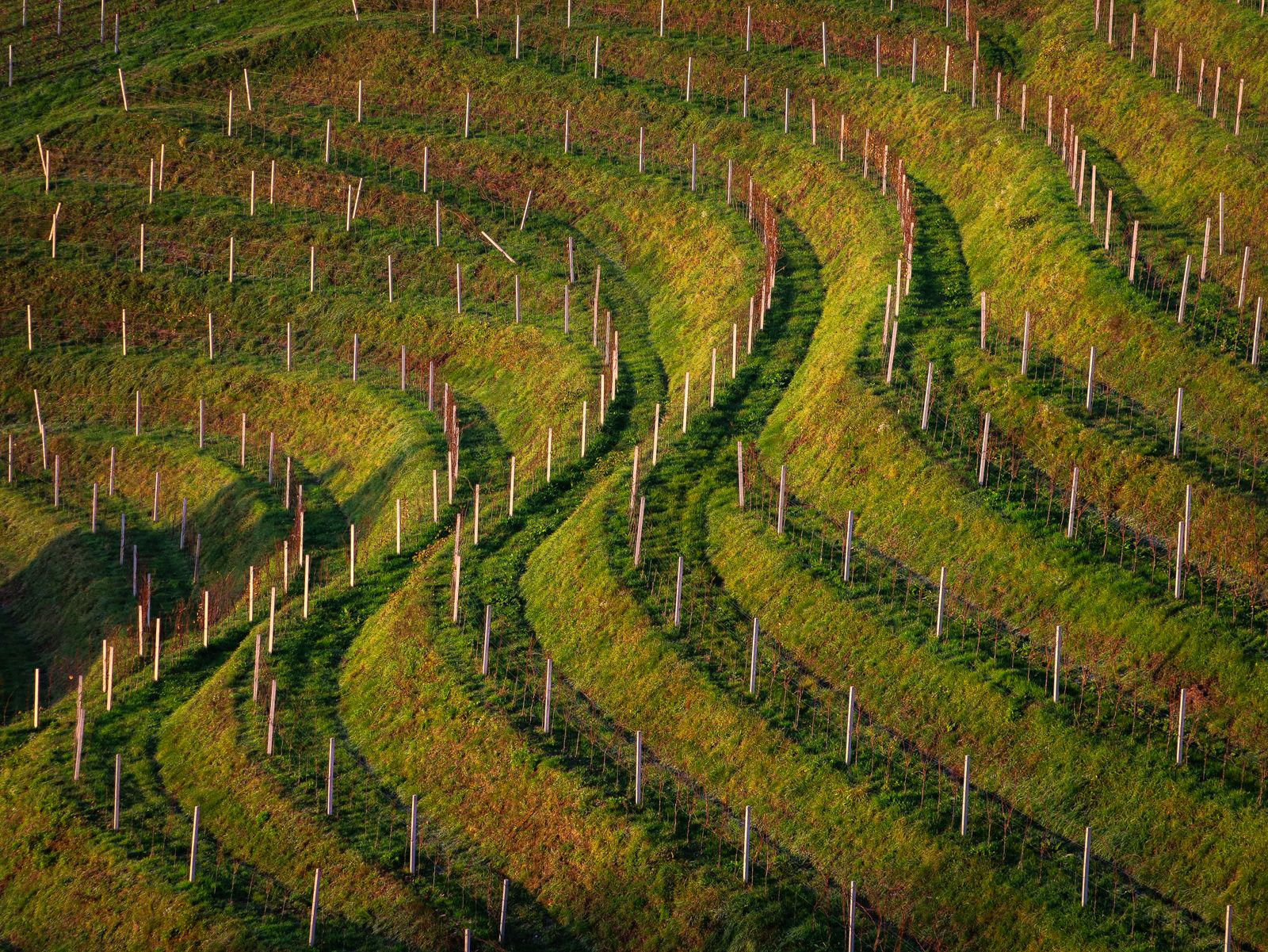
The tools were unglamorous: contour plowing that followed the shape of a hill instead of running straight up and down it, strip-cropping that alternated bands of wheat with bands of sod-forming grasses, terraces cut into slopes to slow runoff, and shelterbelts of trees planted in rows perpendicular to the prevailing wind.
The trees were a separate operation. Between 1935 and 1942 the US Forest Service ran the Prairie States Forestry Project, planting more than 220 million trees in some 33,000 windbreaks totalling over 18,000 miles, in a belt running from North Dakota to Texas. Roosevelt called it the Great Wall of Trees.
Bennett’s own agency worked through local institutions rather than mandates. USDA drafted a model state law in 1937, Roosevelt sent it to every governor, and the first soil conservation district was chartered in the Brown Creek watershed of North Carolina on 4 August 1937. Districts spread faster than anyone expected: more than 1,600 by 1946, and more than 3,000 today, roughly one per county.
Not every practice held. Shelterbelts were torn out during the 1970s grain boom, when tractors grew and farmers wanted fewer obstacles. Irrigation from the Ogallala aquifer masked erosion problems for a generation by making marginal ground artificially productive. As the aquifer draws down across western Kansas and the Texas panhandle, the underlying vulnerability comes back.
The template travelled, though. On the Loess Plateau of northern China, decades of terracing, check dams and revegetation cut the Yellow River’s sediment load by roughly 90 percent over sixty years. That was not two neat decades of work, and it was not Bennett’s programme. But it was his logic, applied to a subcontinent.
Ninety years of the same wind
In 2025, El Paso recorded more dust storms than in any year since the 1930s, following two consecutive years of record heat that stripped vegetation and dried the soil. New Mexico logged 50 dust storms the same year. One of them spawned a plume that reached the east coast and carried out over the Atlantic, the same trans-continental trajectory the March 1935 dust followed to Bennett’s hearing room.
The drought behind it is now in its third decade and is the most severe dry episode the region has seen in more than a thousand years. Work led by Victoria Todd and Timothy Shanahan of the University of Texas at Austin, published in Nature Geoscience in July 2025, found that hemispheric warming can lock North Pacific sea-surface temperatures into a pattern that suppresses winter precipitation across the Southwest. Shanahan has said water managers should plan for the possibility that current conditions are not a rough patch but the new baseline.
The health signal is already visible. Estrella Herrera, a University of California researcher who studies dust and human health, has found that hospitalisations in El Paso ran roughly five times higher after a dust event than before it. Cases of Valley Fever, a fungal infection whose spores travel on dust, rose tenfold in the United States between 1998 and 2011 and are now being diagnosed in Oregon and Washington State, well beyond the illness’s traditional southwestern range.
What has changed since 1935 is the ground cover, not the wind. Contour plowing is standard. Conservation districts write plans farm by farm in the same counties the 1935 storms crossed. The plains no longer carry a continent’s worth of freshly broken sod waiting to be lifted.
The dust that darkened the Capitol that March settled by evening on the marble steps and the tulip beds along the Mall. Groundskeepers swept some of it up the next morning. The rest washed into the Potomac with the next rain, joining the Chesapeake and, eventually, the Atlantic. Oklahoma and Texas topsoil, on the move, looking for somewhere to land.