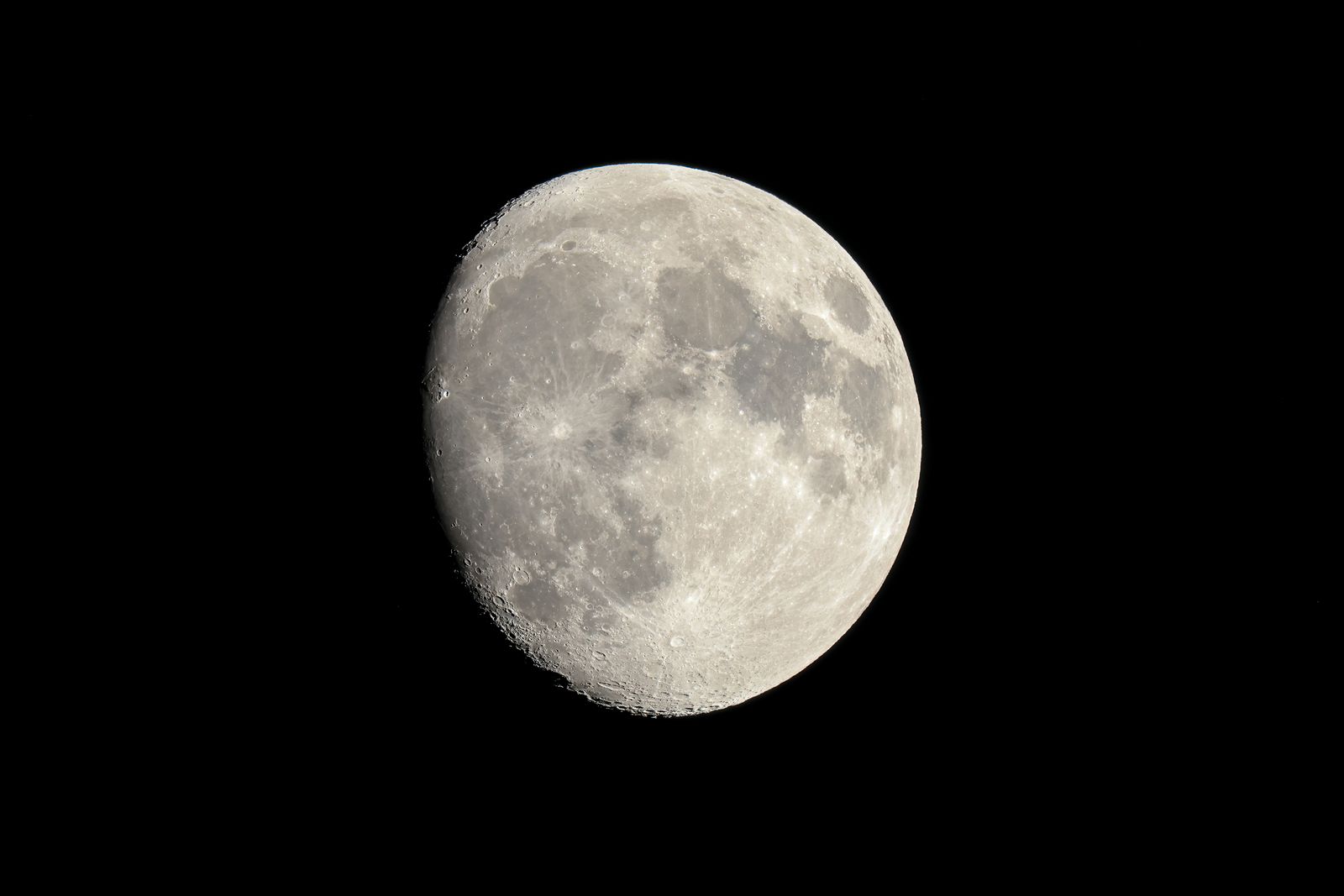
On 6 February 1971, standing in the Fra Mauro highlands at the end of Apollo 14’s second moonwalk, commander Alan Shepard produced a Wilson Staff Dyna-Power 6-iron head that had travelled to the Moon concealed with his personal gear. He attached it to the collapsible handle of a lunar sample-collection tool and, because his pressurised suit made anything resembling a normal golf swing impossible, hit two balls one-handed. Modern image analysis puts the first ball about 24 yards from the swing point and the second about 40 yards away.
It was a deliberately saved-for-last flourish. Shepard had promised NASA management that the golf equipment would stay out of sight unless the mission had gone well and the crew’s surface work was essentially finished.
A six-iron hidden inside a sock
Shepard was already the first American in space when Apollo 14 launched. He had flown the Mercury-Redstone 3 suborbital mission in 1961, then spent much of the 1960s grounded by an inner-ear disorder before surgery returned him to flight status. At 47 on the lunar surface, he became the oldest of the Apollo moonwalkers.
The golf idea is generally traced to comedian Bob Hope’s visit to the Manned Spacecraft Center in Houston in 1970. Hope was famous for carrying a golf club almost everywhere, and seeing golf used in a reduced-gravity demonstration gave Shepard a simple visual way to show television viewers what one-sixth Earth gravity could do.
For the hardware, Shepard turned to Jack Harden Sr., the head professional at River Oaks Country Club in Houston and an enthusiastic club tinkerer. Harden helped adapt a Wilson Staff Dyna-Power 6-iron head so it could be fitted to the collapsible handle of the contingency sample-return tool already assigned to the mission.
Getting it past management
Shepard did not have an immediate green light. In his 1998 NASA oral history, he remembered taking the proposal to Bob Gilruth, director of the Manned Spacecraft Center, and being rejected at first. Shepard argued that he had paid for the club head and balls himself, that they added negligible weight, and that he would use them only if nothing had gone wrong during the surface mission.
His final condition was simple: wait until the end of the second moonwalk, stand in front of the television camera, hit the balls, fold the improvised club away and climb back into the lunar module. Gilruth eventually agreed. The golf gear was concealed during the flight, but the stunt itself had conditional management approval.
The identity of the golf balls remained less clear for decades because Shepard deliberately avoided commercialising the moment. Anniversary reporting in 2021, drawing on the Harden family’s account and comments from Brandel Chamblee and golf coach Butch Harmon, identified them as range balls from River Oaks. Chamblee later joked that the Harden family therefore had a claim to private property on the Moon, but the line was a joke rather than a serious legal assertion.
The suit and the one-handed swing
The Apollo 14 pressure suit weighed roughly 180 pounds on Earth before lunar gravity reduced its effective weight. More important for Shepard’s golf swing was its stiffness. Apollo 14 used the A7L suit, which predated the waist-flexion modification introduced for the later A7LB suits. Bending deeply at the waist was severely restricted, while the pressurised joints resisted arm and torso movement.
Shepard himself explained during the television broadcast that the suit was too stiff for him to swing with two hands. He had practised one-handed in a Houston bunker before the mission, trying to learn what he could do while fully suited and gloved.
On the Moon he positioned himself near the modular equipment transporter, the two-wheeled cart Shepard and Edgar Mitchell used to haul tools and samples. He announced over the radio that the contingency sample-return handle now had a genuine six-iron attached to it, then produced the first golf ball.
Four swings, two balls and one lunar crater
NASA’s later reconstruction gives a more precise sequence than many retellings of the moment. Shepard topped the first ball on his initial attempt. His second swing moved it only two or three feet. On the third attempt he finally sent that first ball about 24 yards into a nearby crater.
He then dropped the second ball and struck it roughly 40 yards in the direction of the Apollo Lunar Surface Experiments Package site. Shepard’s famous claim that it travelled “miles and miles and miles” was always a light-hearted exaggeration. Dust sprayed across the surface during the attempts, but in the Moon’s airless environment those grains followed ballistic paths rather than being suspended by air.
Mitchell then staged his own small sporting demonstration, throwing the staff from the Solar Wind Collector experiment like a javelin. NASA’s reconstruction places it in the same crater as Shepard’s first golf ball.
For decades, estimates of Shepard’s better shot floated around 200 yards. In 2021, British imaging specialist Andy Saunders revisited the surviving imagery, digitally enhancing and stacking frames from the mission. The BBC’s account of Saunders’ analysis reported a much shorter result: roughly 24 yards for the first ball and 40 yards for the second.
What a conventional swing could have done
The physics remain more spectacular than Shepard’s actual shots. Lunar gravity is about one-sixth of Earth’s, and the Moon has essentially no atmosphere. A golf ball therefore experiences no aerodynamic drag or lift once launched, while weaker gravity pulls it back toward the surface much more slowly.
For the 50th anniversary, former PGA champion Jimmy Walker supplied launch conditions for an illustrative modelling exercise involving the USGA and Saunders. Using the speed and launch angle of a conventional terrestrial 6-iron swing, the calculation produced a carry of roughly 4,600 yards, a little over two and a half miles, with more than a minute of flight time.
That was not a reconstruction of what Shepard himself could have achieved. Walker’s figures assumed an unrestricted golfer making a conventional swing. Shepard had one arm, a stiff pressure suit, thick gloves and a sample-tool handle serving as a shaft. His 40-yard second ball was less than one percent of that theoretical comparison.
Where the club is now
The original modified golf club is held by the USGA Museum in New Jersey. Shepard donated it in 1974, after which NASA raised the awkward point that the hardware was technically government property. A replica was subsequently commissioned for the Smithsonian’s National Air and Space Museum collection.
The replica should not be confused with the original, and it should not be described as hanging in the Washington museum today. The Smithsonian currently lists its Apollo 14 golf-club replica as part of the collection rather than as an object on public display.
Shepard’s own oral history says that after the shots he folded the makeshift club, put it in his pocket and climbed back into Antares. The surviving evidence does not establish the later fate of the original sample-tool handle clearly enough to say that it was left in the descent stage or discarded on the surface.
A crew, a mission and a programme still proving itself
Apollo 14 flew just over four years after the Apollo 1 fire killed Gus Grissom, Ed White and Roger Chaffee during a ground test. The disaster forced major changes throughout the Apollo spacecraft. Among them was an outward-opening command-module hatch designed to make escape faster.
NASA also changed the cabin atmosphere used during prelaunch operations. Instead of the pure-oxygen environment present during the fatal Apollo 1 test, later Apollo spacecraft used an oxygen-nitrogen mixture during the countdown before transitioning toward pure oxygen at lower pressure during launch and flight. Those changes, along with extensive fireproofing and procedural revisions, became part of the Apollo hardware and operating system inherited by Apollo 14.
Apollo 14 also followed Apollo 13’s aborted lunar landing, giving the mission an obvious burden of reassurance. Shepard, Mitchell and command module pilot Stuart Roosa returned safely on 9 February 1971 after Shepard and Mitchell collected about 42 kilograms of lunar rock and soil from Fra Mauro, the region Apollo 13 had originally been intended to explore.
Against that scientific and historical background, two golf balls were an almost weightless addition to the mission. They endured because they translated an unfamiliar environment into something television viewers immediately understood: take an ordinary object, put it under lunar gravity, and see what changes.
Why the stunt endured
Jack Nicklaus later described Shepard’s decision to carry golf to the Moon as something unique for the game. Butch Harmon, whose connection to the story came through the Harden family, also helped keep the tale alive during the 50th-anniversary coverage. The appeal was never really the quality of the golf shot. It was the absurdity and clarity of the setting.
Saunders’ imaging work eventually made the story more concrete by identifying the balls and measuring their positions against known features at the landing site. Astronomy Magazine described how the archival imagery was compared with Lunar Reconnaissance Orbiter data to establish the scale of Shepard’s second shot.
The first ball rests in a nearby crater. The second lies about 40 yards from the swing point in the direction of the ALSEP site. Both remain on the lunar surface, without terrestrial weather to roll them into a bunker, wash them into a drain or send a groundskeeper looking for them.
Shepard died in July 1998, five months after recording the NASA oral history in which he looked back on the stunt as exactly what he had intended it to be: a bit of fun after the serious work was done. The original six-iron is preserved in New Jersey, a replica sits in the Smithsonian collection, and two River Oaks range balls remain at Fra Mauro more than half a century after the only lunar round of golf ever attempted.