Saudi Arabia is probably more anxious about the war in Iraq and its consequences than any other nation in the region. The Saudi royal family feels particularly threatened by fears that a bloody conflict between Shiites and Sunnis will spill over into Saudi Arabia. Riyadh was extremely disappointed when Israel did not break the back of Hezbollah in the Lebanon war and thereby weaken Iran's regional influence.
The Saudis suffer constant terrorist threats, but al-Qaida enjoys wide public support, even as the government sees no prospect of anything changing to alleviate the tight situation it finds itself in anytime soon.
Exporting Wahabism to scores of Arab and Muslim countries is seen by Riyadh as an insurance policy offering some protection, but the government also knows that in itself will not prevent the gathering storm from becoming a hurricane that could engulf the kingdom. Saudi Arabia can do great deal more to stabilize the intra-Arab relations not only for its own sake but for the sake of regional stability.
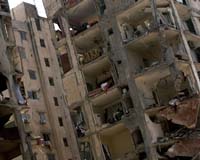
As for Lebanon, the wide-spread destruction there in the wake of the war between Hezbollah and Israel has awakened the Lebanese to the bitter consequences of allowing Hezbollah to operate as a state within their state. The Lebanese now openly criticize Hezbollah for acting on behalf of Iran at an extreme cost to their own country. Outraged because of the destruction they have sustained, they also feel terribly vulnerable to future developments over which they have no control.
The Lebanese economy suffered substantial losses, and meeting the cost of reconstruction, in billion of dollars, seems impossible. Moreover, that there is a growing Shiite community in Lebanon does not bode well for the Christian population. Lebanese Christians feel increasingly marginalized, and this adds to the omnipresent sectarian tension that is bound to explode. Unless the Lebanese government disarm Hezbollah in one form or another and eventually seek peace with Israel, the immediate past war will not be the last.
Syria also finds itself in a difficult position: it wants to be engaged in regional matters but was shunned by the United States and Israel and so has become dismissive of Western efforts to promote regional peace. The troubles caused by Syria's weak economy, rusting military hardware, and growing public restiveness have been aggravated by the Bush administration's desire for a regime change in Damascus.
Damascus may have played with fire by supporting Hezbollah, but as long as Syria's special interest in Lebanon and its desire to regain the Golan Heights are not addressed — and the government remains under the cloud of regime change — the present leadership feels it is rightfully protecting the country's national interests. This, of course, may include supporting unsavory groups that will do whatever it takes on Damascus' behalf to keep the Syrian agenda alive. Syria, along with Israel and the United States must admit that their policies toward each other have failed and must now fashion a new policy that can end once-and-for-all the Israeli-Syrian conflict and prevent another senseless war.
Squeezed in between the two most troubled areas in the region, Iraq to the east and the Palestinian territories and Israel to the west causes tremendous anxiety throughout Jordan. Thanks to Jordan's King Abdullah's diplomatic skills in maintaining good relations with his Arab neighbors, his adherence to the peace treaty with Israel and his close relations with the United States that kept Jordan economically afloat and politically stable. But the King's diplomatic skills may not be enough in the future. The raging civil war in Iraq which could spill over into Jordan, the growing strength of the Muslim Brotherhood and the continuing violent conflict between Israel and the Palestinians, (65 percent of the Jordanian population is of Palestinian origin), could change the picture dramatically overnight. Unless the Israeli-Palestinian conflict is settled and Iraq becomes governable again, Jordan will remain on a shaky ground and a prey for Islamic militancy.