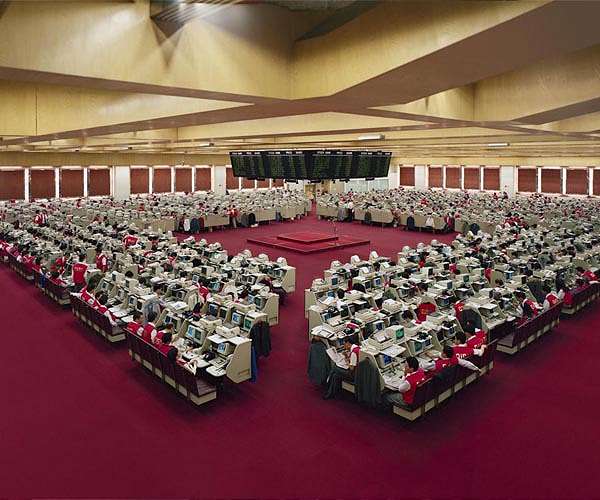
Asian markets rose Tuesday as investors brushed off a reverse on Wall Street and focused on signs of slowing inflation and China's moves to shore up its economy.
A largely positive meeting between US President Joe Biden and Chinese counterpart Xi Jinping indicated an easing of tensions between the powers and added to the upbeat mood on trading floors.
Still, there remains a lot of trepidation that central bank interest rate hikes aimed at taming inflation will eventually send economies into a recession.
And since Thursday's forecast-beating consumer prices data, Federal Reserve officials have warned there were more increases in the pipeline, though they are not expected to be as big as the previous four rises, of 75 basis points.
The latest was vice chair Lael Brainard, who said that while it would probably be right to slow down the rate hikes, "we have additional work to do both on raising rates and sustaining restraint to bring inflation down".
The comments, along with profit-taking, helped push Wall Street's three main indexes into the red and pushed the dollar up against its peers, having tumbled last week.
Stephen Innes at SPI Asset Management said: "With US growth yet to fall off a cliff, make no mistake, inflation is still at the fulcrum of market expectations as board members continue to push back a bit on market pricing."
However, Asian traders were a little more upbeat, cheered by China's move to ease some of its strict Covid-19 restrictions and provide much-needed support to its beleaguered property sector.
Hong Kong rose more than four percent and Shanghai also closed in positive territory.
Tokyo, Singapore, Seoul, Manila, Mumbai, Taipei, Jakarta, Bangkok and Wellington also gained, but Sydney dipped.
Paris and Frankfurt rose at the open though London was slightly down.
Optimism for a thawing in relations between Washington and Beijing was boosted after Biden and Xi's extended talks on the sidelines of the G20 summit in Indonesia.
While there remain differences on hot-potato issues such as Taiwan, the two did find common ground on the Ukraine conflict, climate and the need to avoid another Cold War.
After the talks, Chinese Foreign Minister Wang Yi described it as a "new starting point", adding that Beijing hoped "to stop the tumbling of bilateral ties and to stabilise the relationship".
After a painful year for markets across the planet, dealers are hopeful that there is finally light at the end of the tunnel.
"It's certainly a time to be thinking about a recovery regime unfolding for markets," said Kristina Hooper of Invesco.
"But it's going to take a little time before we know if this really is something of a turning point for inflation and the Fed can be a lot more comfortable about hastening the end of tightening," she told Bloomberg Radio.
China October retail sales, industrial output miss expectations
Beijing (AFP) Nov 15, 2022 –
China on Tuesday reported slower-than-expected growth in factory output and retail sales for October, as a surge in Covid cases and a deepening property slump weighs on the economy.
China is the only major economy persisting with a zero-Covid strategy to stamp out virus clusters as they emerge, but swift and harsh lockdowns associated with that approach have battered growth.
October retail sales were down 0.5 percent from a year earlier, contracting for the first time since May, according to data released by the National Bureau of Statistics (NBS).
The figure was below a 0.7 percent increase expected by Bloomberg analysts and September's 2.5 percent expansion.
Industrial output grew 5.0 percent, less than the 5.3 percent growth forecast and well below the 6.3 gain in September.
"In the face of multiple challenges such as a more complex and severe international environment and new domestic (Covid) outbreaks… (officials are) stepping up efforts to implement various measures to stabilise the economy," the NBS said in a statement.
China's banking regulator on Friday unveiled sweeping measures to rescue the country's struggling property sector with credit support for debt-laden housing developers, and financial help to ensure the completion and handover of projects.
That came on the same day the National Health Commission issued 20 rules for "optimising" China's zero-Covid policy, where certain restrictions were relaxed to limit its social and economic impact.
Fixed-asset investment rose 5.8 percent in January-October as the government poured billions of dollars into building new railways and industrial parks, NBS data showed.
The unemployment rate remained stable at 5.5 percent.
Many analysts expect the world's second-largest economy to struggle to reach its growth target this year of around 5.5 percent, with the International Monetary Fund lowering its forecast for GDP expansion to 3.2 percent.