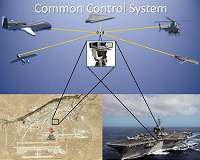
The Unmanned Carrier Mission Control System, or UMCS, reached its first phase of testing on April 11. The program evaluated its software, communications, and advance electro-optical camera.
The project is designed to be used in drone operations for reconnaissance and refueling operations for future systems. According to the Naval Air Systems Command, the testing was conducted primarily to determine how well the system software and hardware linked up with carrier-based networks.
The system is an upgraded and adapted version of what is used on the Navy's new Zumwalt-class destroyer. It includes various versions of the Navy Sea Systems Command's Common Display System and the Common Control System.
The UMCS is designed to allow easy integration with a variety of unmanned systems using different kinds of programming and control systems.
Capt. Beau Duarte, who manages the PM-268 program, which includes the systems, said the ability to easily integrate a wide range of different programming into a single system would greatly simplify using unmanned aircraft in operations.
"We have the ability to really drive interoperability and… we have had the opportunity to leverage many existing technologies and capabilities from other Navy platforms and integrate them into this program," Duarte told Defense Systems.
The final goal will be to allow unmanned drones to refuel Navy strike fighters reliably from aircraft carriers, in addition to the standard roles of reconnaissance, attack missions and electronic-warfare missions.
Lockheed flies long-range endurance test flights of Fury unmanned aircraft
Lockheed Martin is flying long-range endurance missions with its Fury unmanned aerial system as it prepares for low-rate production of the vehicle.
Fury is a tactical Group 3 UAS with an endurance of more than 12 hours and a 100-pound payload of surveillance sensors and communications systems.
"These flight tests have consistently proven that Fury is a true 'anytime, anywhere' ta … read more