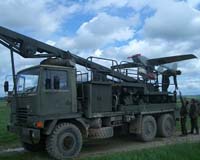
Responding to the rapid growth in demand for training in the area of unmanned aerial systems, QinetiQ's Empire Test Pilots' School (ETPS), based at the MOD Boscombe Down site, has completed its first 'Introduction to Unmanned Aerial Systems Trials and Evaluation' short course.
The course, just one of an expanding number of short test and evaluation training courses now being offered by ETPS, was attended and successfully completed by 14 delegates from the UK Armed Forces and civilian personnel from QinetiQ.
Delegates gained a detailed insight into the philosophies and methods which should be applied when evaluating these innovative unmanned aerial systems. Part of the course involved them applying the techniques learned in classroom sessions during a simulated flight trial with an Observer Unmanned Aerial Vehicle (UAV). They also witnessed a live demonstration of a British Army UAV being flown in an operational scenario.
These 'hands on' opportunities are unique to the ETPS course and allow delegates to practice the assessment of launch and recovery systems, vehicle flight characteristics and onboard surveillance payloads during live UAV flights.
Wing Commander Mike Humphreys RAF from the Air Warfare Centre at RAF Waddington attended the course and commented: "Unmanned aircraft systems are one of the fastest growing capabilities in our military inventory. Understanding the special issues surrounding their test and evaluation is becoming a critical requirement. This course provided an excellent grounding in the unique aspects of their test and evaluation."
The course was developed over the past year in response to the rapid growth in demand for such training. This has been created by the large number of UAVs in development and the need for armed services and other organisations to evaluate the effectiveness and suitability of the systems for the roles in which they will be employed.
ETPS was founded in the UK in 1943 and its first graduates tested the many new aircraft going into Royal Navy and Royal Air Force service. Today the world class standard set by the school attracts students from around the world.