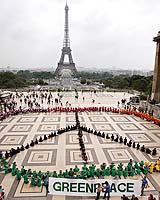
About 500 Greenpeace supporters demonstrated in Paris Sunday, forming a human multicoloured peace symbol to mark the 20th anniversary of the sinking of their ship, the Rainbow Warrior, in New Zealand.
On July 10, 1985, two explosions on the Rainbow Warrior rocked Auckland's Waitemata Harbour, killing photographer Fernando Pereira. The bombs were planted by French agents, in response to Greenpeace's protests against the French nuclear testing programme in the Pacific.
French President Francois Mitterand gave the go-ahead for the attack, Le Monde newspaper in France reported Saturday, quoting from a document written by then secret service (DGSE) chief Admiral Pierre Lacoste.
The demonstrators, wearing the rainbow colours of the organisation, had come from about 15 countries and sat or knelt in silence on the esplanade of the Trocadero, across the river Seine from the Eiffel Tower, to form the symbol and mark the event.
"We want to send a message of hope and an appeal for peace," Yannick Jadot, campaigns director for Greenpeace France, said.
He called on "international leaders immediately to stop wasting astronomical sums on developing their atomic bombs" and devote instead "their resources to an action programme to promote peace, combat climate change, preserve forests and save the oceans."
In New Zealand members of the original crew gathered to pay tribute to their colleague who died in the explosions and to appeal for world peace.
The original skipper Pete Willcox dived 25 metres to where the wreck of the boat now lies and placed a memorial sculpture on the bridge, while above Pereira's daughter Marelle cast flowers into the water.
In Paris a ship's bell tolled twice, at the moment the two mines placed in the boat exploded.
Demonstrators then transformed their peace symbol into a rainbow, displaying a banner proclaiming: "You can't sink a rainbow".