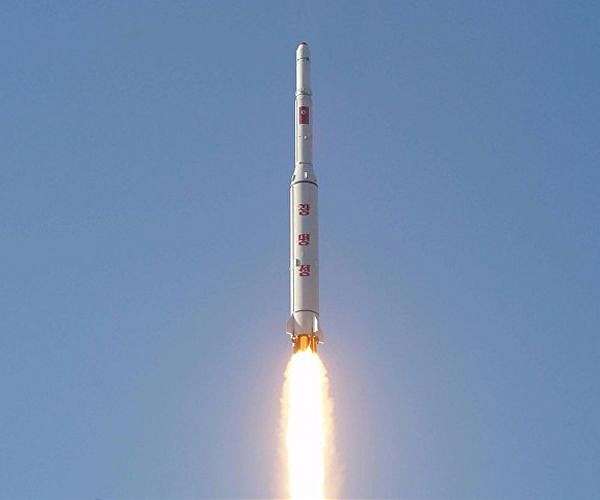
It's been more than four and a half years since North Korea last tried to launch a satellite. The last flight took place in February 2016, placing a real but inoperative payload into orbit. In the intervening years, spaceflight has still featured in North Korean media statements, and North Korea's main spaceport has undergone an upgrade. Statements suggested that North Korea planned larger rockets and geostationary satellites. The world was poised for another launch from this secretive state.
At times, especially in early 2019, speculation of an impending launch circulated in boffin circles. This was fueled by suspected launch preparations observed by satellite as well as hints from North Korea's news agency. But nothing has happened in a long while. North Korea's achievements in spaceflight have always been modest.
Their space program has only managed to place two satellites into low orbit, and neither of them transmitted anything. The principal achievement of their program is probably the fact that North Korea managed to beat South Korea in the race to launch a satellite from their own territory.
The suspension of launches in recent times can be partially explained through politics. North Korea has been engaged in highly publicized diplomacy with the USA, including summits with US President Donald Trump. There is also ongoing dialogue with South Korea and other nations. North Korean satellite launches have always provoked a hostile response from the international community, much like the testing of nuclear weapons and ballistic missiles. Placing such launches on hold could be a strategic move, designed to avoid derailing this wave of diplomacy.
There could also be technical reasons. The underperformance of North Korea's satellites and satellite launch vehicles is a matter of record, despite the nation's official propaganda. A continuation of the program could lead to further flops, producing no real achievements to impress a local or international audience. No practical benefits such as communications or Earth observation can be derived from satellites that can't even send telemetry. North Korea's space program also consumes resources that could otherwise be channeled into other areas of the economy.
Deciphering the mechanics of North Korea's political system has always been difficult for outside observers, but evidence suggests that changes are sweeping through the higher levels of power. Official statements, coupled with analysis by political scientists, suggest that North Korean leader Kim Jong-Un is devolving power to other individuals and entities, including his sister.
An adjustment of the political anatomy of the nation is certain to produce policy changes. With North Korea experiencing a rash of problems ranging from economic troubles to the COVID-19 pandemic, it seems likely that underperforming projects could be cut. The satellite launch program would seem to be an obvious target. Making changes is also a strategy for a new leader to demonstrate power.
The whole subject of North Korean satellite launches seems to have been generally defunct for more than a year, with little discussion in analytical circles. That's a curious indicator in its own right. It's as if everyone has given up on expecting a launch, and has even lost focus on the subject. Fair enough. There are plenty of other clear and present issues to consider, for both North Korea watchers and space enthusiasts. But after so much silence for so long, it's worth returning to the issue for at least some consideration.
It's possible that the program has been placed in mothballs, with hopes of a reawakening at some point in the future. But such plans have their perils. Equipment, infrastructure and talent all suffer from degradation with time. Resurrecting the program could be difficult if too much decay has set in. If there is no activity in the near future, the program could be forced to essentially start afresh.
Determining activities inside North Korea has always been difficult for external observers, and the current turbulence makes analysis even more difficult than in previous times. But it seems highly probable that North Korea will not stage any satellite launches in the near future, and probably not for the next few years.