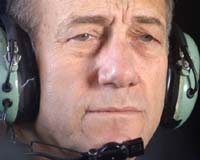
Israeli Prime Minister Ehud Olmert on Monday ruled out any resumption of peace talks with Syria as long as Damascus supported "terrorism," but said negotiations were possible with Lebanon. "As long as Syria continues to support terrorism, there is no basis for negotiations," Olmert said in reference to talks that have been stalled for more than six years.
"Before we negotiate with Syria, they should stop financing terror, before we negotiate with Bashar al-Assad he should stop launching missiles by means of Hezbollah onto the heads of innocent Israelis," he said.
"And… let them stop funding Hamas murder, sabotage and terror," he said. "If they meet all these tests we shall negotiate with them. I am not against negotiation."
The premier spoke one day after Israel announced that Foreign Minister Tzipi Livni had set up a ministerial working group on Syria, seen in the local media as a first step towards the possible renewal of peace talks.
The regime in Damascus has been repeatedly accused by Israel and Washington of sponsoring "terrorism" and of supplying arms to the Lebanese Shiite militia Hezbollah, which launched nearly 4,000 salvos into Israel during the month-long war.
The Jewish state failed to destroy Hezbollah during the offensive and a fragile UN-brokered truce in the conflict entered its second week on Monday.
"We should not forget that thousands of rockets," fired by Hezbollah at Israel during the month-long Lebanon offensive "came from Syria," Olmert said.
At the same time, Olmert did not rule out peace talks with Lebanon, from which Syria withdrew all its troops in 2005 after a decades-long presence.
"If the Lebanese government continues this way and if Prime Minister Siniora continues with his efforts to bring about change in Lebanon, I have no doubt that negotiations" with Beirut will lead to formal relations between Israel and Lebanon, he said.
The statement echoed one issued by Siniora the previous day.
"I believe that if Israel uses all its senses and thinks wisely, I think it will be the opportunity," Siniora told reporters.
"The opportunity is how to convert what happened in Lebanon — the calamity that was inflicted on Lebanon — to make it an opportunity to move toward real peace," Siniora told reporters.
Israel has not had diplomatic relations with either Syria or Lebanon since the founding of the Jewish state in 1948.
The last round of peace talks between Israel and Syria stalled in January 2000, when both sides failed to reach agreement on territory.
Damascus has repeatedly demanded the return of the Golan Heights, the strategic plateau which Israel conquered in the 1967 Middle East war and annexed in 1981.
Earlier Monday, Deputy Prime Minister Shimon Peres also ruled out resuming talks with Damascus.
"We have already had five attempts to talk to Syria and we have even gone a long way in our proposals for the Golan Heights, but all in vain," the veteran statesman and Nobel peace laureate told Israeli public radio.
In contradictory remarks, however, Public Security Minister Avi Dichter told army radio that Israel could withdraw from the disputed Golan Heights in exchange for full peace with Syria.
"Israel can withdraw from the Golan plateau in exchange for a true peace with Syria," he told army radio.
"We have paid similar territorial prices for peace with Jordan and Egypt," he said.
There was no official reaction on Monday from Syrian officials Monday.
Analysts say that the war in Lebanon has been advantageous to Syria, which is accused by Israel of arming Hezbollah, a charge Damascus denies.
yad/jz