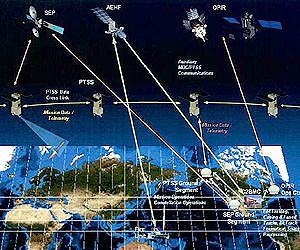
Lockheed Martin is leveraging its satellite and missile defense expertise on the Manufacturing and Production Readiness Integrated Systems Engineering Team for the Precision Tracking Space System (PTSS).
PTSS will provide the U.S. Missile Defense Agency (MDA) with a space-based system for post-boost tracking of ballistic missile threats in a global infrastructure.
Johns Hopkins University Applied Physics Laboratory awarded Lockheed Martin Space Systems a contract in February for $1.2 million covering a 24-month period of performance.
Lockheed Martin participated in the PTSS system requirements review, which was completed in March. Johns Hopkins University Applied Physics Laboratory is leading the Manufacturing and Production Readiness Integrated Systems Engineering Team, which is comprised of government, national laboratories and industry participants.
"Lockheed Martin has extensive experience in advanced sensors, satellite surveillance systems, and missile defense systems, which is ideally suited to help address this critical fire control sensor capability for the Ballistic Missile Defense System," said Doug Graham, vice president of advanced programs, Strategic and Missile Defense Systems, Lockheed Martin Space Systems Company.
"We are partnering with the Missile Defense Agency and Johns Hopkins Applied Physics Lab to provide the best integrated satellite solution for the agency's network of sensors and weapon systems."
Following the current prototype phase, the MDA has announced that it plans to competitively select one contractor for system development and production of an operational PTSS, consisting of nine to 12 spacecraft with associated ground control and processing equipment.