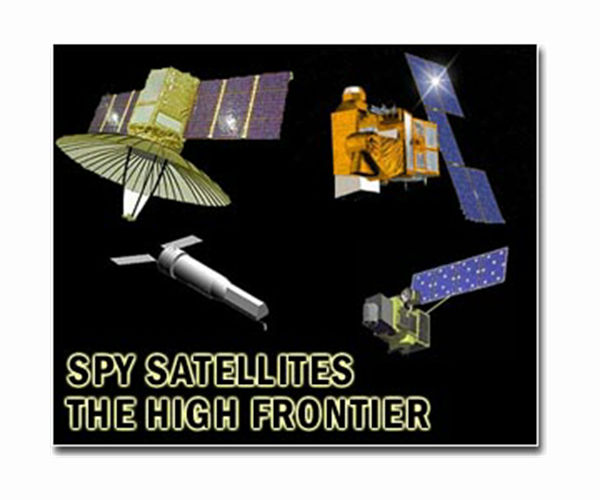
The growing speed and complexity of nuclear weapons have forced defense planners to look up – literally. Traditional radar systems work well, but have one big limitation: they live on Earth. By the time they see a missile, it may already be close. That's why the U.S. is building a new kind of watchtower in the sky.
These aren't science fiction satellites. They're real, and they're part of a new orbital system that keeps an eye out for nuclear missile launches from space. The goal is simple: see faster, warn earlier, and stop threats before they become disasters.
This shift in strategy also demands smarter research. Military labs and partner institutions are running performance reports, and in some cases, opting to use services typically associated with requests like write my research paper to compile internal studies and grant briefs. Good documentation isn't a bonus – it's essential. Trust starts with clarity.
Why Space-Based Warning Systems Are Needed
Nuclear weapons today are different from the ones used in tests decades ago. They are faster, more agile, and sometimes stealthier. The need to catch them early is critical.
What Makes the Threat Worse
+ Hypersonic missiles travel faster than five times the speed of sound and can change direction mid-flight.
+ Low-flying cruise missiles can avoid radar by staying under detection layers.
+ Submarine-launched systems can appear close to the coast with little warning.
Earth-based radar and sonar still matter. But space-based sensors fill the biggest gap: time. They spot heat, track trajectories, and follow threats from their first moments.
Why Orbit Is a Better Vantage Point
+ Global Coverage: A satellite network can monitor every region 24/7.
+ Altitude Advantage: Looking down provides clearer tracking and faster alerts.
+ Constant Movement: Multiple satellites in orbit mean overlapping views and no blind spots.
This doesn't make space a battlefield – it makes it a shield.
How the Technology Works
At the heart of this system are infrared sensors. When a missile launches, it creates a huge amount of heat.
Space-based infrared sensors catch that heat bloom quickly.
Satellites then send the data to ground centers. There, military analysts and AI programs work together to confirm the threat and map out responses. This all happens in seconds.
Newer systems are combining this with:
+ Optical sensors for visual confirmation
+ Radio-frequency tracking to monitor command links
+ Laser communication to connect satellites instantly
A key component is survivability. These satellites are built to survive debris hits, jamming, and even radiation surges from solar flares. They're also made smaller and cheaper so that more can be launched quickly if needed.
Real Programs Already in Motion
This isn't theory. The U.S. Space Development Agency (SDA) has already launched early satellites for its Tracking Layer. This layer will form a global web of sensors designed to detect and follow missile threats.
The Space Force launched a second-generation early warning satellite equipped with advanced onboard AI and real-time ground link capabilities.
These satellites form the future of what some call "missile birthwatch." It's not enough to track. The job is to alert, and do it before the warhead is halfway here.
Strategic Impacts and Defense Policy
Early warning gives time for multiple layers of defense to engage. That includes:
+ Ground-based interceptors in Alaska and California
+ Sea-based Aegis systems with SM-3 and SM-6 interceptors
+ Airborne alert systems that reposition defenses
The faster the warning, the more intercept chances a missile faces. That increases the odds of a successful block and reduces the threat of nuclear fallout or retaliation.
But this also opens new debates. If the U.S. can track and potentially stop a launch from anywhere, does it invite an arms race? Could others see it as a reason to build even more unpredictable weapons?
The Global Response
Allies like Japan and Australia have shown interest in similar programs. NATO is also exploring shared satellite tracking for nuclear and hypersonic threats.
Meanwhile, adversaries are developing their own space sensors. China has launched experimental tracking satellites. Russia continues to invest in orbital jamming and anti-satellite tech.
That's why clarity, trust, and open lines matter. The right technology helps prevent war – but the wrong assumptions can start one.
What's Next for Satellite-Based Early Warning
Over the next five years, we can expect:
+ Dozens of new satellites launched each year
+ More public-private collaborations on sensor design
+ Quicker data relay between satellites and Earth
More military branches will also train operators to work with space data. This is not just a Space Force mission – it will soon involve the Army, Navy, and Air Force too.
Final Thoughts
In the 1980s, missile detection was slow. A radar would beep, and people would hope it wasn't an error. In 2025, space-based systems change that. They watch, confirm, and respond in real time.
Nuclear weapons haven't gone away. But with smarter systems and faster warning, their danger can be managed. Orbit isn't just a frontier anymore. It's a firewall. And one day, it could be the thing that prevents a war from starting at all.