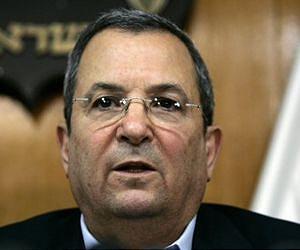
Israel's defence minister said existing sanctions against Iran are unlikely to make it give up what Israel and much of the international community believe is a covert nuclear arms programme.
Speaking late Thursday, Ehud Barak acknowledged that current sanctions on Iranian trade and banking are tougher than ever, and that a new round of talks is due on May 23 between Tehran and international powers.
"But the truth must be told. The chances that under this level of pressure Iran will meet international demands to irreversibly stop its (nuclear) programme seem slim," the minister told an event marking Israel's independence day, according to a statement from his office.
The UN Security Council has slapped four rounds of sanctions on Tehran over suspicions harboured by Israel and the United States, among others, that Iran seeks to develop nuclear weapons — a charge Tehran denies.
Still harsher measures are to go into force in June, which call on countries to "significantly reduce" oil imports from Iran or face being frozen out of the US financial system.
Barak said a nuclear-armed Iran would set off "a regional nuclear arms race, which Saudi Arabia, Turkey and even the new Egypt would have to join, and the countdown to leaks of know-how and technology to terror groups would begin."
His remarks took a different tone to those voiced a day earlier by the head of Israel's armed forces, who told Haaretz newspaper Iran was approaching the point at which it would be able to decide on whether to build a bomb, but that Supreme leader Ayatollah Ali Khamenei had not yet made that decision.
"In my opinion, he would be making a huge mistake if he does so, and I don't think he will want to go the extra mile," Lieutenant General Benny Gantz said of Khamenei.
"I think the Iranian leadership is composed of very rational people," he said, indicating the international regime of hard-hitting sanctions was "starting to bear fruit."
US Secretary of Defence Leon Panetta said Thursday that he hoped Gantz was right.
"I would hope he's correct and he knows something more that I do," said Panetta.
"I do not have any specific information that indicates (the Iranians) have made any decision one way or another" on whether to build a nuclear weapon.
"I would like to hope… that because of the leadership of the United States, the international community and the leadership of Israel, they can make the right decision," he added.