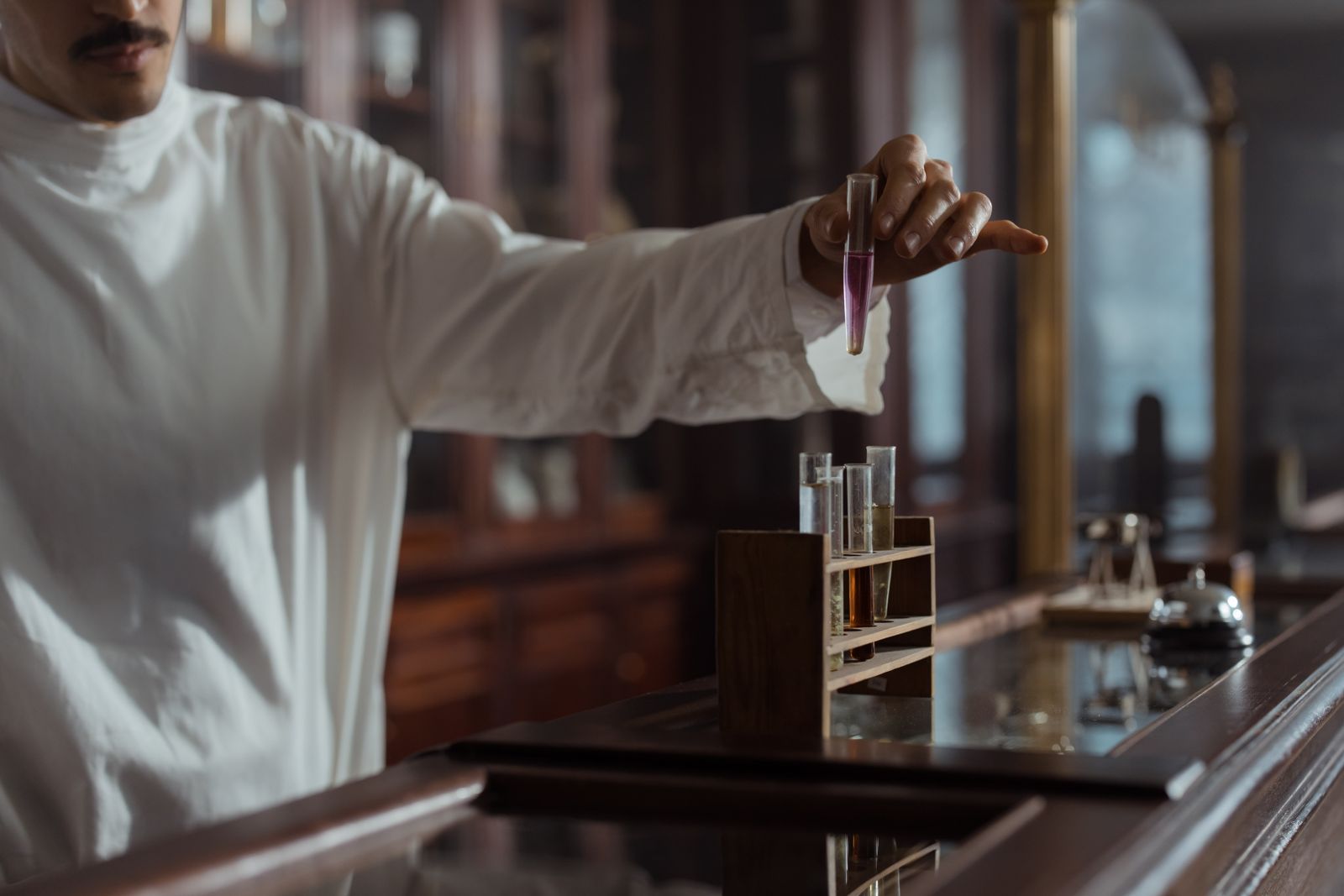
In the winter of 1868 into 1869, a young Swiss chemist named Friedrich Miescher walked each morning to a surgical clinic near the medieval castle of Hohentübingen in southwestern Germany, collected buckets of used bandages caked with the yellow discharge of infected wounds, and carried them back to a converted castle kitchen where he rinsed the pus into salt solutions to strip out its cells. From that unglamorous slurry he pulled a phosphorus-rich substance he called nuclein, which sat inside the nucleus of every white blood cell and behaved chemically like nothing anyone had catalogued before. It was DNA. Almost no one who read his 1871 paper understood that yet, and the recognition would take decades to arrive.
Miescher’s name is largely absent from the popular story of genetics. The double helix belongs to Watson, Crick, Franklin, Wilkins. The transforming principle belongs to Avery. The pus and the bandages belong to a man who died believing he had failed.

A hearing loss that redirected a career
Miescher was born in Basel into a family of physicians and anatomists. He intended to practise medicine like his father, but a childhood illness left him partially deaf, and by his own account he could not reliably hear a patient’s chest or a colleague’s whisper in a crowded ward. According to a biographical essay in The Conversation by the authors of a forthcoming Miescher biography, the impairment pushed him toward the bench rather than the bedside.
He arrived at the University of Tübingen to work under the biochemist Felix Hoppe-Seyler, whose laboratory occupied the old kitchens of the town’s hilltop castle. The set-up was closer to an alchemist’s workshop than a modern lab. Beakers stood where cooking pots had stood. The distilling equipment looked medieval. And the questions being asked there were the largest questions in nineteenth-century biology: what, chemically, is a cell made of?
Why pus
To answer that, Miescher needed cells he could get in bulk and take apart without them falling to pieces first. Muscle and liver tissue were too structurally complex. Blood was accessible but red cells lacked nuclei in mammals. Pus, drained from surgical wounds, was almost entirely white blood cells suspended in fluid — leukocytes with intact nuclei, delivered daily by the local clinic in the form of soiled dressings.
He collected the bandages, rinsed them in dilute sodium sulfate to lift the cells free of the cotton, and let the cells settle. Then he began peeling those cells apart. He used dilute hydrochloric acid to strip away the cytoplasm and pepsin from pig stomachs to digest away the proteins. What remained, stubbornly, was a grey precipitate that came only from the nucleus.
That precipitate did not behave like protein. It was acidic. It contained no sulfur. And when Miescher ran an elemental analysis, it came back extraordinarily rich in phosphorus — a signature no known cellular protein carried in that proportion. He named the substance nuclein, after the part of the cell it came from, and the root of that word survives inside the modern term deoxyribonucleic acid.
The 1871 paper nobody read as a landmark
Miescher wrote up the work and submitted it to Hoppe-Seyler’s journal in 1869. Hoppe-Seyler, cautious, sat on it for two years while he repeated the experiments himself. The paper finally appeared in 1871. It was dense, chemical, technical, and did not read like a manifesto.
Miescher already suspected the substance mattered. Cell biologists of his generation, working from the cellular framework Robert Hooke had first sketched in the seventeenth century, were beginning to argue that the nucleus governed cell division and inheritance. Miescher wrote that nuclein must play some part in those processes. But he stopped short of the leap that later generations would make.
Salmon on the Rhine
When Miescher moved back to Basel to take up a professorship, he needed a new source of nuclein. Pus was hard to scale. Salmon testes turned out to be almost perfect.
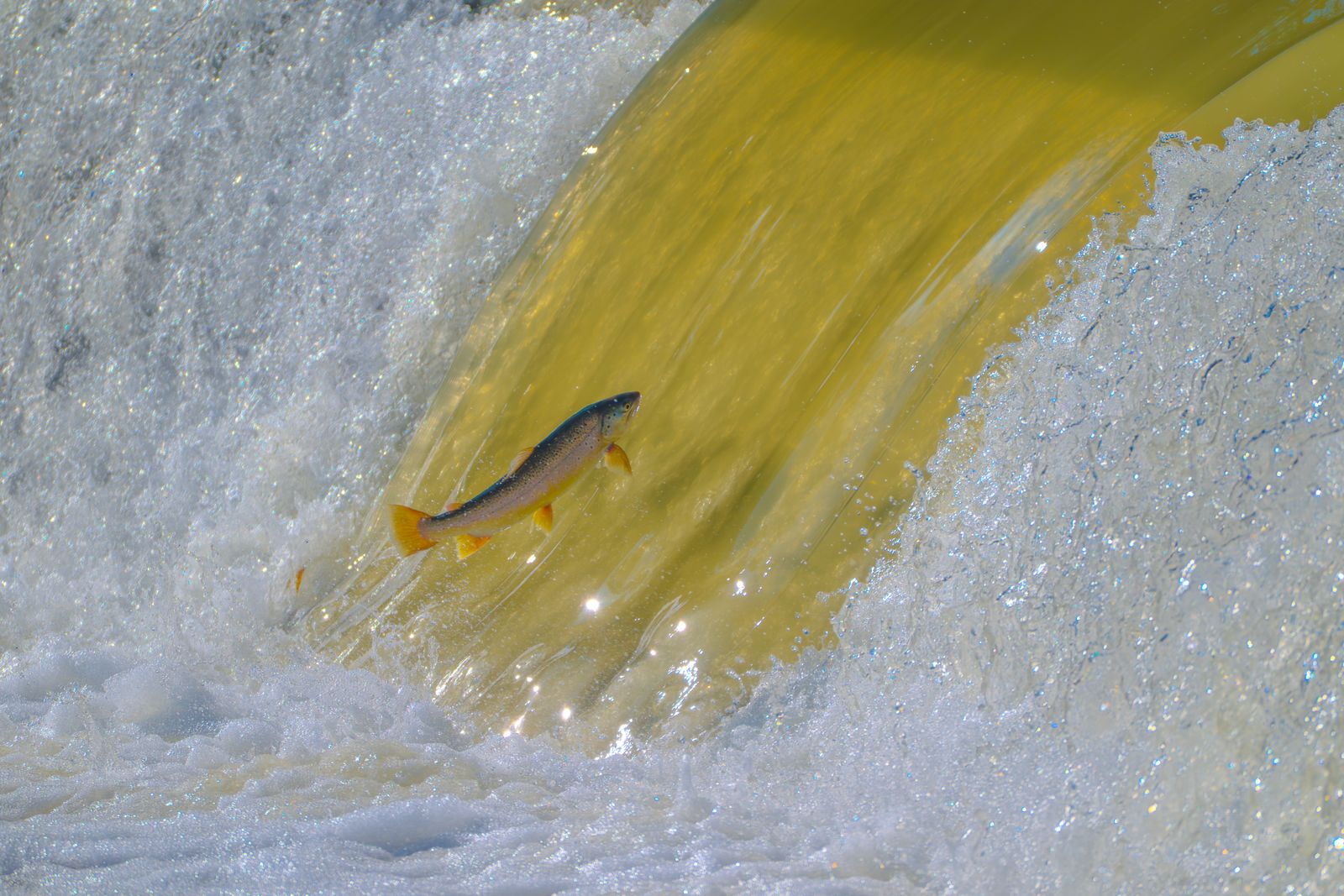
Each spring, Atlantic salmon ran up the Rhine toward their spawning grounds in the upper river. By the time they reached Basel, the males were carrying testes swollen with sperm, which are among the most nucleus-dense tissues in vertebrate biology — cells that are essentially packaged DNA with a tail. Miescher would rise before dawn, walk down to the Rhine, buy fresh-caught salmon from the fishermen, and carry them back to his lab to extract nuclein by the gram rather than the milligram.
The image is durable enough that Miescher’s biographers used it for the title of their book, The Dawn Fisherman.
Why it took so long to be understood as DNA
Miescher had isolated the molecule. He had characterised its chemistry. He had located it in the nucleus and correlated it with cell division. What he had not done — could not have done, with the tools of the 1870s — was prove that it carried genetic information.
In fact, near the end of his life, in a sanatorium in Davos where he was being treated for tuberculosis, Miescher wrote about heredity and speculated that traits were passed down through variations in the structure of some large molecule. He guessed it was a protein. He did not guess it was nuclein. The connection sat there, unmade, in his own notebooks.
For decades after his death, most biologists agreed with that misdirection. Proteins were structurally rich, with twenty amino acids to play with. DNA had only four bases and looked, to a biochemist, monotonous — a scaffold, perhaps, but not an information carrier. That consensus held until the 1940s.
The turning point came in 1944, when Oswald Avery, Colin MacLeod, and Maclyn McCarty at the Rockefeller Institute in New York showed that the substance capable of transferring a heritable trait between strains of pneumococcus bacteria was DNA, not protein. The Guardian’s science blog has described Avery as the unsung hero of genetic science for that finding — a description that would fit Miescher just as well, seventy-five years earlier. The Avery, MacLeod and McCarty result was itself extended and confirmed by the Hershey–Chase blender experiments of 1952, which tracked radiolabeled DNA and protein separately into infected bacteria and settled the question.
From Miescher’s 1869 winter of bandages to Avery’s 1944 paper is a stretch of roughly seventy-five years. The double helix, described by James Watson and Francis Crick in Nature in April 1953, arrived nine years after that. A retrospective in The Conversation on Watson’s career notes that the double helix rested on decades of prior work — Miescher’s chemistry, Chargaff’s base-pairing rules, Rosalind Franklin’s X-ray diffraction images — that the popular telling tends to compress into a single Cambridge afternoon.
The man himself
Miescher was, by every account, a formidably intense worker. One of his students later recalled that on Miescher’s wedding day, friends had to physically drag him from his lab bench to make it to the church on time. He founded an institute of anatomy and physiology in Basel and spent much of his later career buried in administrative duties, advising the Swiss government on prison diets and the local salmon fishery.
He was aware that these obligations were eating the research time he wanted for nuclein. In letters he compared himself to Sisyphus, forever rolling the same stone up the same slope.
His health deteriorated. Tuberculosis moved him to Davos. His letters from the sanatorium record that he would never know the happiness of a man who felt he had lived up to his own station. He died in 1895.
What nuclein became
The substance Miescher pulled from surgical bandages is now the reference point for essentially every branch of modern biology. It sequences species, diagnoses disease, convicts and exonerates in courtrooms, reconstructs migrations tens of thousands of years old, and drives the genetically modified crops and vaccines that shape twenty-first-century agriculture and medicine. The molecule serves as the operating language of life.
The chain of custody from pus-stained bandage to prenatal genetic screen runs through Tübingen. Miescher extracted nuclein without a centrifuge, without electrophoresis, without ultraviolet spectroscopy, without any of the instruments a first-year biology student now takes for granted. He used pig-stomach pepsin, cold rooms, and a chemist’s patience. And he was right about the phosphorus, right about the nucleus, right about the novelty.
Why the story sits oddly in the record
Discoveries in science rarely arrive on the day they are made. The historical record is full of gaps like this — timing decides what gets remembered. Miescher’s timing was terrible. He isolated the molecule of heredity a generation before anyone was equipped to ask the right question of it.
Salmon still run up the Rhine each spring, in far smaller numbers than they did in the nineteenth century, past the city where Miescher rose in the dark to catch them. The molecule he extracted from their testes is the same molecule now being read, letter by letter, in sequencing machines that can decode a human genome in an afternoon. His name on those machines is nowhere. His word for the substance — nuclein — is still buried inside the acronym that everyone knows.