
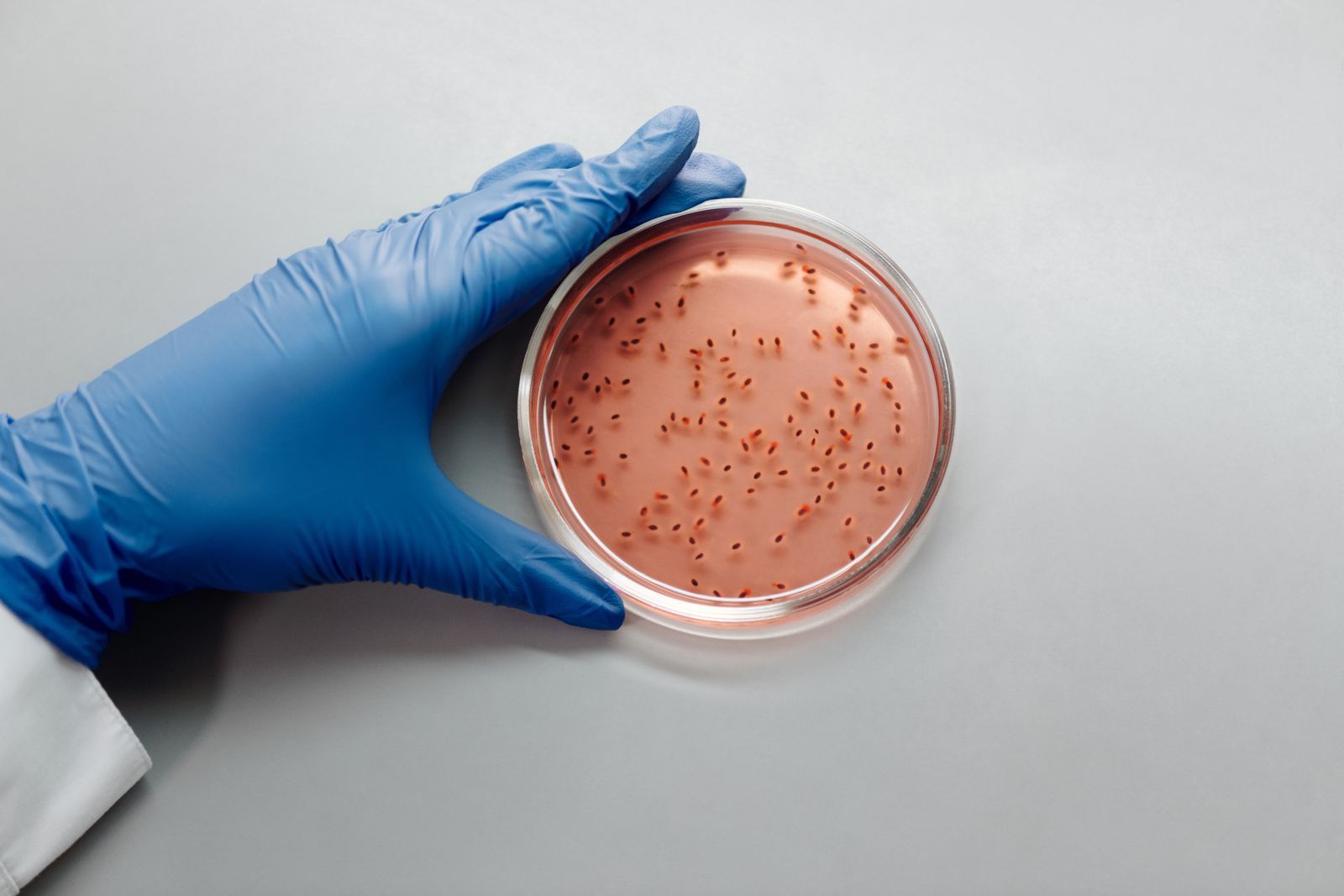
On the morning of 28 September 1928, Alexander Fleming walked back into his cramped second-floor laboratory at St Mary’s Hospital in Paddington after a family holiday, glanced at a stack of glass Petri dishes he had left on a bench, and noticed something odd on one of them. A blue-green mould had colonised a corner of the plate. Around the fuzzy invader, the yellow lawn of Staphylococcus aureus he had been growing was gone — dissolved into a clear, bacteria-free halo. According to popular accounts, Fleming noticed the unusual clearing around the mould and set the dish aside for further study. That single contaminated plate became the origin story of the antibiotic era, a period that has, by one estimate, gone on to save roughly 500 million lives.
The room was messy. Fleming was famous for it.
His colleagues at St Mary’s Medical School had long teased him about the state of his bench — teetering columns of unwashed culture plates, cigarette ash, half-finished experiments left to fend for themselves. That untidiness, which would have got a modern lab technician fired, is the reason the mould had time to grow, sporulate, and kill the staphylococci before anyone noticed. Fleming was known for maintaining a somewhat disorganized laboratory, a habit that may have inadvertently contributed to the serendipitous discovery.
The plate that shouldn’t have worked
The chain of accidents needed to make that plate is almost absurd. Fleming had been studying variants of staphylococci, the round bacteria responsible for boils, wound infections and what was then routinely fatal sepsis. Before leaving for holiday in late July, he stacked culture dishes on a bench near an open window rather than storing them in the incubator.
London that August was unusually cool. The mould spore — later identified as Penicillium notatum, likely drifting up from a mycology lab run by Charles La Touche — landed on the plate and had a head start in the cold room before the weather warmed and the staphylococci began to grow. If the temperatures had run the other way, the bacteria would have colonised the plate first and the mould would have been just another green speck on a yellow lawn.
Instead, the fungus got there first, secreted a chemical into the surrounding agar, and by the time Fleming returned there was a visible dead zone around it — a clear moat where no bacteria could survive.
Not his first accident
What made Fleming pause rather than tip the plate into the disinfectant tray was that he had seen a version of this before. In the early 1920s, working in the same building, he had dripped some of his own nasal mucus onto a culture and watched the bacteria around it die. He named the responsible enzyme lysozyme, and spent much of the next decade studying it. Lysozyme turned out to be a weak antibacterial, useful against harmless microbes but hopeless against the dangerous ones.
The 1928 plate looked, to him, like lysozyme’s stranger cousin. This time, the killer wasn’t a bodily fluid but a mould, and the bacteria dying in its shadow were staphylococci — a real pathogen. According to a UPI obituary published the day he died in March 1955, contemporaneous accounts recognized that Fleming’s discovery combined fortunate circumstances with his persistent research skills. The patience was real. The initial spark was luck.
“Mould juice”
Fleming scraped some of the mould into a broth and grew it in pure culture. The liquid the fungus secreted — Fleming initially referred to the antibacterial substance informally before settling on the name penicillin in early 1929 — killed staphylococci, streptococci, pneumococci, meningococci, gonococci and the diphtheria bacillus. That list reads today like a catalogue of the great killers of the pre-antibiotic world: pneumonia, meningitis, scarlet fever, gonorrhoea, wound sepsis, childbed fever.
He published his findings in 1929. The paper landed with a thud. Almost no one cared.
The problem was practical. Penicillin was fragile, difficult to purify, and produced by the mould in tiny quantities. Fleming could grow enough to dab on a colleague’s eye infection — he treated a St Mary’s student’s conjunctivitis in the early 1930s, curing him in time for a rifle competition — but nothing like the doses a systemic infection would need. He tried, and largely failed, to interest the pharmaceutical industry. For most of the 1930s the mould sat in his lab, kept alive as a curiosity, occasionally shipped in vials to any researcher who asked.
Oxford picks up the thread
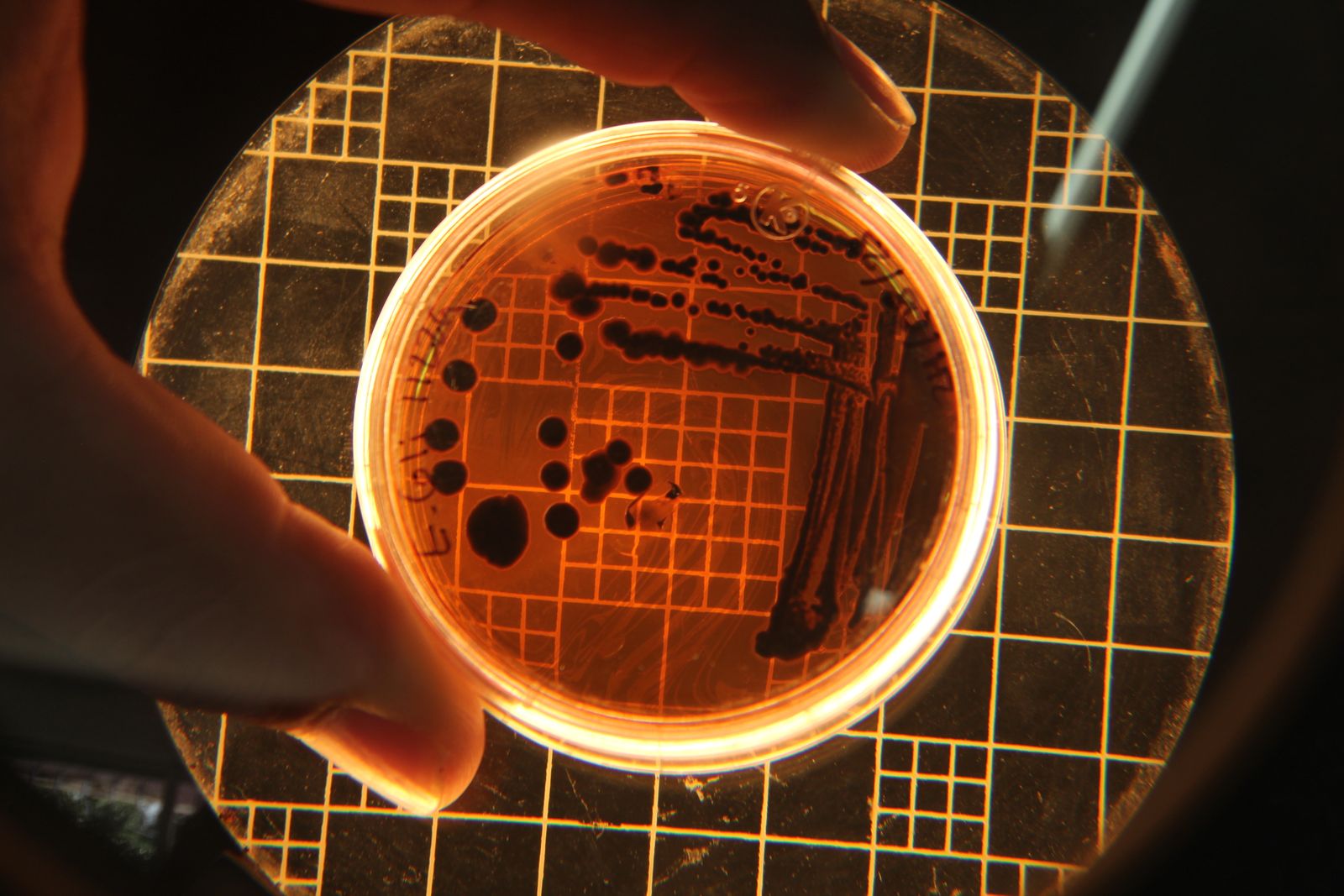
The rescue came from an Australian pathologist, Howard Florey, and a German-Jewish biochemist who had fled the Nazis, Ernst Chain. Working at the Sir William Dunn School of Pathology in Oxford from 1939, they took Fleming’s obscure paper off the shelf and set out to isolate the active compound in usable quantities.
By May 1940 they had enough purified penicillin to test on eight mice injected with a lethal dose of streptococci. Four mice received penicillin. Four did not. The next morning the untreated four were dead and the treated four were fine. Florey and his team were reportedly amazed by the dramatic results, with the treated mice surviving while the untreated ones died.
Scaling up meant turning the Oxford lab into a factory. Bedpans, bathtubs, milk churns and biscuit tins were pressed into service as culture vessels. A team of six women, later dubbed the Penicillin Girls, tended the moulds in shifts, harvesting the yellow broth by hand. To treat a single patient took the output of hundreds of vessels running for weeks.
The first human patient, an Oxford policeman named Albert Alexander, had scratched his face on a rose thorn and developed a raging sepsis that had already cost him an eye. Injected with the Oxford team’s penicillin in early 1941, he began to recover within a day. Then the supply ran out. His doctors filtered penicillin out of his urine and re-injected it, but couldn’t keep up. He relapsed and died. The drug worked. There simply wasn’t enough of it.
A war, and a fermentation vat in Peoria
With Britain being bombed nightly, Florey flew to the United States in 1941 with samples of the mould sewn into the lining of his coat. He landed at the U.S. Department of Agriculture’s Northern Regional Research Laboratory in Peoria, Illinois — a place chosen because it had deep expertise in industrial fermentation of corn products.
Two breakthroughs there changed everything. First, the Peoria team switched the growth medium from Oxford’s meat broth to corn steep liquor, a cheap by-product of cornstarch manufacturing, and yields rose roughly tenfold. Second, lab assistant Mary Hunt brought in a cantaloupe from a Peoria market that had a golden-colored mould on it. That strain, Penicillium chrysogenum, produced about 200 times more penicillin than Fleming’s original.
By D-Day in June 1944, Allied pharmaceutical firms — Pfizer, Merck, Squibb, and others — were producing enough penicillin to treat every wounded soldier who needed it. In 1928, one contaminated dish. Sixteen years later, massive industrial production.
Why the timing mattered
Before penicillin, a bacterial pneumonia killed roughly a third of adults who caught it. A soldier’s wound was as likely to kill him as the shell that made it. Puerperal fever — a streptococcal infection contracted during childbirth — killed young mothers by the tens of thousands each year. Scarlet fever, meningitis, syphilis and tuberculosis carved through populations in ways that are difficult to picture in a country where a course of amoxicillin costs less than a sandwich.
The rate of change after 1945 was extraordinary. Streptomycin, effective against tuberculosis, was isolated in 1943 at Rutgers. Chloramphenicol arrived in 1947, tetracycline in 1948. Within a decade of Fleming’s Nobel Prize — awarded jointly with Florey and Chain in 1945 — the pharmacopoeia of modern medicine had been rewritten. The accidental discovery on that September morning is often ranked alongside the germ theory itself as one of the two most consequential events in the history of medicine.
The scientist who painted with germs
The story attracts a certain amount of hagiography, and Fleming, who was shy and Scottish and disliked publicity, would have found most of it embarrassing. He was a man who painted with bacteria in his spare time — literally, streaking pigmented microbes onto agar to produce small representational pictures of ballerinas and Union Jacks, a hobby documented in a Smithsonian feature on his “germ art.” He rarely raised his voice, hated giving lectures, and, according to accounts of his death, took his own temperature before quietly telling his wife to call the doctor.
He also gave the mould away for free. He took no patent, drew no royalty from the drug, and after being knighted in 1944 continued to work at St Mary’s on a hospital salary until his retirement in 1954. He died at 73 of a heart attack the following March. His obituary noted that he had made the discovery by accident.
What accidents actually look like
The Fleming story is often invoked as the archetypal example of serendipity in science, but the accident is only half of it. The plate had to be left out. The window had to be open. The weather had to break cool. A specific mould strain had to be present in the building. And someone — someone who had spent seven years thinking about lysozyme and the way certain substances killed certain bacteria — had to look at the plate long enough to see what was there instead of what was supposed to be there.
The history of science is full of these moments, and Spacewar has written about several of them: the way Rosalind Franklin’s Photo 51 gave away DNA’s helix in a single X-ray exposure, or the way tardigrades survived exposure to open vacuum in 2007 and rewrote the boundary of what “habitable” means. The pattern repeats. Someone sees the thing on the plate that everyone else would have thrown away.
Ninety-seven years on
The original mould from Fleming’s plate is still alive. A small medallion of it, dried and mounted, sits in the collections of the Smithsonian’s National Museum of American History. Descendants of the Peoria cantaloupe strain still run in fermentation tanks at pharmaceutical plants around the world, though most modern penicillins are semi-synthetic derivatives — ampicillin, amoxicillin, methicillin — tweaked to survive stomach acid or beat back resistant bacteria.
Resistance, which Fleming warned about in his 1945 Nobel lecture, has caught up. He predicted, almost exactly, the world of MRSA and carbapenem-resistant Enterobacteriaceae — of hospital wards where the drug that once killed Staphylococcus aureus in a Petri dish is now the drug the bacteria shrug off. The antibiotic era he opened in 1928 has a beginning and, some worry, an end.
But it began on a bench near an open window in Paddington, on a plate that had been left out too long, with a scientist who was too curious about a smudge of mould to reach for the disinfectant. The clear ring of dead staphylococci around the fungus is, in the end, a small piece of visual evidence — a halo of nothing, on a plate of something, seen for the first time by a man who had spent a decade learning what to look at.
