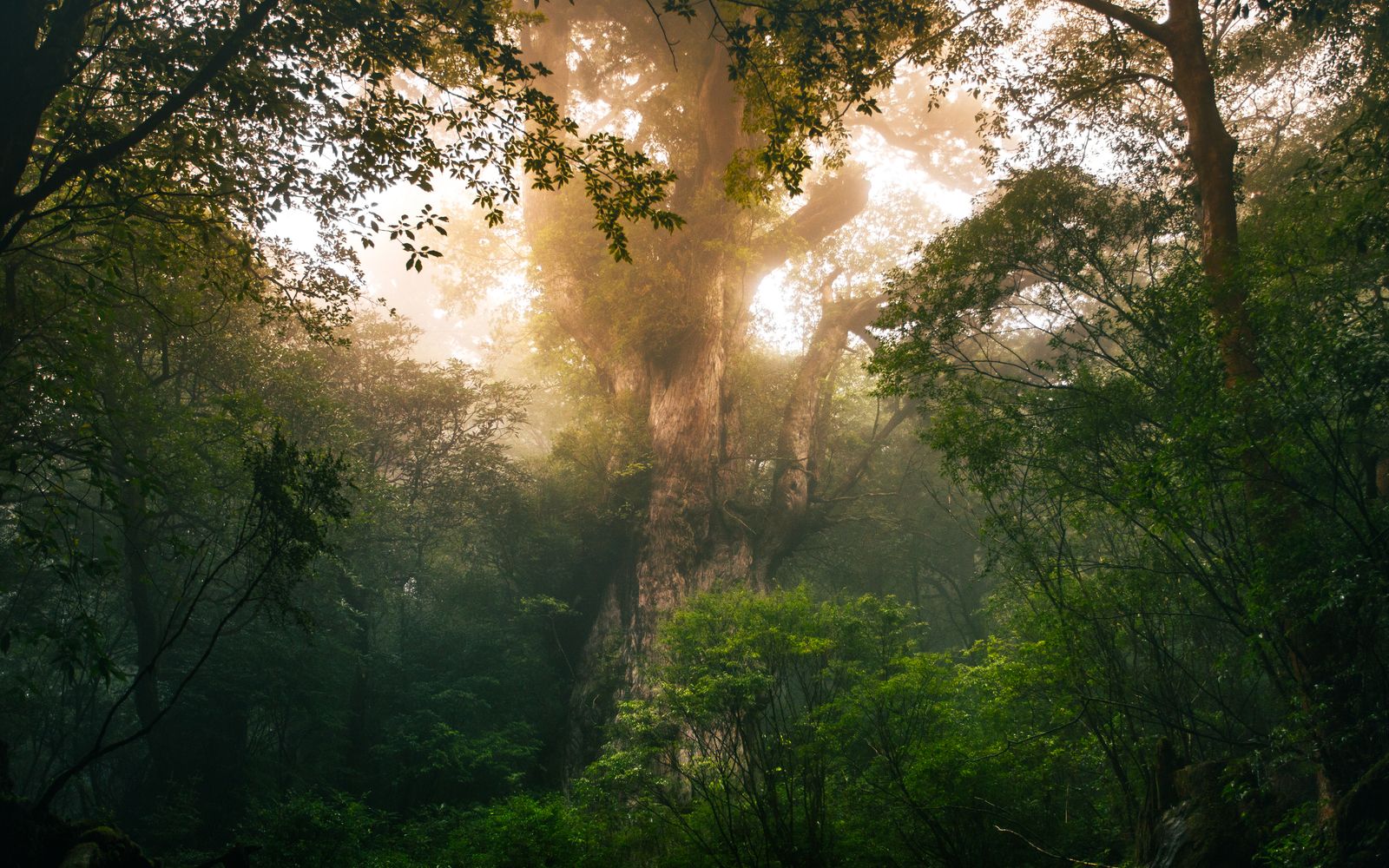
In September 1994, a field officer named David Noble was on weekend leave, roped into a slot canyon in Wollemi National Park about 150 kilometres west of Sydney, when he stopped beside a tree that should not have existed. Its bark looked like bubbling chocolate. Its foliage was waxy and fern-like, unlike anything in the eucalypt-dominated bush around it. Noble broke off a sprig, stuffed it in his pack, and carried out what the then-director of the Royal Botanic Gardens Sydney would soon describe as the botanical equivalent of finding a small dinosaur still alive on Earth.
The tree was Wollemia nobilis. Its closest known relatives had been dead for roughly 90 million years, preserved only as impressions in Cretaceous rock. Fewer than 100 adults were left in the wild, hidden in a single gorge system in the Blue Mountains. Three decades later, fewer than 100 Wollemi pines survive in the wild. That is the entire wild population of a genus that outlived the dinosaurs.
The canyon and the sprig
Noble was not looking for a lost species. He was a bushwalker with the New South Wales National Parks and Wildlife Service, spending a day off abseiling into one of the deep sandstone slots that cut through the Wollemi wilderness — a plateau of gorge country north-west of Sydney, much of it never surveyed on foot. The canyon he entered was narrow, humid, and shaded, its floor deep below the rim. The trees stood tall, their crowns rising past overhangs and ferns.
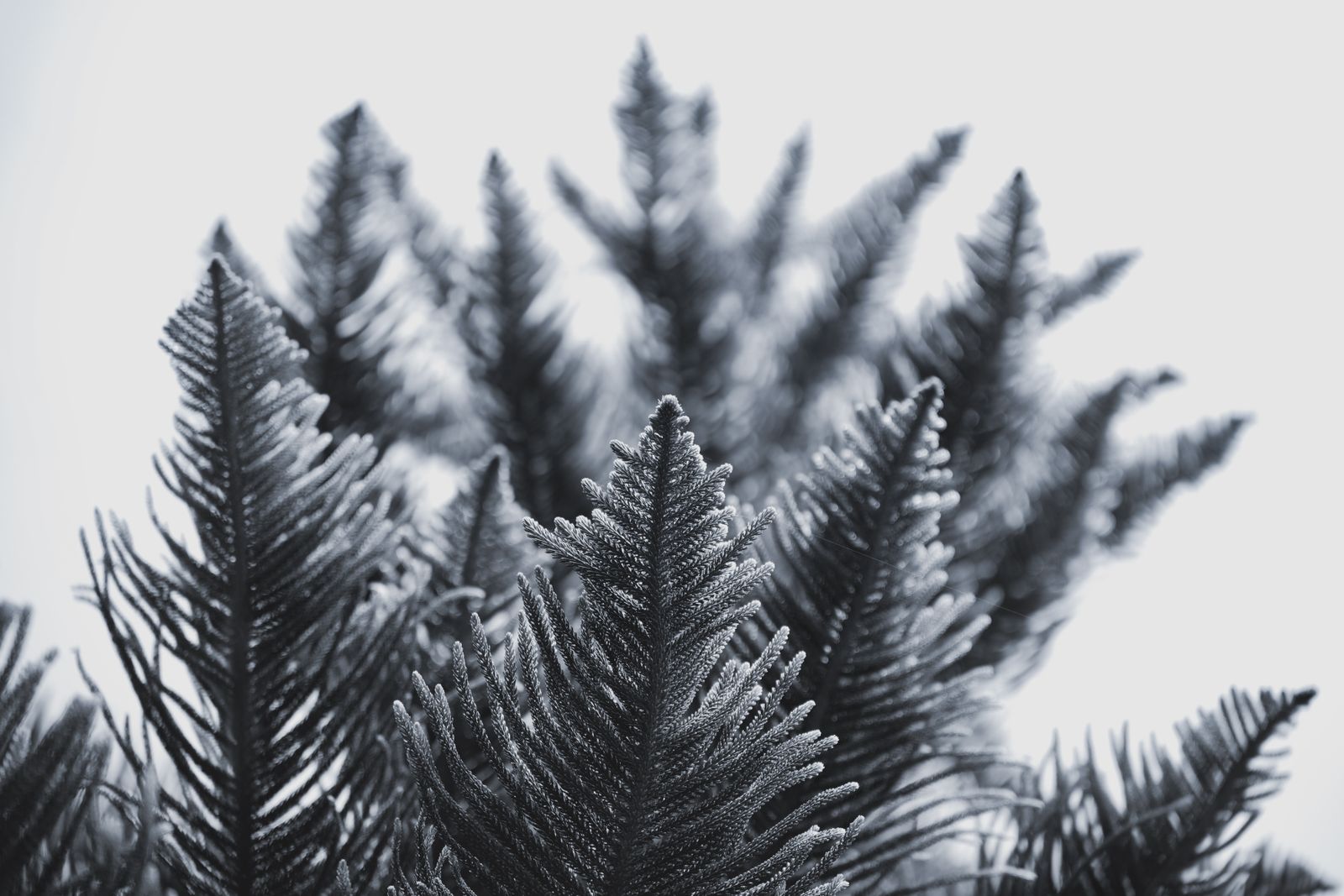
He noticed them because they were wrong. The bark was dark and nodular, resembling coke bubbling out of a fire. The leaves grew in flat, opposing ranks along the stem, glossy and stiff. Nothing in the standard Australian field guides matched. Noble took the sample back to Sydney and passed it to botanists at the Royal Botanic Gardens. They could not place it in any living genus.
Within weeks, the sprig had been identified as a member of the Araucariaceae, the ancient conifer family that includes the monkey puzzle and Norfolk Island pine. It matched no known living species. It matched fossils. The genus was new. They named it after the park where Noble had found it, and after Noble himself: Wollemia nobilis.
What 90 million years means
The Araucariaceae family is about 200 million years old, older than flowering plants, older than the split of Gondwana. During the Jurassic and Cretaceous, its members grew from Patagonia to Antarctica to the ancient forests that would become New South Wales. Then most of them vanished. The last Wollemia-type pollen in the Australian fossil record dates to around 2 million years ago, with the closest fossil relatives stretching back roughly 90 million years to the mid-Cretaceous.
To put that in perspective: when the last known ancestor of the Wollemi pine was shedding pollen, Tyrannosaurus rex had not yet evolved. The Atlantic Ocean was less than half its current width. The continent that would become Australia was still attached to Antarctica. The tree Noble touched in 1994 belongs to a lineage older than the Rocky Mountains.
Living fossils of this depth are rare. The ginkgo, at around 170 million years, is one. The coelacanth, rediscovered off South Africa in 1938 after being presumed extinct for 66 million years, is another. The Wollemi pine is a different case: the endurance of a whole genus, hidden in one canyon.
How a genus hides for 90 million years
The Wollemi gorge is a refugium in the strict ecological sense: a pocket of stable microclimate insulated from the changes that scoured the rest of the continent. Australia dried out over the Cenozoic. Its rainforests shrank into isolated patches. Fire became a constant. But deep in the Wollemi sandstone, sheltered by high cliffs, humidity stays high, temperatures stay mild, and fire rarely reaches the canyon floor.
The trees themselves are strange. They can produce multiple trunks from a single root system, coppicing when the crown is damaged. Some of the individuals standing today may be genetic clones thousands of years old, even if any given trunk is younger. Their reproductive biology is slow and inefficient — the pollen and seed cones grow on the same tree but mature at different times — and genetic diversity across the wild population is remarkably low. Every wild Wollemi pine tested so far is nearly identical to every other.
That uniformity is the tell. The population passed through a severe bottleneck, probably repeatedly, and what survived was a handful of trees clonally propagating in a single hidden valley. The genus did not thrive for 90 million years. It hung on.
The secret location and the boot-wash
The exact coordinates of the wild grove have never been published. Access is restricted to a small number of researchers from the Botanic Gardens of Sydney and the NSW National Parks and Wildlife Service, and every visit involves a decontamination protocol. Boots are scrubbed and sprayed. Ropes and gear are inspected. The reason is a soil-borne water mould called Phytophthora cinnamomi — a pathogen already present in parts of Australia that kills Araucariaceae by rotting their roots.
NSW Environment Minister Penny Sharpe, who visited a translocation site in 2024, described the trek: we had to stop multiple times to disinfect our shoes. The tree’s discovery raised the profile of plant conservation across Australia.
The pathogen threat remains serious. Phytophthora does not respect canyon walls.
Fire in the summer of 2019–20
The most acute threat came not from disease but from smoke. During the Australian bushfire season of 2019–20 — the Black Summer — flames swept across more than five million hectares of New South Wales, including large sections of the Greater Blue Mountains World Heritage Area. The Wollemi grove sat directly in the path of the Gospers Mountain fire, which burned for over 70 days.
A specialist team of firefighters was inserted by helicopter into the canyon system. They installed irrigation lines above the grove, running water pumped from the creek to keep the canopy damp. Large air tankers dropped fire retardant along the ridges above. The operation was classified and unusual: firefighters were told the location and the target, but the coordinates were not made public. Most of the adult trees survived. Several juveniles did not.
The insurance policy
Conservation strategy for the Wollemi pine now runs on two parallel tracks. The first is protection of the wild grove — restricted access, biosecurity, fire management. The second is dispersal. If the entire wild population burned tomorrow, the species would not be lost, because genetically diverse young trees now grow in botanic gardens across four continents.
The largest ex-situ collection sits at the Australian Botanic Garden Mount Annan, on the outskirts of Sydney. In 2024, a genetically diverse back-up planting was established at the Blue Mountains Botanic Garden Mount Tomah, timed to the 30th anniversary of Noble’s discovery. Genetically diverse saplings from that same collection have also been shipped to botanic gardens in the United Kingdom, Ireland, continental Europe, and one botanic garden in the United States, as a further hedge against a single catastrophic loss.
Not every Wollemi pine outside Australia arrived through that formal pipeline, though. One tree, nicknamed Wally, started life as a ten-inch sapling sold through a 2006 National Geographic holiday catalogue — part of an early licensed commercial-propagation partnership, unrelated to the botanic gardens’ own dispersal program. A Colorado couple bought it for their home bonsai collection and grew it on a Boulder deck and in their basement for nearly two decades before donating it, in 2025, to the Department of Ecology and Evolutionary Biology greenhouse at the University of Colorado Boulder, where it now serves as a teaching and outreach specimen.
Translocation sites inside Wollemi National Park itself now hold hundreds of saplings, planted in soil and microclimates similar to the original grove but far enough away that a single fire could not reach both.
The commercial gamble
In 2005, the Botanic Gardens of Sydney did something unusual for a critically endangered species: they put it on sale. Propagated Wollemi pines were released to the commercial nursery trade under a licensed programme, with royalties directed back into conservation. The logic was straightforward. A tree growing in ten thousand suburban gardens is a tree that cannot be driven to extinction by a single wildfire or pathogen.
The commercial partnership formally ended in 2010, but propagation continues. Wollemi pines are now sold by nurseries in Australia, the UK, and North America. They grow well in temperate climates, tolerate frost down to around minus 5°C, and reach a manageable size in cultivation. Owning one is, as the Forbes profile put it, a small act of conservation.
In September 2024, six first-generation specimens propagated directly from Noble’s original grove were auctioned online by Foundation & Friends of the Botanic Gardens, coinciding with the 30th-anniversary planting.
What the tree tells you about deep time
Discoveries like this reset the assumption that the fossil record is complete. A genus can vanish from the record for 90 million years and still be alive. The Wollemi pine is evidence that persistence is possible in geometries the survey record does not capture.
The tree also carries a warning. A genus that survived the Cretaceous–Paleogene extinction, the Eocene warming, the Pliocene aridification of Australia, and repeated glacial cycles now depends on fewer than 100 individuals in one canyon, a fungus-preventing boot wash, and a helicopter-inserted irrigation crew. Deep-time resilience does not guarantee near-term survival.
What Noble saw
David Noble still works in conservation. He rarely gives interviews. In the accounts that exist, the moment of discovery is described as ordinary — a man on a weekend, catching sight of something unfamiliar, breaking off a twig to identify later. The sample sat in his pack for the rest of the trip.
The tree he touched that afternoon is probably still alive. Wollemi pines are estimated to live for 400 to 1,000 years, and the largest individuals in the wild grove are thought to be at least 500 years old — meaning some of them were saplings when the first European ships were mapping the Australian coast, and were already mature trees when Cook landed at Botany Bay in 1770. The genus behind them was old when the first flowering plants evolved. The canyon that hides them is a pocket of the Cretaceous, cut into New South Wales sandstone, currently guarded by a small team of botanists, a locked gate, and a bucket of disinfectant.