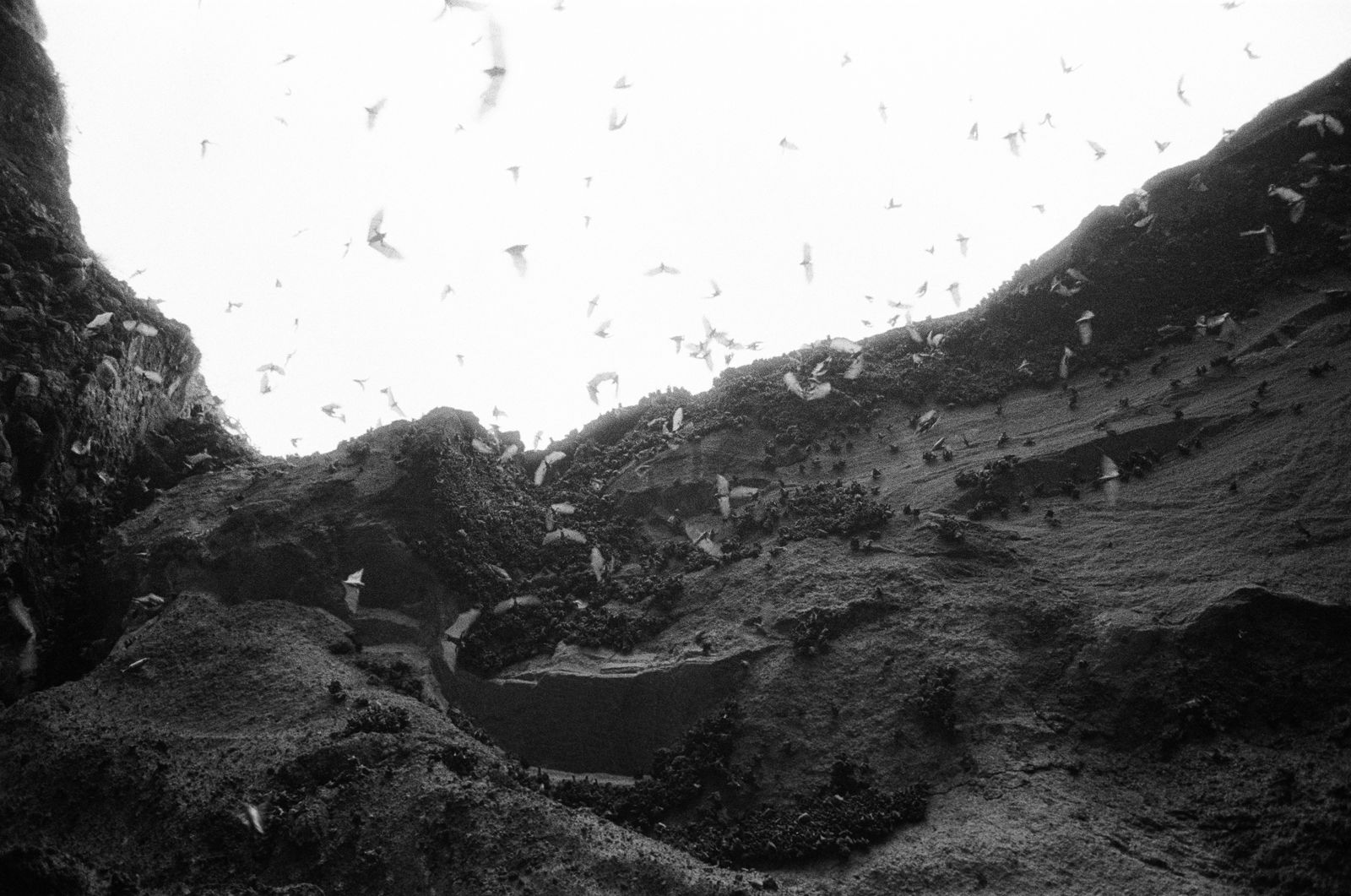
On a summer evening at the mouth of Carlsbad Cavern in southeastern New Mexico, the sky over the desert begins to move. Brazilian free-tailed bats rise from the limestone opening in a whirling funnel, gain altitude, and spread into the dark in search of insects.
The colony is commonly described as numbering in the hundreds of thousands, but that figure is an estimate rather than a fixed nightly census. National Park Service background material says researchers counted approximately 400,000 bats emerging in June 2005, with numbers changing during the season and from year to year. The same park material estimates that the colony consumes about three tons of insects on a typical night.
That makes the emergence more than a wildlife spectacle. It is the visible beginning of a nightly transfer of insect biomass from the air above the Chihuahuan Desert into one of North America’s best-known cave systems.
The evening flight
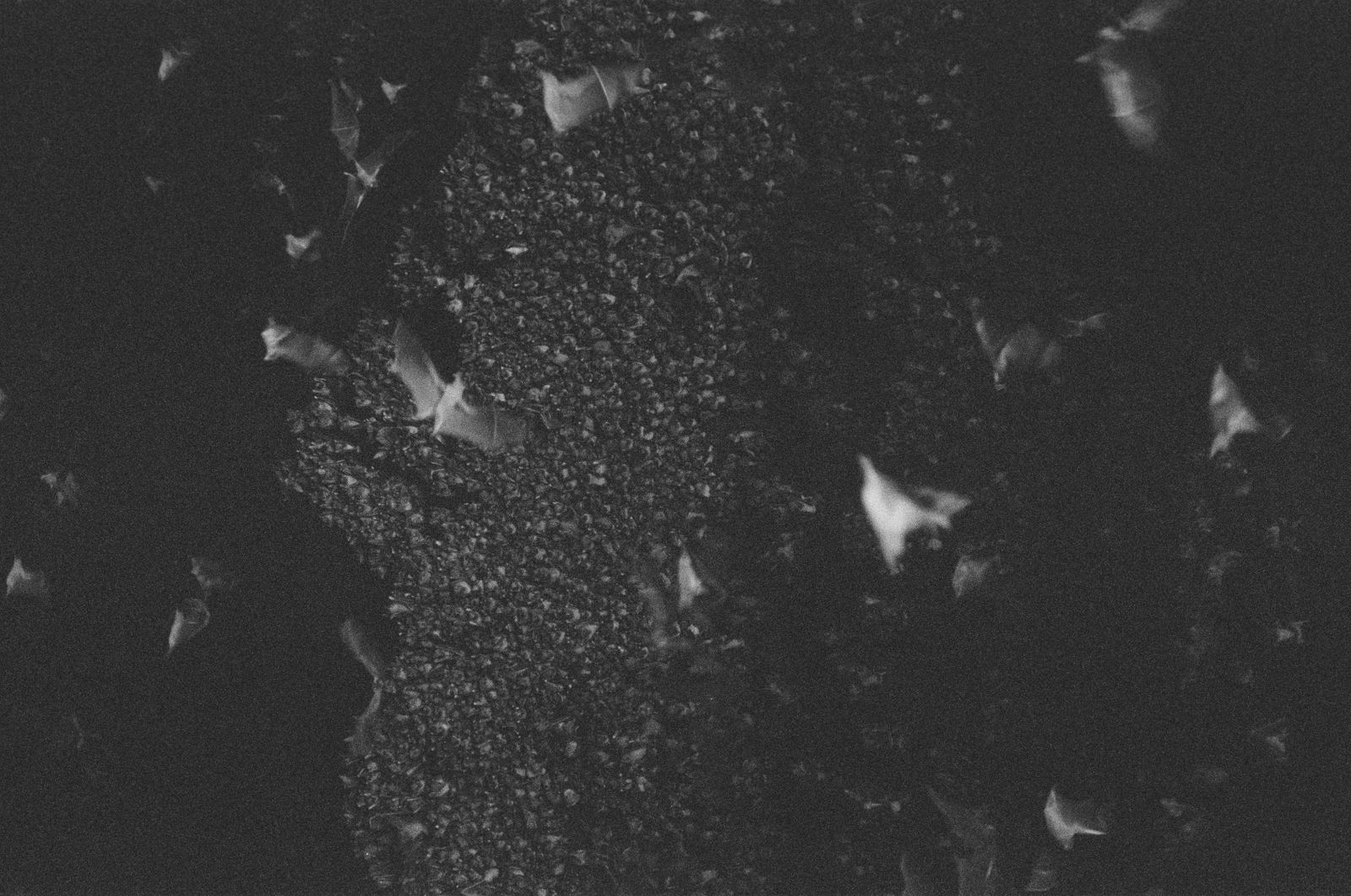
The bats do not simply scatter from the entrance. They circle upward from the deep, bowl-shaped opening before separating into smaller streams, a maneuver that helps them gain lift before beginning the night’s hunt.
The park holds a free Bat Flight Program from April through October at the outdoor amphitheater beside the Natural Entrance. Cameras, phones, tablets, and other electronic devices are prohibited in the surrounding area. The park says observations have shown that the bats can be disturbed by sound and light, potentially changing their behavior; it does not say that ordinary radio signals interfere with echolocation.
Most of the migratory free-tailed bats arrive at Carlsbad in March and April and leave for southern locations in Mexico by late October. Young born in early summer begin joining the evening flight later in the season, which is why August and September often produce the largest displays.
What Carlsbad diet studies show
There is direct scientific evidence for what the Carlsbad bats eat. A 2005 Journal of Mammalogy study examined 1,303 fecal samples from Mexican free-tailed bats at Carlsbad Cavern. Researchers identified insects from 11 orders and 38 families, with moths and beetles making up the largest shares of the diet by volume and frequency.
The amount consumed can increase sharply during reproduction. The National Park Service reports that a pregnant or lactating bat may eat between 50 and 100 percent of her body weight in insects during a night. It also estimates that 100,000 bats can consume more than 1,000 pounds of insects.
Those findings support the conclusion that Carlsbad’s colony removes tons of moths, beetles, and other insects from the air. They do not, on their own, identify every moth species eaten or establish where each surviving insect would otherwise have travelled.
What the Texas farm studies establish
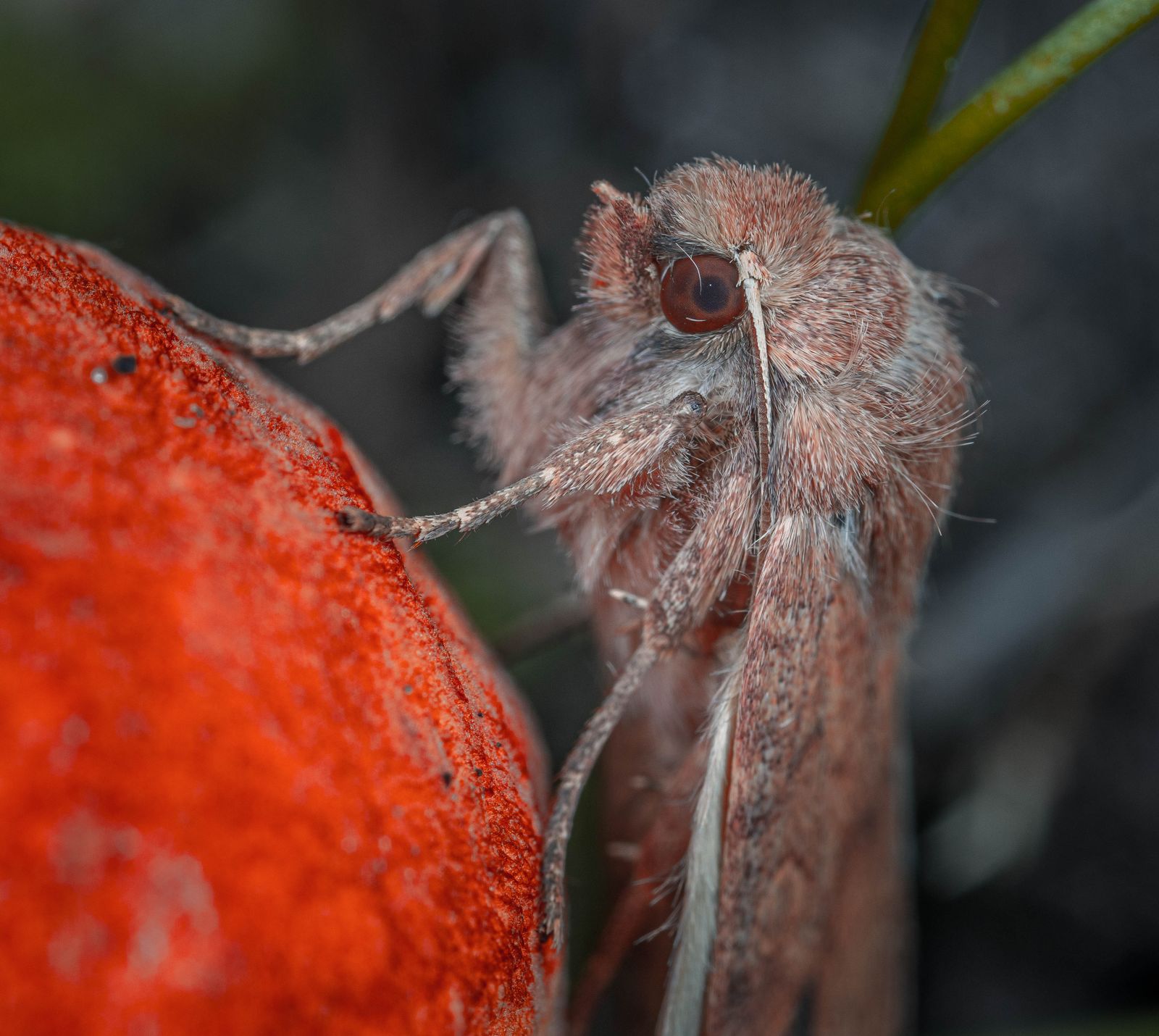
The strongest evidence involving corn earworm moths comes from Texas, not Carlsbad. In a 2012 PLOS ONE study, researchers tested fecal samples from Brazilian free-tailed bats roosting under the Seco Creek Bridge in Medina County. They found that the proportion of bats consuming corn earworm moths rose and fell with the moths’ abundance across the surrounding Winter Garden agricultural region.
An earlier economic analysis studied colonies and farms across eight counties in south-central Texas. That research estimated the annual value of bat pest control to cotton growers at approximately $741,000 under its reference assumptions, with avoided crop damage accounting for most of the benefit.
These studies provide strong evidence that Brazilian free-tailed bats can intercept an important agricultural pest before its larvae damage crops. They cannot be transferred wholesale to Carlsbad’s colony, however, because the sampled bats, farms, and measured pest populations were all in south-central Texas.
How high free-tailed bats can hunt
Brazilian free-tailed bats are built for fast, open-air flight. Park material reports that individuals from Carlsbad have been observed feeding as far as 36 miles from the cavern, while free-tailed bats studied elsewhere in nearby Texas have fed on agricultural moths at approximately 10,000 feet. The distinction between the Carlsbad observations and the Texas findings matters when describing the colony’s agricultural reach.
A useful comparison comes from Southeast Asia. Researchers from the Leibniz Institute for Zoo and Wildlife Research and Prince of Songkla University reported in February 2025 that wrinkle-lipped free-tailed bats in Thailand hunted as high as 1,600 metres above the ground, overlapping with high-flying planthoppers that damage rice crops.
The Thai work demonstrates that another free-tailed species can exploit pest insects far above farmland. It does not prove that Carlsbad’s bats follow the same flight pattern, but it shows why high-altitude tracking is important when researchers try to measure the agricultural value of aerial predators.
White-nose syndrome and the Carlsbad colony
White-nose syndrome remains one of the largest threats to North American bats. The U.S. Fish and Wildlife Service says the disease, caused by Pseudogymnoascus destructans, was first documented near Albany, New York, in 2006 and has since spread through more than 40 states and eight Canadian provinces.
The disease predominantly affects hibernating bats, which helps explain why migratory free-tailed colonies have not suffered the catastrophic mortality recorded in some cave-hibernating species. The distinction is not absolute, however. The White-Nose Syndrome Response Team lists the Brazilian free-tailed bat as positive for the fungus but without confirmed diagnostic signs of the disease.
Carlsbad nevertheless remains one of the continent’s most prominent places to observe free-tailed bats. A Smithsonian Magazine bat-tourism guide includes Carlsbad alongside Bracken Cave and the Congress Avenue Bridge in Texas. Bracken hosts more than 15 million bats in summer, while Congress Avenue is known for its large urban colony; the guide presents them as notable viewing sites rather than ranking the three as North America’s most important biological strongholds.
A Cheetos bag, and what it revealed
In September 2024, a full bag of Cheetos left off-trail in Carlsbad’s Big Room became an unusually vivid lesson in cave ecology. According to the Guardian’s account of the National Park Service warning, the processed corn softened in the cave’s humidity and supported microbial and fungal growth. Cave crickets, mites, spiders, and flies gathered around the unexpected food source.
Rangers spent about 20 minutes removing the food, mold, and contaminated debris. The incident appeared trivial at human scale, but caves receive relatively little outside energy, so a concentrated supply of food can alter biological activity around it.
The episode does not prove anything about crop protection above ground. It does underline the dependence of the bats, insects, and other cave organisms on careful management of the cavern that shelters them.
How bats, exploration, and industry shaped Carlsbad
The bats did help draw modern attention to Carlsbad Cavern, although the history is more complicated than a simple chain from mining to discovery. The National Park Service credits cowboy Jim White with the first modern exploration in 1898, after he approached what looked like smoke and realised it was thousands of bats leaving the cave. White later explored and named features including the Big Room.
Commercial guano mining followed. Between 1903 and 1923, workers removed approximately 100,000 tons of guano and guano-rich material, much of it shipped west for use by California citrus growers. The operation created infrastructure that early visitors later used to enter the cavern.
Carlsbad Cave became a national monument in 1923 and a national park in 1930. The 1923 presidential proclamation formally cited the cavern’s extraordinary proportions, unexplored chambers, and unusual formations as reasons for protection. The bats were central to the story that brought explorers to the entrance, but the official designation protected the cave as a broader natural wonder.
What the nightly hunt means
The most defensible picture is regional rather than continental. Carlsbad’s bats remove tons of insects from the air around their summer roost, while studies from specific Texas farm landscapes show that the same species tracks and consumes corn earworm moths. Connecting those findings is reasonable at the species level, but assigning Carlsbad’s colony a 100,000-square-mile agricultural service area would require tracking and diet evidence that is not currently available.
By late October, falling insect activity pushes most of the colony south. Some banding records connect Carlsbad bats with winter roosts in Mexico, but the park says the location and status of much of the winter population remain uncertain.
In spring, the bats begin returning to the cavern. As evening settles over the limestone entrance, hundreds of thousands rise into the dark again, carrying with them both a measurable appetite for insects and a reminder of how much scientists still have to learn about where a night’s hunt takes them.