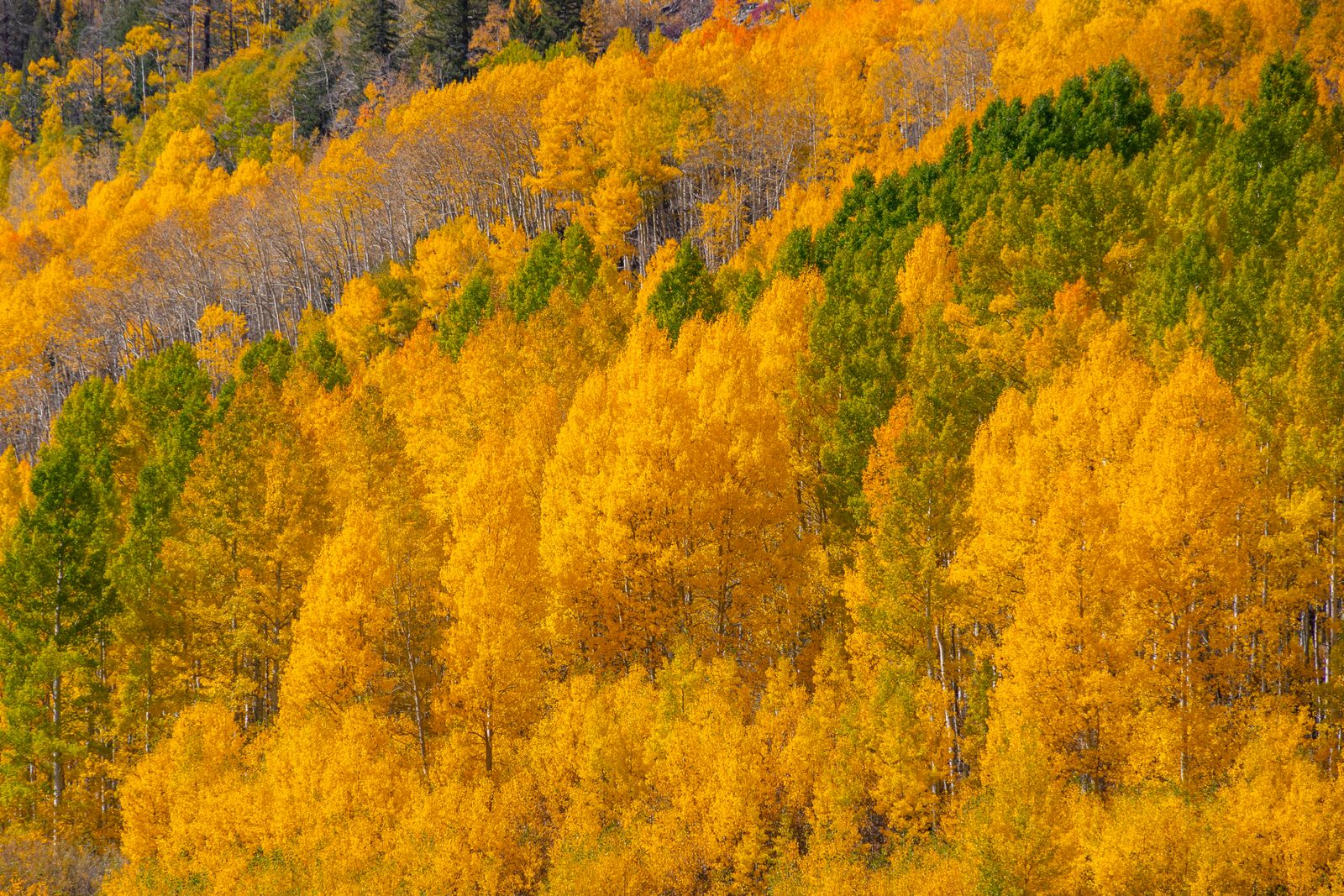
In the Fishlake National Forest of south-central Utah, a single male quaking aspen has been quietly cloning itself for tens of thousands of years. The forest you see when you pull off the highway near Fish Lake — over 40,000 trunks, pale bark, leaves that flutter in the smallest breeze — is one tree. One genetic individual. One root system that spans over 106 acres and weighs close to 6,000 tonnes, making it, by mass, the heaviest known living organism on Earth.
Its name is Pando, Latin for I spread. The mechanism is simple in principle and staggering in scale: instead of reproducing by seed, Pando sends up new trunks — technically called ramets — from a shared underground root network. Every trunk is genetically identical to every other. Every trunk is, in the strictest biological sense, the same tree.
One seed, tens of thousands of trunks
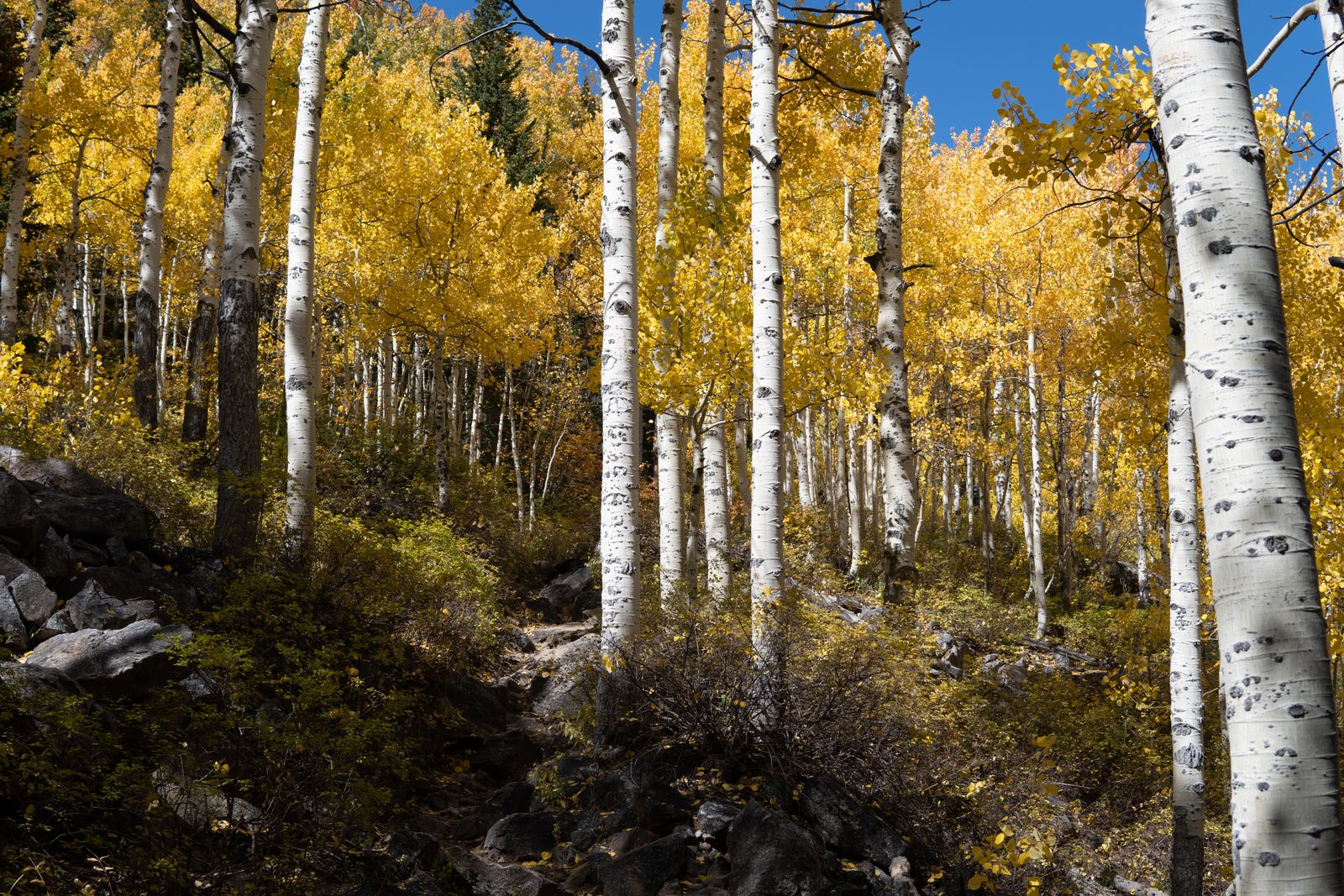
Quaking aspen (Populus tremuloides) is one of the most widespread trees in North America, and it has an unusual reproductive habit. A single aspen can spread through its roots, sending up genetically identical suckers that grow into full trunks. Most clonal aspen groves cover a few acres at most. Pando is different by orders of magnitude.
According to a team writing up the colony for Gizmodo’s coverage of recent age estimates, Pando consists of more than 40,000 individual trunks, all descended from a single seedling that sprouted somewhere between 16,000 and 80,000 years ago. Every leaf on every tree carries the same DNA. If you dig down, the trunks are connected by roots the way fingers are connected by a hand.
The scale is easier to grasp with a comparison. A blue whale — the largest animal ever known to have lived — tops out at around 150 tonnes. Pando is roughly forty times heavier. Its footprint, at 106 acres, is about 80 American football fields laid end to end.
How the math of a single organism works
Calling over 40,000 trunks a single organism is not a semantic trick. It is the standard biological definition applied consistently. Genetic sampling has confirmed that every trunk in the Pando stand is a clone of every other, and physical excavation has traced the root connections between them. When one trunk sends sugars down into the roots, those sugars can travel to feed another trunk hundreds of feet away.
The 6,000-tonne mass figure comes from summing the estimated biomass of every trunk plus the shared root system beneath them. Reporting from WRAL’s coverage of Pando puts the total at roughly 13 million pounds — the same number in imperial units — spread across those 106 acres in Fishlake National Forest near Richfield, Utah.
For comparison, Pando outweighs even the most massive giant sequoias more than three times over, though the mass is distributed across tens of thousands of relatively slender trunks rather than concentrated in one colossal stem.
Why aspens clone instead of seed
Quaking aspens do produce seeds, but conditions for germination in the mountain west are rarely favorable. Aspen seeds need moist bare soil and a cool spring. In the semi-arid Colorado Plateau, that combination is rare enough that most groves persist for centuries or millennia without a single successful sexual reproduction event.
What aspens do instead is exploit their roots. When a trunk is stressed — burned, browsed, cut — the root system responds by sending up new suckers. A single fire can trigger thousands of new trunks to emerge from an existing root network within a few growing seasons. Over long enough timescales, a lucky clone in a favorable spot can expand outward almost indefinitely, colonizing new ground one root-tip at a time.
Pando appears to have done exactly this, slowly, for as long as humans have been in the Americas. The oldest individual trunks on the site are only around 130 years old, but the organism itself — the genetic individual, the root network — is far older. Age estimates vary widely because there is no straightforward way to carbon-date a still-living root system, but even the conservative floor of 16,000 years would make Pando older than the pyramids by a factor of three.
The sound of a single tree
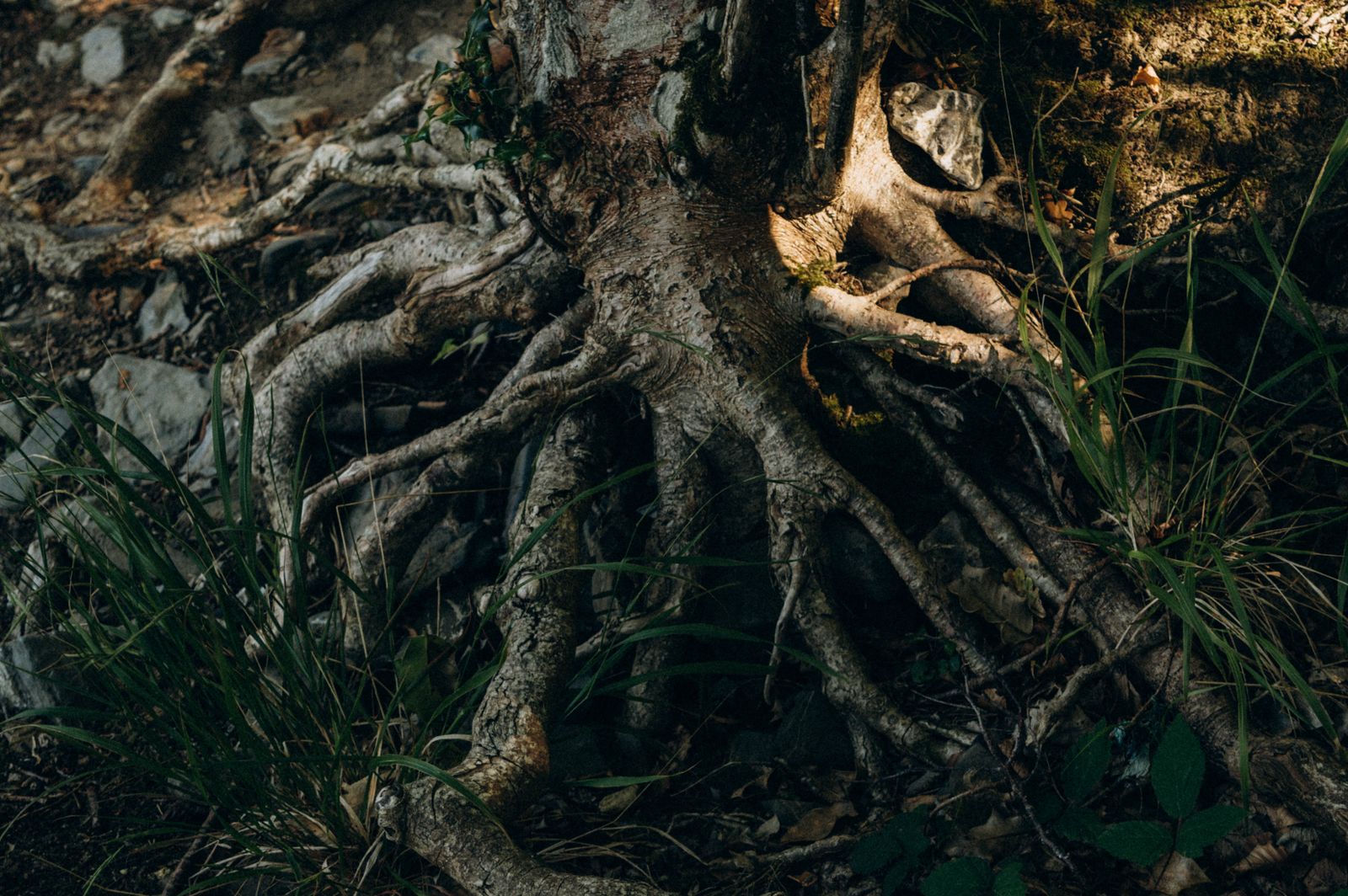
In 2023, sound artist Jeff Rice attached a hydrophone to a hollow at the base of one of Pando’s trunks and recorded what was happening underground. The results were unlike anything expected from a tree. A low rumble, almost like distant thunder, rose through the root system whenever wind moved the leaves in the canopy above.
The recording, described in coverage from IFLScience’s report on the Pando audio project, suggests that vibrations from millions of quaking leaves travel down through individual trunks and into the shared root network, where they resonate through the soil. Whether the tree uses these vibrations for anything — signalling, sensing, coordinating growth — is unknown. What the recording does confirm is that a mechanical signal in one part of Pando can propagate through the whole organism.
A follow-up account from Futura’s write-up of the recording effort notes that the sound changed depending on weather conditions, with storms producing the deepest rumbles. The hydrophone data opens a new way to monitor the health of clonal forests without cutting into them.
Why Pando is shrinking
The organism that survived the last Ice Age is now in trouble. Ecologists tracking the stand have documented steady decline over the past several decades, driven by a combination of overbrowsing by mule deer and cattle, drought, and the suppression of the fires that would normally trigger regeneration.
The mechanism is straightforward. Pando needs to send up new trunks to replace old ones that die. New trunks start as tender suckers a few inches tall — exactly the kind of vegetation that deer prefer to eat. In parts of the stand where fences exclude browsers, young aspens grow up healthy. Outside the fences, most suckers are eaten before they reach shoulder height.
Coverage from ZME Science’s feature on the largest organism describes an aging forest with a missing middle. Old trunks continue to fall. New trunks fail to establish. The canopy thins year by year, and without intervention the organism will keep losing biomass until the root system itself begins to die back for lack of photosynthetic support from above.
What killing a super-predator did to a tree
The mule deer population in the Fishlake area is elevated in part because the wolves and cougars that once kept it in check have been reduced or eliminated across much of the mountain west. Livestock grazing on adjacent public land adds further pressure. Fire suppression, the standard forestry policy across the American west for most of the twentieth century, removed the disturbance signal that normally prompts aspen clones to send up dense flushes of new growth.
Pando is, in a sense, a slow-motion casualty of choices made about predators and fire a century ago. The organism itself has no defense against browsing pressure sustained over decades. Its evolutionary strategy assumes that periodic fires will reset the browse pressure by triggering mass suckering — thousands of new trunks emerging faster than deer can eat them. Take away the fires and the arithmetic stops working.
Is Pando really the heaviest?
The “heaviest living organism” title carries a footnote. A honey fungus (Armillaria ostoyae) in Oregon’s Malheur National Forest covers about 2,385 acres — more than twenty times Pando’s footprint — and is by area the largest known organism on Earth. But fungal mycelium is thin and diffuse, threaded through the soil and dead wood of the forest, and the total biomass estimates for that fungus fall well short of Pando’s 6,000 tonnes.
By mass, according to reporting from IFLScience’s overview of contenders for the title, Pando remains the leading candidate for heaviest single organism. There may be larger clonal seagrass meadows or fungal networks yet to be measured, but among organisms that have been directly weighed or biomass-estimated with reasonable confidence, the Utah aspen sits at the top.
A very slow kind of life
Understanding Pando requires adjusting for time. Individual trunks live about a century — comparable to a human lifespan. The organism itself has been alive for something between 160 and 800 human lifespans stacked end to end. It was already ancient when the first humans crossed into North America. It was already ancient when the pyramids were built, when Rome fell, when the Fishlake area was first mapped by European surveyors in the 1870s.
Every trunk you can touch is temporary scaffolding on something much older beneath the soil. The roots have survived climate shifts that reshaped the entire continent — the retreat of the Laurentide Ice Sheet, the drying of the Great Basin, the Medieval Warm Period, the Little Ice Age. Pando has watched glaciers come and go without moving from that hillside above Fish Lake.
What monitoring the giant looks like now
Forest Service ecologists and independent researchers have divided Pando into sections and installed fencing on portions of the stand to compare regeneration rates. Aerial imagery going back decades shows the canopy footprint slowly contracting on unfenced ground and holding steady or expanding inside protected areas. Hydrophones now supplement the visual monitoring, giving researchers a way to check on the health of the root system without excavation.
Genetic sampling continues to confirm what earlier surveys established: every trunk still carries the same male genotype. No stray seedlings have taken hold inside the stand to complicate the story. What is dying, if the current trajectory continues, is a single genetic individual — one tree that first put out a shoot when mammoths still walked the Utah highlands.
The organism is not silent about it, either. When the wind moves the leaves, the rumble travels down through over 40,000 trunks and out along an interconnected root system as wide as a small town. If you stand in the right spot in the Fishlake National Forest with a hydrophone pressed to the base of a trunk, you can hear it — one tree, six thousand tonnes, still spreading, still shrinking, still humming to itself in a language no one has yet learned to read.