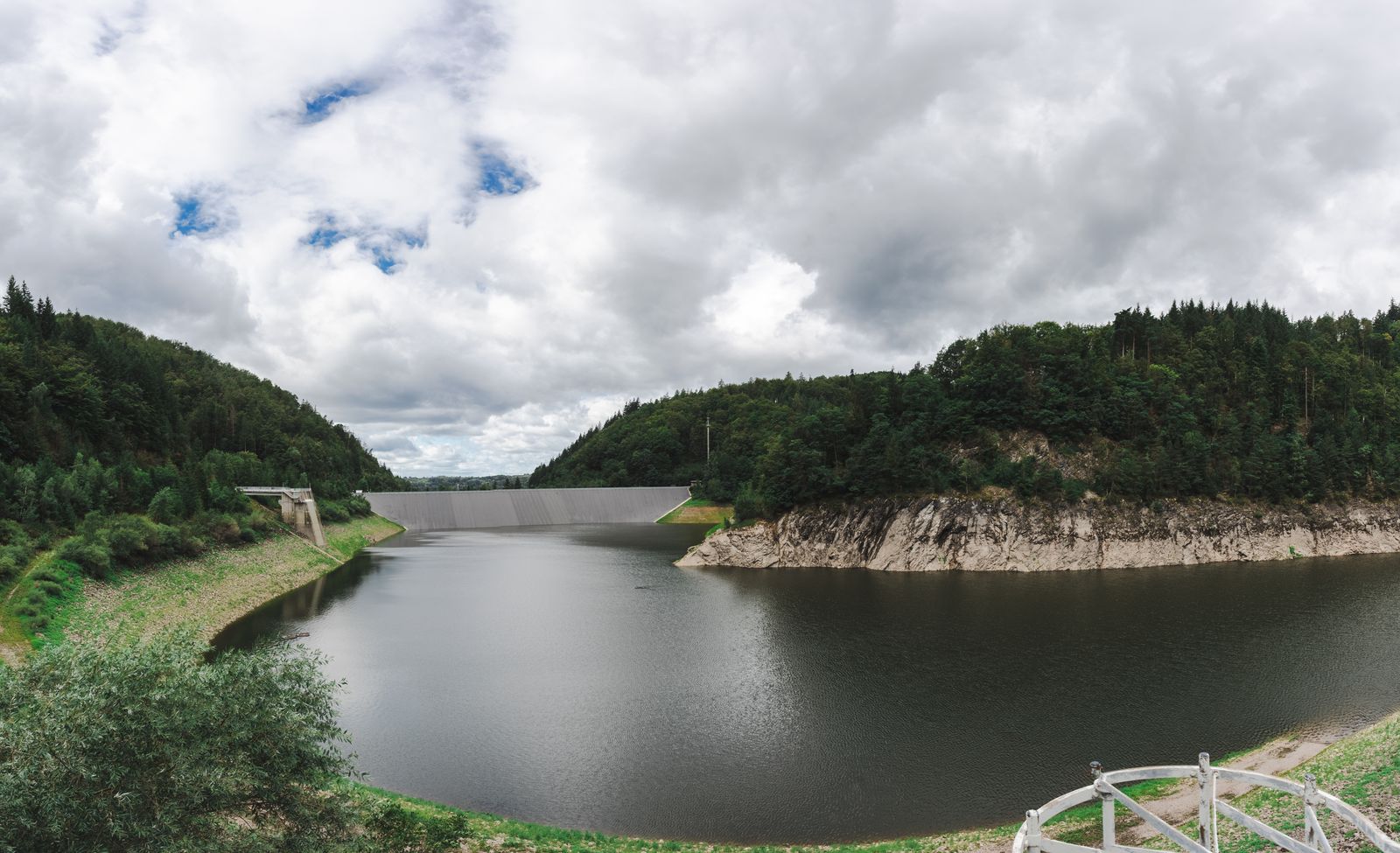
The river was the Klamath, and the mechanism was the surrender of PacifiCorp’s federal hydroelectric license, its transfer to the Klamath River Renewal Corporation, and the staged removal of four dams. Copco No. 2 came out in 2023, while J.C. Boyle, Copco No. 1 and Iron Gate were removed in 2024. When the corporation declared the river work complete on October 2, 2024, sonar detected Chinook salmon passing the former Iron Gate site that same day, and within weeks biologists found salmon spawning in Oregon.
The roughly $500 million undertaking became the largest dam removal project completed in the United States. It reconnected the main river with tributaries across a watershed where NOAA estimated 420 miles of salmon habitat would become accessible, while the first peer-reviewed monitoring later documented how much of that range the fish actually used.
A century of blockage
The Klamath runs roughly 250 miles from southern Oregon to the Pacific coast of Northern California. Before the lower dams divided it, the river produced what NOAA describes as the third-largest salmon run in the lower 48 states, behind the Columbia and Sacramento systems.
Copco No. 1 began blocking fish passage in 1918. Copco No. 2, J.C. Boyle and Iron Gate followed over the next four decades, leaving migrating salmon without adequate passage into the upper basin.
When PacifiCorp sought a new federal license in the 2000s, regulators required modern environmental protections and fish passage. The company concluded that removing the four dams would cost less than upgrading them, a calculation that turned decades of ecological damage into a practical choice between expensive reconstruction and decommissioning.
The regulatory mechanism was a license surrender rather than an involuntary demolition order. On November 17, 2022, the Federal Energy Regulatory Commission approved the surrender and authorized the transfer needed for the nonprofit renewal corporation to carry out removal.
How four dams came out
Copco No. 2, the smallest structure, was dismantled during 2023. Reservoir drawdown for the remaining three began in January 2024, deconstruction followed in spring, and work in the river ended on October 2.
The most delicate stage was draining Iron Gate, Copco and J.C. Boyle reservoirs through low-level outlets. Project managers estimated that 17 million to 20 million cubic yards of sediment had accumulated behind the three dams, with roughly 5 million to 7 million cubic yards expected to move downstream during the initial drawdown. The operation illustrated the wider problem of sediment accumulating behind large dams, but the Klamath release was scheduled for winter to reduce exposure for migrating fish.
The transition was not harmless. In February 2024, the California Department of Fish and Wildlife released about 830,000 hatchery Chinook fry above Iron Gate and later concluded that a large mortality was probably caused by pressure changes in the dam’s outlet tunnel. The department said the event was caused by gas bubble disease rather than the river’s turbidity or dissolved oxygen, and the obsolete tunnel was removed later that year.
As the reservoirs drained, restoration crews seeded 2,200 acres of exposed ground with native plants to stabilize the former reservoir beds. That work continues because removing concrete restored connectivity immediately, but rebuilding vegetation and channel structure takes years.
What the sonar recorded
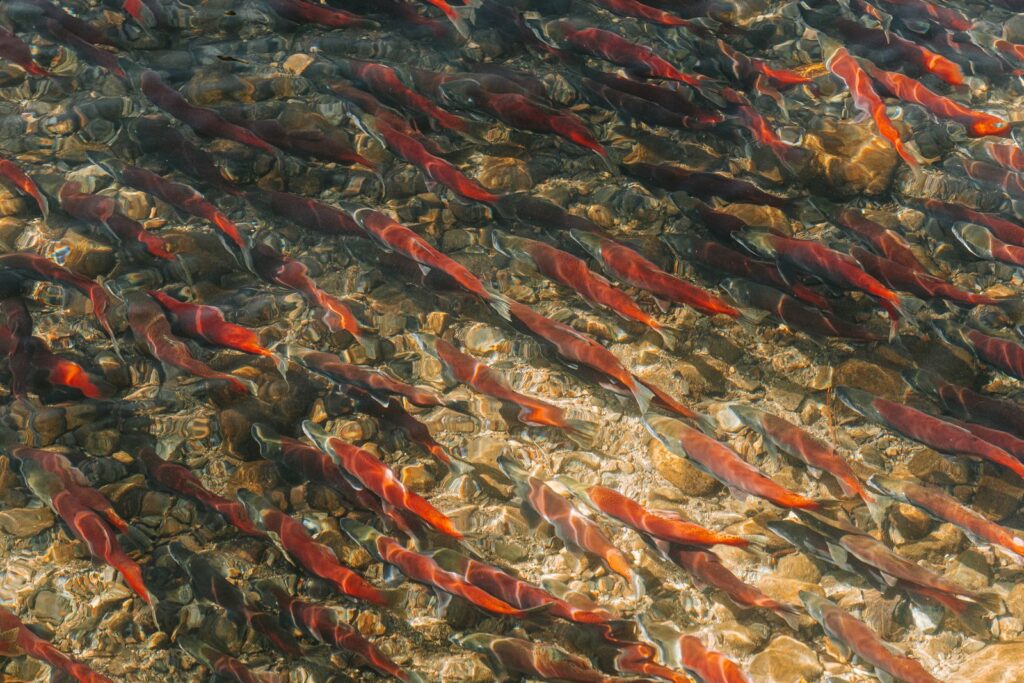
The answer to the title’s second question arrived almost at once. Monitoring detected Chinook at the former Iron Gate site on October 2, 2024, and biologists subsequently reported that the fish had reached Oregon spawning habitat within a few weeks. The rapid movement was documented through sonar, spawning surveys, video weirs, telemetry and environmental DNA sampling described in OPB and Underscore Native News reporting.
The completed scientific analysis sharpened the early estimates. A 2026 peer-reviewed study in Scientific Reports estimated that 7,742 Chinook passed upstream in 2024 and 13,310 did so in 2025, representing 18 percent and 19 percent of the total Chinook returning to the Klamath Basin in those years.
Within the first two migration seasons, Chinook had recolonized 88 percent of their documented historical distribution above the former dams. Researchers recorded them across 345 kilometres, or about 214 miles, of reconnected habitat and at elevations reaching 1,250 metres.
The sonar operated almost continuously from October 1 until high water disabled it on December 24, 2024. The peer-reviewed analysis calculated a maximum daily passage of 541 Chinook on October 21, not an average of 588 fish per day across the three-month monitoring period.
The following autumn, salmon negotiated fish ladders at Keno and Link River dams, crossed Upper Klamath Lake and entered tributaries farther upstream. Their route included former dam sites, difficult rapids and two engineered fishways that had been considered potential bottlenecks.
A changing river, and a rarer return
Water monitoring also registered a sharp decline in microcystin, a toxin produced by cyanobacteria that had flourished in the warm reservoirs. Toz Soto of the Karuk Tribe reported that 58 percent of samples below Iron Gate had previously exceeded the public-health limit, while every sample taken after removal was below it and 82 percent had no detectable microcystin.
The reservoirs had acted as stores of summer heat, extending unusually warm conditions into the salmon migration season. After their removal, scientists reported a more natural temperature pattern, while observers recorded more activity by eagles, ospreys, bears, otters and beavers along the restored corridor. Those observations are early ecological signals rather than proof that every population has permanently increased.
Most of the immediate return involved fall-run Chinook, the basin’s more abundant run. Spring-run Chinook enter freshwater earlier and spend summer holding in cold pools before spawning, but the Klamath’s remaining wild population has fallen to only a few hundred fish.
On June 3, 2026, Oregon receivers detected a tagged spring-run Chinook moving upriver through the former dam sites. The fish, released experimentally three years earlier, passed Keno and Link River and reached the mouth of the Williamson River at Upper Klamath Lake, becoming the first spring-run Chinook detected in the upper basin in more than a century.
Officials said the fish had probably reached the Pacific before returning, although they could not prove every stage because the lower river was not continuously monitored. A $6 million federal award to Oregon wildlife officials, the Klamath Tribes and the Yurok Tribe is now supporting spring-run incubation and a formal upper-basin reintroduction effort.
The people behind the removal
The engineering followed more than two decades of Tribal campaigning. The Yurok, Karuk, Klamath and other Indigenous communities pressed regulators, organized protests, pursued litigation and negotiated with PacifiCorp after generations of salmon decline and deteriorating water quality.
The 2002 lower-river fish kill became a decisive turning point. NOAA estimates that between 30,000 and 70,000 fish died amid low flows, warm water and disease, after which the Yurok Tribe investigated the event and Tribal governments intensified demands for dam removal.
The dams also submerged places belonging to the Shasta Indian Nation. Cultural preservation officer Sami Jo Difuntorum later described hearing water moving through a long-dry canyon and rocks popping as they became wet, a distinctive observation first reported by OPB and Underscore Native News.
The completed project was therefore more than a technical decision about four aging power structures. It was the regulatory result of Tribal pressure, a negotiated settlement among governments and PacifiCorp, and a finding that keeping the dams had become more expensive than taking them out.
What remains unresolved
Keno and Link River dams still stand upstream, and their fish ladders remain difficult passages. Sediment continues to shift, restored vegetation is still establishing itself, and the upper basin remains vulnerable to drought, low flows and unusually warm water.
A disease episode in 2026 showed how quickly those pressures can return. Federal testing found that 46 percent of nearly 700 juvenile Chinook sampled at three upper-river locations carried Ceratonova shasta, while about one fifth of the infected fish carried lethal parasite levels. The finding did not mean that one in five of all juveniles had died, as reporting on the tests made clear.
Monitoring has its own uncertainty. Damon Goodman said in October 2025 that the Interior Department had terminated California Trout’s U.S. Fish and Wildlife Service contract, leaving the organization to seek other funding for sonar, video and field surveys.
The Klamath now sits within a much larger American dismantling effort. American Rivers counted 2,350 documented US dam removals through 2025, while projects such as the Netherlands’ Room for the River programme reflect a related move away from forcing every river into a fixed channel.
At the Klamath, the first answer arrived before the new riverbanks had settled. Chinook crossed the former Iron Gate site on the day removal was declared complete, and by the following weeks their bodies were cutting upstream through water their ancestors had been unable to enter for more than a century.