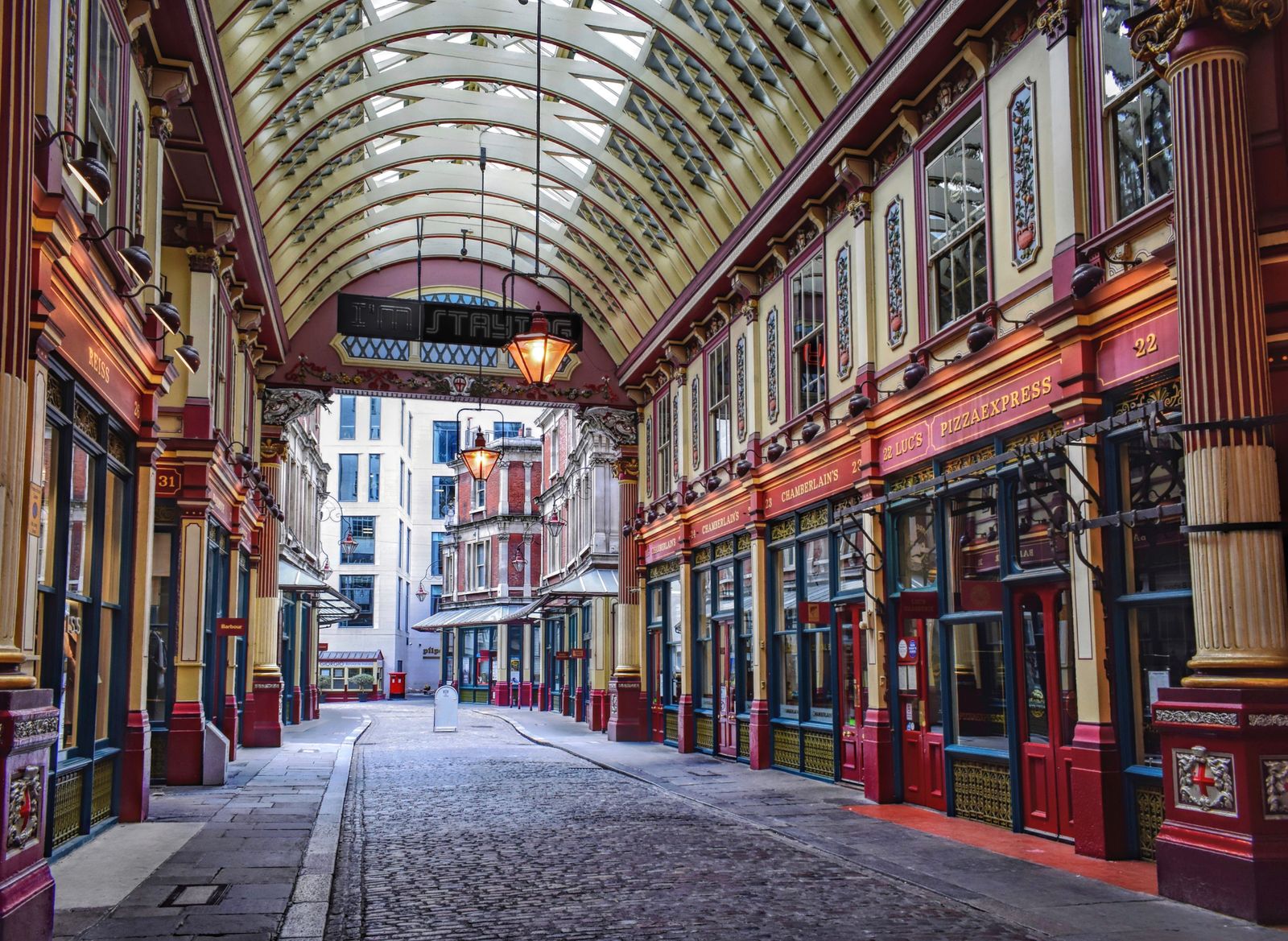
In the first week of September 1854, a physician named John Snow walked through the Soho district of London with a notebook, a street map, and a hypothesis that put him at odds with nearly every medical authority of his day. Within about ten days, 578 people in a few blocks around Broad Street had died of cholera. Snow marked each death as a black bar on a hand-drawn map, watched the bars stack up around a single water pump, and convinced the local parish to unscrew the pump’s handle. The outbreak, already fading, collapsed. It is the founding case of modern epidemiology, and it turned on a piece of wooden hardware roughly the size of a walking stick.
The pump stood at the corner of Broad Street (now Broadwick Street) and Cambridge Street. Snow suspected it was drawing water contaminated by sewage from a nearby cesspit. He was right. According to Sky History’s account of the Broad Street outbreak, the cesspit sat only a few feet from the well, and a decaying brick lining had let household waste from a sick infant seep into the drinking supply. The mechanism was faecal-oral transmission of Vibrio cholerae, though the bacterium itself would not be identified until Robert Koch’s work three decades later.

A neighbourhood collapsing in days
Soho in 1854 was crowded, poor, and plumbed for a smaller century. Houses that had been built for single families were subdivided into tenements. Cesspits under floorboards overflowed into cellars. The Industrial Revolution had pulled hundreds of thousands of workers into London without building the sewers to match, a pattern the BBC’s history of Victorian sanitation describes as one of the defining public-health failures of the industrial city. Cholera had already killed tens of thousands across Britain in three earlier epidemics.
The Broad Street outbreak moved with terrifying speed. On the night of 31 August, residents began vomiting and passing the rice-water stools that are cholera’s signature. By 3 September, dozens were dead. By the time Snow arrived with his notebook, whole households had been emptied. Some victims were healthy at breakfast and buried within 24 hours.
The map, and what it showed
Snow’s method was simple and, for its moment, radical. He went door to door. He asked where the dead had drunk their water. He plotted each fatal case as a small black bar on a map of the streets. The bars piled up thickest on the houses nearest the Broad Street pump and thinned rapidly as the distance grew. Households that drew water from other pumps, even a block away, were largely spared.
Two anomalies sharpened the case. A workhouse on Poland Street, sitting inside the death zone, had its own well and lost only a handful of its more than 500 inmates. A brewery on Broad Street lost none of its workers, who drank the beer they made and water from a private well. Meanwhile, a widow in Hampstead — miles away, well outside any plausible miasma from Soho — died of cholera after a servant brought her a bottle of Broad Street water she had preferred since her days living in the neighbourhood. Her niece, visiting, drank the same water and died too. The Smithsonian’s reconstruction of Snow’s investigation treats the Hampstead deaths as the clinching data point: geography had nothing to do with it; the water did.
Removing the handle
On the evening of 7 September 1854, Snow presented his findings to the Board of Guardians of St James parish. The next day, they authorised the removal of the pump handle. It was a modest object — a curved iron and wooden lever bolted to the top of the pump shaft — and unscrewing it took minutes. New cases had already been falling for several days, partly because so many residents had fled Soho, but the removal ended the outbreak’s tail and became the symbol of the intervention. As the Hartford Courant noted in a 2020 comparison to COVID-19 contact tracing, the handle removal is now taught as the archetypal act of applied epidemiology: identify the source, break the chain, count what happens next.
Snow was not celebrated for it at the time. The prevailing scientific consensus held that cholera spread through miasma — bad air rising from filth and rotting matter. A committee of the General Board of Health investigated the outbreak after Snow and concluded, against his evidence, that the cause was atmospheric. His waterborne theory was formally accepted only years after his death in 1858.
Why the pump was contaminated
The origin of the outbreak was traced, eventually, to a single household. At 40 Broad Street, an infant had contracted cholera — possibly from her father, who worked at a police station nearby. Her mother washed the soiled nappies and emptied the water into a cesspit in front of the house. That cesspit lay less than a metre from the Broad Street well. The brickwork between them was cracked. Bacteria did the rest.
The BBC Radio 4 reconstruction of the 19th-century cholera years describes how the infant, Frances Lewis, died on 2 September. Her father fell ill and died the following week. By then, everyone who had drawn water from the pump for cooking, tea, or drinking was already exposed.
What 578 deaths bought
The Broad Street death toll — cited across the historical record, including in the i Paper’s account of the outbreak — sits inside a much larger Victorian catastrophe. Cholera killed more than 10,000 Londoners in 1854 alone. What made the 578 different was that they were counted, located, and mapped by one man with a hypothesis. The dots on Snow’s map are among the first uses of geographic data to establish a cause of disease.
This approach underpins nearly every modern outbreak response. Contact tracing during Ebola in West Africa, Zika mapping in Brazil, and the case-cluster dashboards that defined the early months of COVID-19 all descend, methodologically, from a physician walking Soho with a pencil. The CBC drew that lineage explicitly in a 2020 piece connecting Snow’s map to modern pandemic surveillance.
The pump today
A replica of the Broad Street pump stands on Broadwick Street in Soho, a few metres from where the original was located, with its handle deliberately missing. Beside it is a pub called the John Snow. The original well was later sealed. The cesspit was drained. The house at 40 Broad Street was demolished in the general clearance of the neighbourhood decades later.
The map itself survives in multiple editions. Snow published a revised version in 1855 in his book On the Mode of Communication of Cholera, in which he laid out the water-supply theory in full and included the case-by-case addresses of the dead. The book sold poorly at the time. It is now considered one of the founding documents of public health.
A wider pattern of buried causes
Snow’s investigation belongs to a broader Victorian shift in which invisible causes — germs, sediment, radiation — were being pulled into scientific view for the first time. The Broad Street outbreak has a characteristic shape: a huge, diffuse suffering collapsed into a single physical object, in this case a pump handle, in this case unscrewed by hand.
What Snow did not know was the pathogen. He inferred its existence from the pattern of the deaths. Koch would isolate Vibrio cholerae in Egypt and India in 1883 and 1884. By then, London had already begun the great sewer works of Joseph Bazalgette, built partly in response to the Great Stink of 1858 and partly in growing acceptance that Snow had been right. The city’s water supply was moved upstream of the Thames tideway. Deaths from cholera in London fell sharply and, after another outbreak in 1866, essentially stopped.
A handle, an inference, a discipline
The physical pump handle was iron and wood, roughly the length of a forearm, curved for leverage. It had been pulled hundreds of times a day for years. Removing it took a screwdriver. That single act did not end cholera in London — the outbreak was already burning out, and thousands more would die elsewhere before the sewers were built. What it did was make a case. It gave Snow a before-and-after boundary that let him argue, in print, that the disease had one cause and that the cause could be stopped.
Every dashboard tracking a modern outbreak, every case-cluster map produced by a health ministry, every contact-tracing app that pings a phone in a crowded room, sits on the same underlying idea: count the sick, plot them in space, and look for the thing they share. In September 1854, the thing they shared was a wooden lever on a Soho street corner, and 578 people had died proving it.