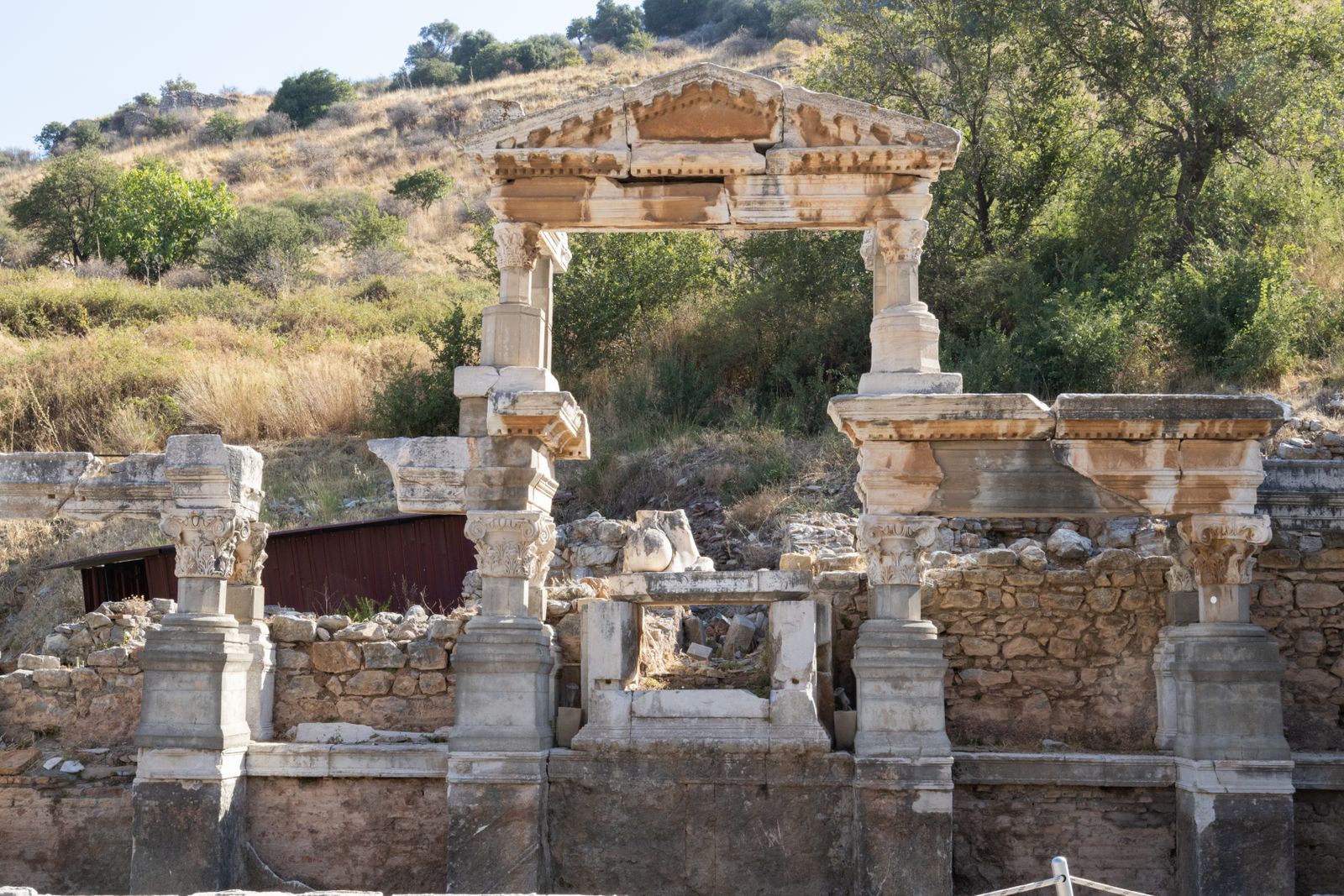
The material was Roman marine concrete: a mixture of lime, volcanic ash, rock and seawater that continued reacting long after it hardened. Seawater moving through its pores encouraged new mineral cements to grow, refining weak spaces and reinforcing parts of the binder. Modern piers work differently because they normally depend on embedded steel, which can begin corroding within decades when chlorides or carbonation breach the concrete protecting it.
Two separate bodies of research explain the contrast. A 2017 study of Roman harbour concrete examined what seawater did to volcanic material over centuries, while a Science Advances study published on 8 July 2026 investigated how atmospheric carbon dioxide transformed an inland sample from Hadrian’s Villa. Together, they show that Roman concrete did not simply remain frozen in the condition in which it was poured.
What the 2026 latrine study actually found
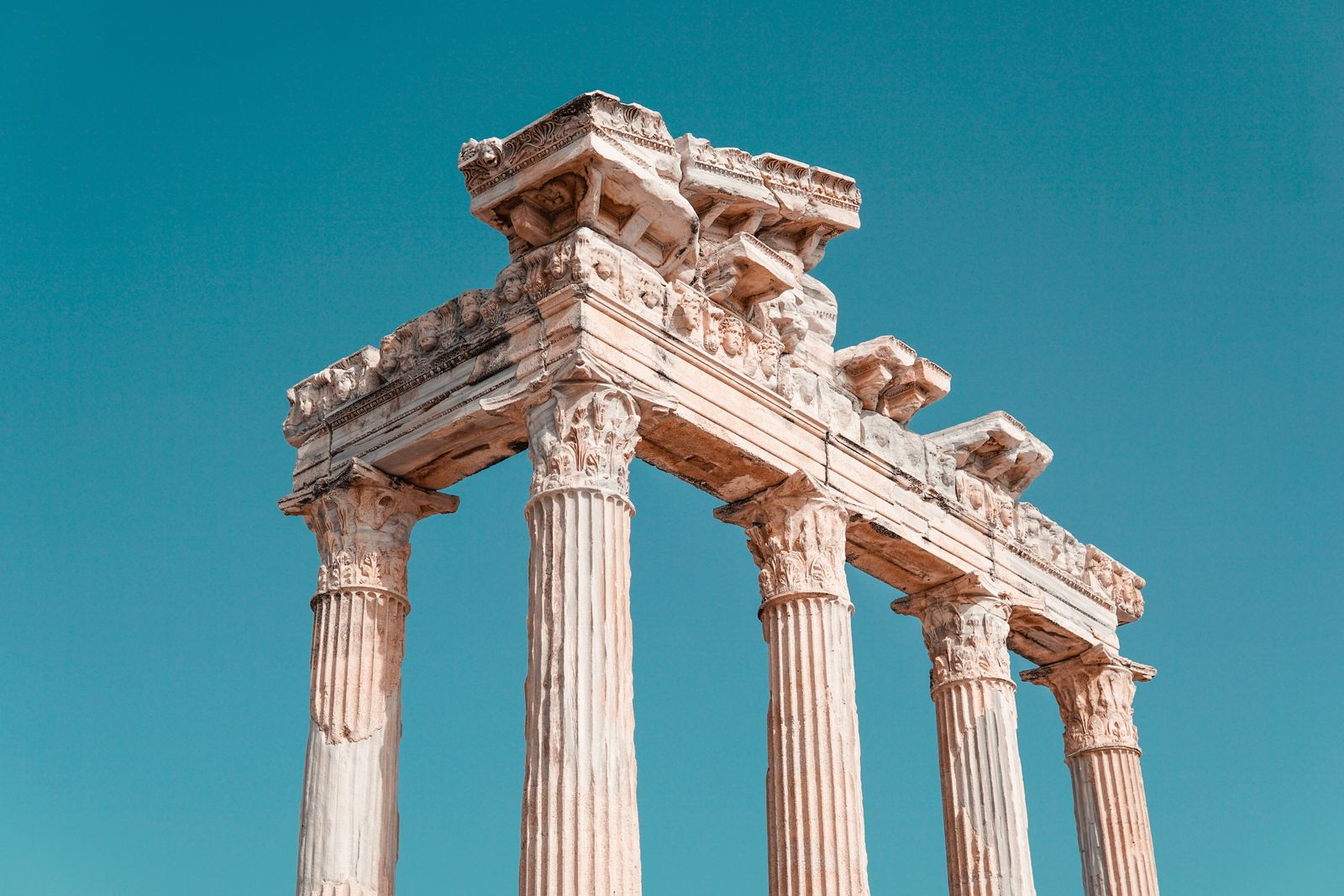
The 2026 study was led by Xiaohong Zhu of Beijing University of Technology and Paulo J. M. Monteiro of the University of California, Berkeley. Their team examined concrete taken from the western substructures of the Canopus complex at Hadrian’s Villa in Tivoli, using techniques that mapped the material from the millimetre scale down to nanometres.
The location mattered because the sample came from beneath a communal latrine. Unlike a celebrated wall, column or mosaic, a toilet was unlikely to have been repeatedly repaired with modern mortar. The sprawling villa was created for Emperor Hadrian during the second century and is now a UNESCO World Heritage site.
The scans revealed volcanic fragments surrounded by several kinds of binder. Calcium-aluminium-silicate-hydrate, or C-A-S-H, was concentrated around the boundaries between the aggregate and the surrounding material, but it represented only part of the system. Calcite, a crystalline form of calcium carbonate, had become the dominant mineral cement in the studied sample.
Three-dimensional imaging showed calcite filling pores, fractures and gaps between components. According to the University of California, Berkeley’s account of the research, these networks improved load transfer and limited routes through which water could penetrate. The study supports gradual strengthening of the mineral network, but it did not compare the surviving fragment with a mechanical test specimen preserved from the day the concrete was poured.
How carbonation changed inland Roman concrete
The process responsible is carbonation. Carbon dioxide enters the pore network, dissolves in moisture and reacts with calcium-bearing compounds left by the original lime. The reaction produces calcium carbonate, often in the form of calcite.
In ordinary language, the concrete was growing mineral cement inside itself. The researchers found fan-shaped radiaxial fibrous calcite extending from reaction rims and across nearby spaces. As those crystals connected, they formed bridges that could close fine cracks and make the pore structure denser.
This mechanism complements another Roman self-healing process identified in 2023. An MIT-led Science Advances study found evidence that some Roman builders used hot mixing, leaving reactive lime clasts inside the hardened material. When water reached a crack, calcium from those clasts could dissolve and recrystallise inside the opening.
Spacewar previously examined that work in its report on the self-healing role of Roman lime clasts. The two mechanisms should not be treated as one universal recipe, however. Roman concrete varied by location, period, available rock and the job the structure had to perform.
Why seawater helped the harbour mix
Roman marine concrete introduced a different chemical environment. Builders combined lime and volcanic pozzolana with pieces of tuff or other volcanic rock, then placed the mixture where seawater could become part of the reacting system. Ancient writers including Vitruvius and Pliny described concrete that could harden beneath the sea.
Modern analysis of cores from Portus Cosanus, Portus Baianus and other Mediterranean sites found that seawater had continued moving through the material. The alkaline fluid dissolved parts of the volcanic glass and crystals. New minerals, particularly phillipsite and aluminium-rich tobermorite, then precipitated inside pores, altered pumice and remnants of lime.
These minerals formed interlocking structures that refined pore space and improved bonding within the mortar. They also made it more difficult for fractures to travel cleanly through the material. That provides a mechanism by which the concrete’s resilience could improve over time, although it does not prove that every surviving Roman block now has a higher compressive strength than it possessed when new.
Fragments of the harbour works at Portus Cosanus have survived roughly two millennia of waves, salt and temperature changes. Spacewar covered the original mineral study in its report on how seawater alters Roman concrete. Survival on that timescale remains remarkable even after the mechanical claim is stated cautiously.
Why modern reinforced piers fail differently
Modern structural concrete solves a problem Roman builders could largely avoid. Concrete withstands compression well but performs poorly when pulled apart, so bridges, towers, decks and slender piers use steel bars to carry tensile forces. That combination allows structures that would be difficult to build with massive unreinforced walls and arches.
Fresh Portland-cement concrete is strongly alkaline. The high pH creates a thin passive layer on the steel that suppresses corrosion, provided the surrounding concrete remains dense and protective. Trouble begins when chlorides from seawater reach the reinforcement or when carbonation reduces the alkalinity around it.
Carbonation does not normally move inward at a constant number of millimetres every year. Its depth is commonly modelled as increasing approximately with the square root of exposure time, while moisture, temperature, cracking, curing, cement composition and permeability can all alter the rate. A study of carbonation modelling describes why predictions must account for both time and material variability.
Once corrosion begins, the reaction products occupy more space than the steel that produced them. Pressure builds against the surrounding concrete, eventually causing longitudinal cracks, delamination and spalling. The US Federal Highway Administration treats deterioration as a sequence involving chloride penetration, corrosion initiation, propagation and accumulated damage rather than a universal fifty-year deadline.
What the comparison can and cannot prove
Roman harbour walls and modern piers were engineered for different structural worlds. Roman builders could make enormous masses of masonry and concrete that kept most of the material in compression. Contemporary structures use steel to span farther, rise higher and carry changing loads with far less bulk.
Modern reinforced concrete is therefore not condemned to fail after a fixed number of decades. Low-permeability mixes, generous concrete cover, crack control, protective coatings, stainless or corrosion-resistant reinforcement and timely maintenance can greatly extend service life. Poor workmanship or extreme salt exposure can shorten it just as dramatically.
The surviving Roman structures also represent the winners of a long historical selection process. Ruined, dismantled or badly made examples are less visible than the Pantheon and the harbour blocks that endured. Their longevity demonstrates what some Roman materials could achieve, not the performance of every Roman concrete pour.
There is nevertheless a modern reason to study them. Producing clinker for Portland cement requires both high-temperature heating and the release of carbon dioxide from limestone, making cement one of the more difficult industrial materials to decarbonise. The International Energy Agency identifies supplementary cementitious materials, material efficiency, alternative fuels and carbon capture among the principal routes to lowering those emissions.
The wager on time
The Pantheon’s roughly 43-metre unreinforced dome remains the most visible demonstration of Roman concrete’s durability. Completed under Hadrian, it carries its own enormous weight without a steel reinforcing cage. Its builders reduced the density toward the crown by changing the aggregate, eventually using light pumice around the oculus.
Its survival does not mean that a Roman harbour mixture can simply replace structural concrete in a modern bridge. Roman mineral systems developed slowly, while contemporary projects need predictable strength within days or weeks. Engineers must also satisfy tensile, seismic, fatigue and safety requirements that ancient builders never calculated in modern terms.
The useful idea is narrower and more compelling. Some Roman concretes were designed, intentionally or not, with ingredients that remained chemically active after construction. Water entering the material did not always begin a one-way path toward destruction because it could also transport the elements needed to grow new mineral cement.
Along a Roman breakwater, seawater still slips through pores that first opened before the empire reached its height. Inside a modern pier, the same water may be carrying chloride toward steel. The difference is not a forgotten magical recipe, but two materials making opposite bets about what water and time will do next.