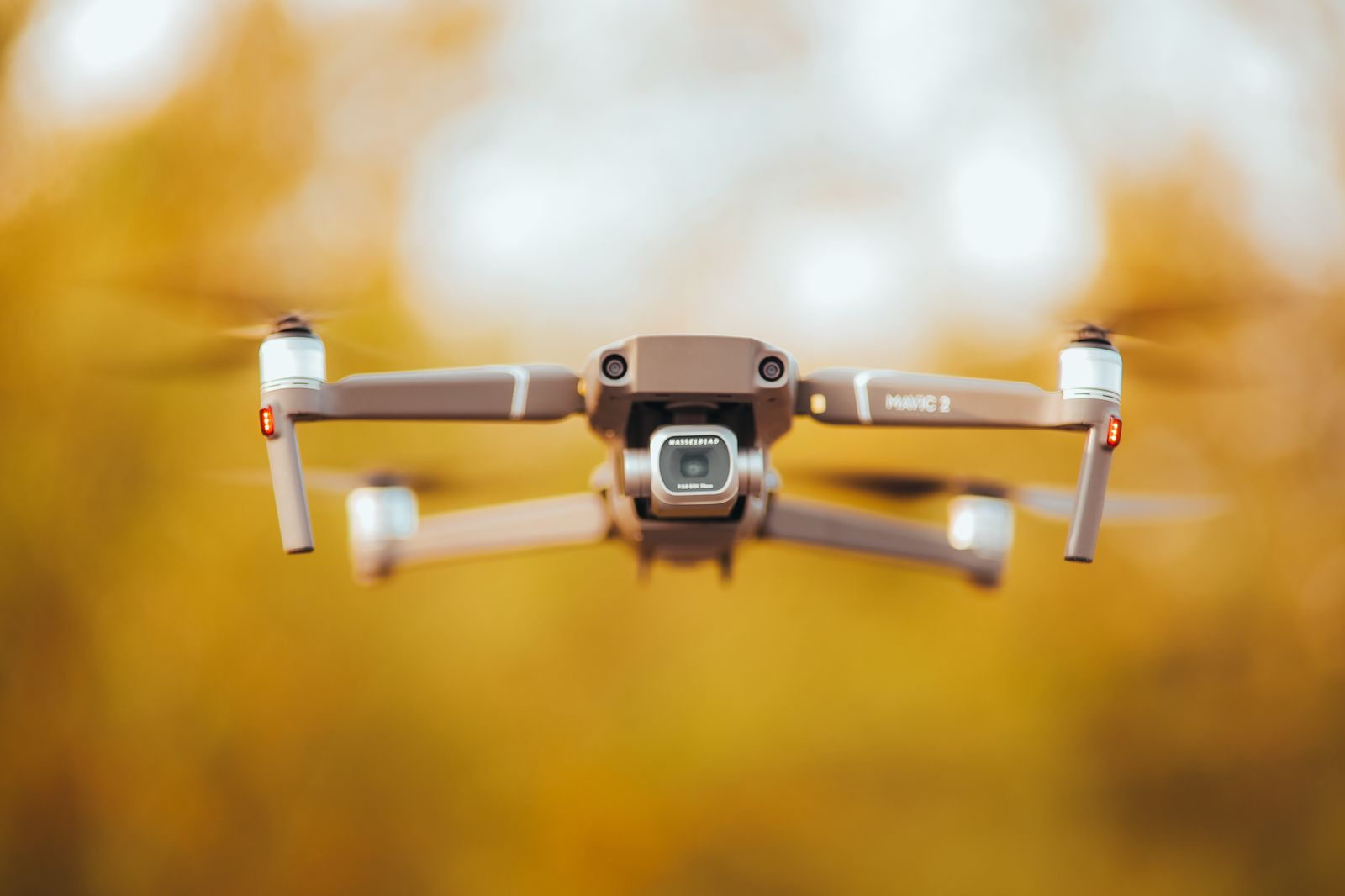
On August 3, 2026, two bureaus inside the Federal Communications Commission published a public notice that would, if adopted, retroactively strip sales authorization from drones the same agency cleared for the American market only months earlier — including models with LiDAR sensors — by declaring their LiDAR sensors military-grade equipment. The comment window on the docket closes tonight.
The notice does not ban flying. It bans selling.
A DJI drone already in a hobbyist’s backpack stays legal to fly. A drone sitting in an Amazon warehouse in Kentucky, waiting to ship, becomes contraband the moment the rule takes effect. That is the mechanism the FCC is proposing, and it works by reaching backward through its own authorization records to withdraw permissions it had already granted.
What the August notice actually says
The document was issued jointly by the FCC’s Public Safety and Homeland Security Bureau and its Office of Engineering and Technology. It is not a Notice of Proposed Rulemaking. The bureaus already hold delegated authority to act on the record they build, without a vote of the full Commission, as DroneXL’s technical breakdown of the docket spells out.
The bureaus propose seven categories that would tag a drone as military-grade UAS. Any single category qualifies. Among them: LiDAR sensing, thermal imaging, aerosol dispensing, swarm coordination, and payload capacity above a set weight threshold.
The test is capacity-based, not use-based. It does not matter whether the pilot is a county surveyor, a wedding videographer, or a soybean farmer checking irrigation lines. If the airframe carries a LiDAR unit — even a low-power one used for obstacle avoidance — it fits the definition.
Why LiDAR-equipped drones are on the hook
Many DJI models carry LiDAR sensors as shipped. Forward LiDAR units are typically downward-and-forward obstacle-detection sensors designed to keep camera drones from clipping tree branches or to help hold position in low light.
Under the plain reading of the August 3 notice, each of those sensors converts each of those drones into military-grade equipment for regulatory purposes. Coverage of the FCC filing notes that the definition is broad enough to sweep in the vast majority of DJI’s consumer lineup and much of Autel’s, along with imported models from Switzerland, Japan, and Korea.
The internal contradiction is what makes the notice unusual. The bureaus wrote that they expect minimal economic impact because military-grade drones are a minority of the market and recreational flyers are unlikely to be flying them. Two pages earlier in the same document, the bureaus wrote a definition that captures sub-250-gram camera drones sold at major retailers.
How the FCC gave itself the power to reach backward
Until October 2025, the FCC’s Covered List worked prospectively. Once equipment was added, no new authorizations could be issued, but products already cleared could continue to be imported and sold. Consumers who bought a DJI Mavic 3 in November could reasonably assume they could still buy accessories, replacement propellers, and spare batteries a year later.
That changed with a rule the Commission adopted in October 2025, which built a mechanism to limit the continued importation and marketing of previously authorized covered equipment. Regulators gave themselves the ability to run a public-interest analysis on any authorized product and pull the authorization if the equipment had been flagged as a national-security risk. Reason’s account of the rulemaking describes the move as the agency granting itself retroactive authority in advance of using it.
In December 2025, the Public Safety and Homeland Security Bureau added all foreign-produced UAS and UAS critical components to the Covered List. That freeze meant no new drone models from covered manufacturers could be authorized after that date.
The August 3, 2026 notice is the second step. It uses the October 2025 rule to reach backward through the pre-freeze catalog and revoke sales authorization for drones already on shelves.
The Malaysia detour and why tariffs weren’t enough
Tariffs on Chinese-assembled drones were meant to squeeze DJI out of the American consumer market. They did not. DJI and its component suppliers shifted final-assembly work through third countries, most visibly Malaysia, and continued shipping product into the United States at prices consumers were willing to pay. sUAS News laid out the trade-routing pattern that pushed regulators toward a different tool.
The FCC’s authorization system is that tool. Every radio-transmitting device sold in the United States needs an FCC ID. Pull the ID, and a customs officer at the Port of Long Beach has a legal basis to hold a shipment regardless of where the box was sealed.
That same shell-brand pipeline has drawn its own separate enforcement action. Earlier in the summer, in a proceeding distinct from the LiDAR notice, the FCC proposed fines against several companies it suspected of selling rebranded DJI hardware after they failed to respond to the agency’s inquiries, and moved against others outright — a parallel push against the same Malaysia-routed workaround, running alongside but apart from the August 3 military-grade proposal.
What “military-grade” means when the definition includes obstacle avoidance
LiDAR is an acronym for light detection and ranging. A small automotive LiDAR fires low-power infrared laser pulses and measures return time to build a three-dimensional map of nearby surfaces. On consumer drones, the sensor’s job is to prevent the drone from flying into a fence post. Its range is measured in meters.
The same physical principle scales up to the LiDAR units on autonomous cars, forestry mapping aircraft, and battlefield reconnaissance pods. The FCC’s proposed definition does not distinguish among them by power output, range, or angular resolution. A sensor that can map a hedgerow is treated the same as a sensor that can map a tank column.
Thermal imaging is the second broad category likely to catch consumer hardware. TNW’s summary of the proposal notes that thermal-equipped drones are standard equipment for roof inspectors, solar-farm technicians, volunteer search-and-rescue teams, and rural fire departments checking hotspots after a controlled burn. All of them, under the notice, would be using military-grade hardware.
What existing owners can and cannot do
Owners of affected models keep the right to fly the aircraft they already own. That is the one carve-out the bureaus made explicit.
They lose the ability to buy replacement parts sold as new FCC-authorized equipment. A cracked drone shell, a dead battery, a lost remote — each of those becomes a hunt through the secondary market rather than a next-day Amazon order. Repair shops that stock genuine DJI parts cannot re-import fresh inventory once existing stock runs out.
Retailers face the harder outcome. Once the prohibition takes effect, stores could no longer list the affected models for sale, and warehouse stock would either have to move back to the distributor or be written off. Tech Times reported that the ban on imports and sales would take effect roughly 180 days after the notice’s August 3 Federal Register publication, setting the clock on how long retailers have to clear existing stock.
The evidence the government has and hasn’t shown
A Department of Homeland Security intelligence bulletin warned that DJI was likely providing U.S. critical infrastructure and law enforcement data to the Chinese government. The FCC has cited that bulletin, along with subsequent Pentagon assessments, as grounds for adding DJI to the Covered List.
DJI commissioned an independent security audit. The audit reported no evidence of data transmission outside the United States, no backdoors or unauthorized remote-access mechanisms, and no unexplained radio-frequency emissions from the drones it tested.
The public record still does not contain a specific technical demonstration by a U.S. agency showing a DJI consumer drone exfiltrating flight data to a server inside China. The classified record may contain such a demonstration. The unclassified record does not, which is the gap that has kept the debate running for years.
What happens after tonight
Comments on the docket close at the end of the day on September 2, 2026. After the docket closes, the two bureaus review the record and decide whether to issue a final order. Because delegated authority already sits with the bureaus, there is no requirement for a full-Commission vote before the order takes effect.
DJI itself has called the proposal a total reversal of the terms under which its products were authorized in the first place. The company has retained U.S. counsel and is expected to challenge any final order in federal court, likely on grounds that revoking a prior authorization without new evidence of harm exceeds the FCC’s statutory mandate.
The consumer drone that is also a survey instrument
Consumer drones with LiDAR modules are designed for obstacle avoidance. These pocket-sized camera drones are lightweight, affordable, and widely available at major retailers.
Under the August 3 notice, those pocket-sized camera drones share a regulatory category with reconnaissance systems designed to map artillery positions from kilometers away. The category is defined not by what the sensor does in the field, but by the physics it uses to do it.
The comment window closes at midnight Eastern. Whatever the bureaus decide next, the record they are building tonight will set the precedent for how the FCC treats every future generation of consumer hardware that happens to share a signal-processing technique with something on a Pentagon procurement list.