The Lockheed SR-71 Blackbird cruised at Mach 3.2 at altitudes reaching 80,000 feet and above, and at that speed the titanium airframe heated dramatically. Skin temperatures averaged around 327 degrees Celsius across the fuselage, with hotspots on the wings and inlets reaching even higher temperatures. The metal expanded so much that the entire aircraft grew several inches longer in flight. The engineers at Lockheed’s Skunk Works knew this would happen. So they built the fuel tanks to leak on the ground, and only seal once the plane heated up in the air.
It is one of the strangest design compromises in aviation history. A Blackbird sitting on the tarmac at Beale Air Force Base dripped JP-7 jet fuel onto the concrete like a broken tap. Ground crews walked around puddles. The plane was designed that way on purpose.
Why titanium, and why the leaks
At Mach 3.2, aluminum airframes soften and warp. Steel is heavy. Lockheed’s answer was titanium, a metal that keeps its strength at high temperatures but behaves in ways aluminum never does. The SR-71’s structure was built primarily from titanium alloy, and the raw material had to be sourced from the Soviet Union — the same country the plane was built to spy on.
Titanium expands when it heats. Not dramatically by everyday standards, but across the SR-71’s airframe cruising at over 600 degrees Fahrenheit of skin temperature, the cumulative growth is significant. Veteran pilots have described the elongation at up to four inches — around 10 centimetres — with the airframe fitted with joints designed to close up as the plane grew during flight.
The fuel tanks were part of the same problem. Cold, the panels sat loose against their seals. Hot, they pressed tight. If the engineers had sealed the tanks to be leak-proof on the ground, the panels would have buckled or split as the metal expanded in the air. So they accepted the leaks. Fuel dripped. The plane took off, climbed, accelerated, and the tanks sealed themselves as the titanium reached operating temperature.
The heat does not come from friction
A common misconception says the SR-71’s skin heated up because of friction with the air. Hypersonics researchers have noted that the real culprit is compression.
Supersonic flight generates shock waves that violently compress the air in front of and along the aircraft. Compressed air heats up, the same way a bicycle pump gets warm as you squeeze air into a tyre. The effect scales with the square of the Mach number, which is why Concorde’s skin at Mach 2 topped out around 100°C while the SR-71 at Mach 3.2 baked at more than three times that temperature.
Re-entry vehicles coming back from orbit face the same physics dialled up further, with shock-heated air pushing surface temperatures past 1,000°C. The Blackbird lived in the middle band — hot enough to demand titanium and exotic fuel, cool enough that a pilot in a pressure suit could survive an hour of cruise.
JP-7: a fuel that would not light with a match
Ordinary jet fuel would have been a bomb waiting to go off in the SR-71’s roasting tanks. Lockheed and the Air Force developed JP-7, a low-volatility hydrocarbon with a flashpoint high enough that you could drop a lit match into a puddle and watch it go out. That property mattered when the tanks themselves were being used as heat sinks, absorbing warmth from the airframe and the engines before the fuel was burned.
Modern hypersonics research follows the same logic. Work on thermal management of hydrocarbon fuels in next-generation vehicles treats the fuel as an active coolant rather than just propellant. The Blackbird pioneered the idea in the 1960s.
Starting the J58 engines with JP-7 was itself a problem. The fuel was so hard to ignite that the SR-71 needed a chemical called triethylborane, or TEB, which spontaneously combusts on contact with air. A shot of TEB into the combustor produced a green flash and lit the JP-7. Each engine start used a measured squirt from a small onboard tank.
The J58 engine and the inlet trick
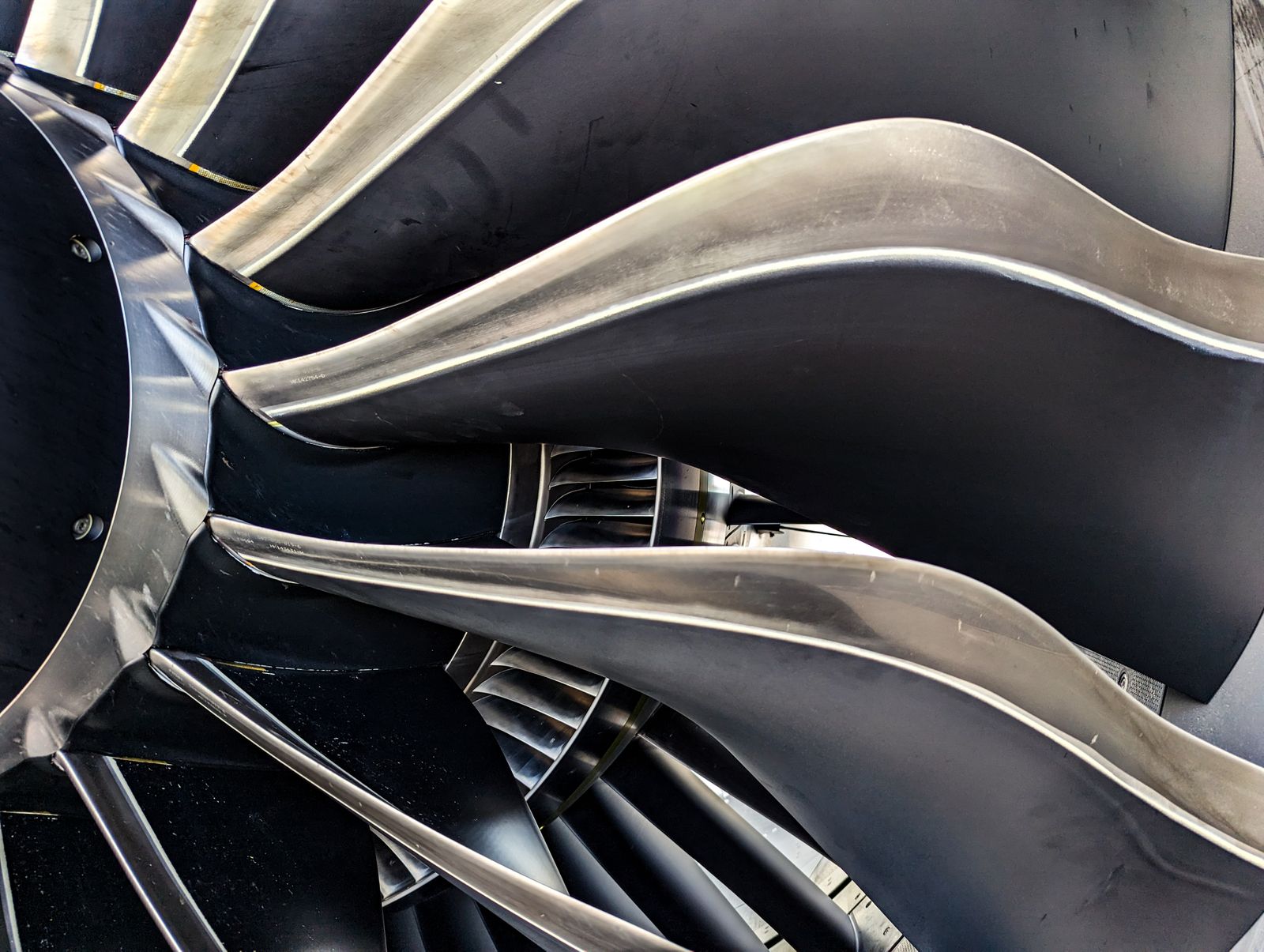
The two Pratt & Whitney J58s hanging off the SR-71’s wings were technically turbojets, but at cruise they behaved more like ramjets. Movable spikes in each engine inlet slid forward and back to manage the shock waves entering the intake. At Mach 3, most of the air bypassed the turbine machinery entirely and was routed straight to the afterburners.
The numbers are counterintuitive. Engineering analyses have shown that at cruise, the J58 turbine itself produced only about 17 percent of the aircraft’s thrust. The inlet contributed 54 percent, and the ejector nozzle at the back added the remaining 29 percent. The engine, in a sense, was mostly a flow manager. The plane pushed itself forward by cleverly arranging the air around it.
As aviation historians have noted, the Blackbird still holds the record for the fastest air-breathing crewed aircraft ever built, decades after its official retirement. Nothing has publicly beaten it.
What the pilot dealt with
Former SR-71 pilots have described the cruise environment in precise terms. Skin temperature averaged 620°F (327°C). Outside air pressure dropped to 0.4 pounds per square inch, roughly one thirty-sixth of sea-level pressure. Cruise altitude ranged from 79,200 to 84,480 feet — 15 to 16 miles straight up. True airspeed hovered around 2,000 to 2,100 miles per hour.
The canopy above the pilot’s head reached 620°F in flight, and was made from thick fused quartz. Touching the inside of the glass through a pressure-suit glove felt like leaning against a warm oven door.
The Flight Manual capped the aircraft at Mach 3.3, though the SR-71 was not power-limited. Pushing past that risked exceeding compressor inlet temperature limits, and no pilot ever ran both throttles up to see how fast the Blackbird would actually go. The airframe was point-designed for continuous cruise at Mach 3.2, with little margin built in above that.
Missions that used the heat
Between 1966 and 1990, the SR-71 flew thousands of operational reconnaissance missions and logged extensive flight hours in the hostile envelope above 80,000 feet. No Air Force crew member was ever killed flying one. No SR-71 was ever successfully intercepted, despite repeated surface-to-air missile launches from North Vietnam, North Korea and elsewhere. The last known SAM shot at a Blackbird was fired by North Korea in 1981. It missed.
The plane’s defensive tactic was simple physics. If a missile launch was detected, the pilot accelerated, climbed, and banked at 45 degrees. No SAM of the era could out-turn a Blackbird at Mach 3.2, and none could match its altitude. Speed and height were the armour.
The Astro-inertial Navigation System tracked stars from an onboard catalogue in broad daylight, updating the aircraft’s position to within a quarter of a mile after thousands of miles of flight. This was navigation to GPS-level accuracy in the pre-GPS era, achieved by looking at stars through a small window in the top of the fuselage.
The fuel-leak paradox in context
Aerospace history is full of design decisions that only make sense once you understand the extreme environment involved. The SR-71’s leaking tanks sit in this category of counterintuitive engineering: choices that look wrong at rest and correct only at operating conditions.
The Blackbird was refuelled almost immediately after takeoff by a KC-135Q tanker carrying JP-7. The plane would take off with a partial load, meet the tanker at altitude, top up, and only then accelerate to cruise. By the time the tanks had sealed themselves against thermal expansion, the aircraft was full and ready for the mission.
On the ground, ground crews used drip pans and worked around the puddles. The leaks were not a bug in the design. They were the design, running in its cold state.
Records that still stand
On 6 March 1990, the last SR-71 to fly operationally, tail number 61-7972, made a farewell run from Palmdale, California to Washington DC. It covered the continental United States in 64 minutes and 20 seconds, with a top speed of 2,242 miles per hour. That flight remains the fastest coast-to-coast crossing by a crewed air-breathing aircraft in history.
The Blackbird’s speed and altitude records set decades ago have not been broken by any operational crewed aircraft since. The North American X-15 rocket plane reached Mach 6.7, but it was experimental, air-launched from a B-52, and never flew a mission. Among aircraft that took off from a runway under their own power and did a job, the SR-71 still sits alone at the top.
Rumours of a hypersonic successor, unofficially called the SR-72 or “Son of Blackbird,” have circulated for over a decade. Lockheed Martin executives floated the concept publicly in 2013 and projected a possible test vehicle by 2025. Nothing has flown. The engineering problems the SR-71 solved with titanium and leaking tanks scale up viciously at Mach 5 and above, where researchers are still working through composite airframes and dual-cycle propulsion.
Where the Blackbirds sit now
Of the 32 SR-71s built, 12 were lost to accidents. The survivors are scattered across museums: the Smithsonian’s Steven F. Udvar-Hazy Center outside Washington DC, the March Field Air Museum in California, the Imperial War Museum at Duxford in England, the Museum of Aviation in Georgia. They sit cold. The tanks are empty and sealed. The titanium is grey rather than the deep black of an aircraft freshly recovered from a mission.
Stand under one and look at the wing roots and inlet spikes. The panels no longer fit tight against each other the way they did at 80,000 feet. The gaps are visible if you know where to look — small dark lines where the metal has contracted back to its resting shape. A Blackbird on the ground is a plane holding its breath, waiting for a heat it will never feel again.