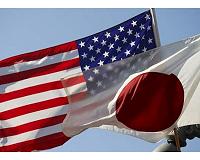
Washington and Tokyo are seeking "the strongest possible" measures against North Korea after its latest and most powerful nuclear test, a top US envoy said Sunday.
Sung Kim, the US State Department's special representative for North Korea policy, also suggested that the US may launch its own sanctions in response to "the provocative and unacceptable behaviour by the North Koreans".
"We will be working together very closely in the Security Council and beyond to come up the strongest possible measure against North Korea's latest action," Kim told reporters in Tokyo after meeting his Japanese counterpart Kenji Kanasugi.
Kanasugi said Seoul, Tokyo and Washington would be coordinating their response.
"We agreed to continue Japan-US and Japan-US-South Korea cooperation…as we work toward an adoption of a new UN Security Council sanction that will include further sanction measures against North Korea," he said in a statement.
North Korea has been hit by five sets of UN sanctions since it first tested a nuclear device in 2006, but has insisted it will continue its testing programme, come what may.
The North carried out its fifth nuclear test on Friday, claiming that it had successfully detonated a nuclear warhead, and drawing global condemnation.
The international community has engaged in a flurry of diplomacy in an attempt to persuade China to use its leverage to persuade Pyongyang to comply with UN sanction resolutions.
China has said it "firmly opposes" the test, but analysts believe Beijing wants to avoid a collapse of North Korea in order to prevent the balance of power on the Korean peninsula from leaning towards the US.
Washington's "dialogue" with Beijing over the crisis will continue, Kim said.
"We continue to work together to urge China to implement existing Security Council resolutions…and to work with us to make sure North Korea's behaviour and their deliberation change in a more productive and positive direction," Kim said.
"North Korea continues to present growing threats to the region, to our allies and to ourselves. We will do everything possible to defend against that growing threat," he said.
Obama warns of new sanctions after N. Korea nuclear test
Washington (AFP) Sept 9, 2016 –
President Barack Obama vowed Friday to push for new international sanctions in retaliation for the "grave threat" posed by North Korea's latest nuclear test.
The US leader consulted by telephone with South Korean President Park Geun-Hye and Japanese Prime Minister Shinzo Abe following news of the reclusive country's fifth and most powerful test.
"We agreed to work with the UN Security Council, our other Six-Party partners, and the international community to vigorously implement existing measures imposed in previous resolutions, and to take additional significant steps, including new sanctions," Obama said in a statement.
"The United States condemns North Korea's September 9 nuclear test in the strongest possible terms as a grave threat to regional security and to international peace and stability," he said.
Obama, who has pleaded since first taking office in 2009 for a world without nuclear weapons, denounced North Korea's actions as "unlawful and dangerous."
"To be clear, the United States does not, and never will, accept North Korea as a nuclear state," the president declared.
"As Commander in Chief, I have a responsibility to safeguard the American people and ensure that the United States is leading the international community in responding to this threat and North Korea's other provocations with commensurate resolve and condemnation," Obama said.
North Korea has been hit by five sets of UN sanctions since it first tested a nuclear device in 2006.
The Security Council will meet Friday at 3 pm (1900 GMT) at the request of the United States and Japan to discuss Pyongyang's latest test.
Obama reaffirmed, as he has done repeatedly following North Korean ballistic missile launches, the US commitment to "take necessary steps to defend our allies in the region," namely South Korea and Japan.
North Korea claimed Friday it had successfully tested a nuclear warhead that could be mounted on a missile, drawing condemnation from South Korea's government over the "maniacal recklessness" of young ruler Kim Jong-Un.
At 10 kilotons the blast approached the might of the bomb that devastated Hiroshima in 1945, experts in Seoul said.