

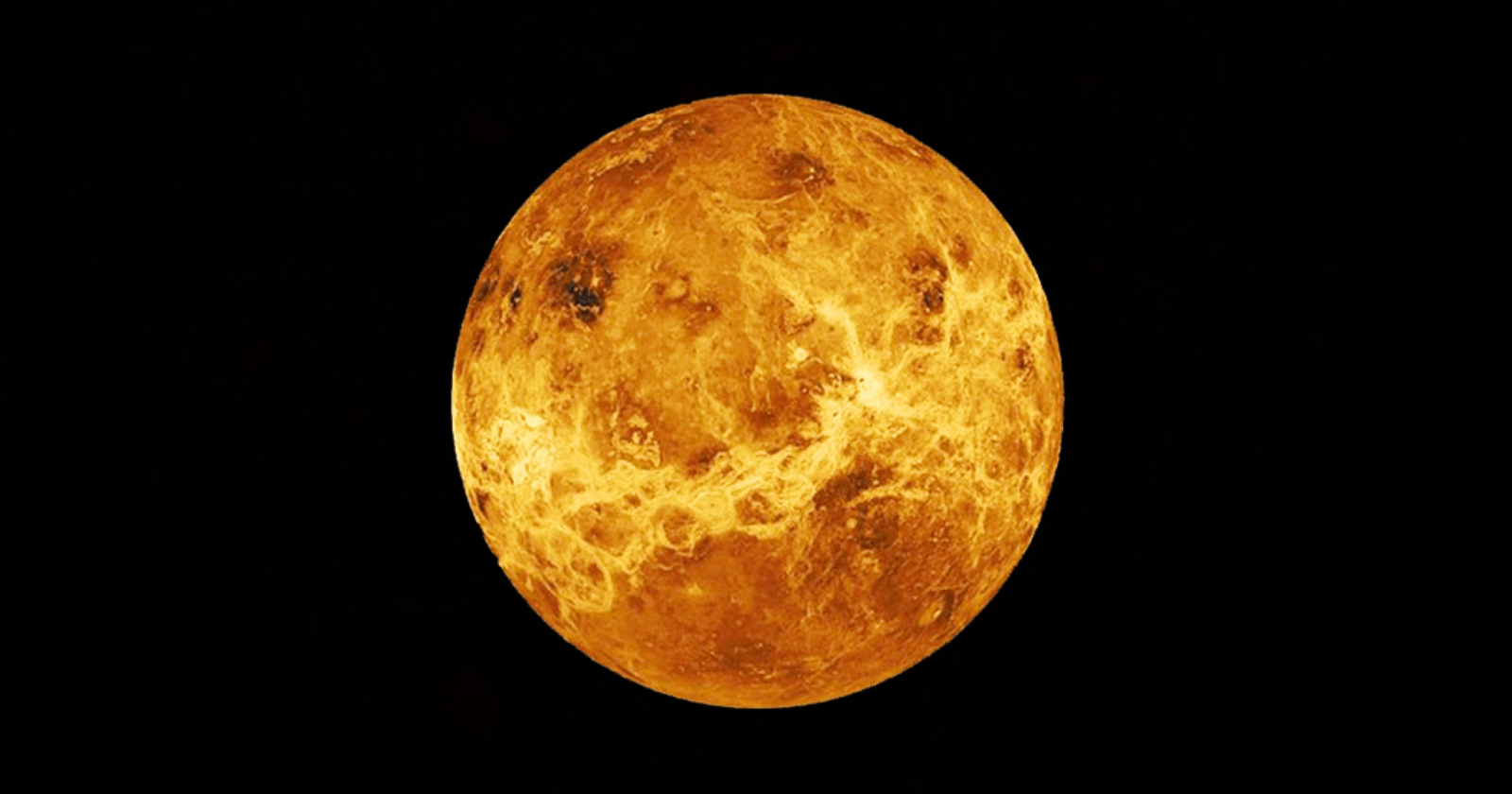
The last time a working spacecraft touched the surface of Venus was 41 years ago.
The specific spacecraft was Vega 2, a Soviet probe that landed on June 15, 1985, ran experiments for 56 minutes, and stopped transmitting. Before Vega 2 there had been eight other successful Soviet Venus surface landings between 1970 and 1985, of which the most productive was Venera 13, in March 1982. Venera 13 returned two colour panoramas of a flat basaltic plain under an orange sky, drilled a soil sample and analysed its chemistry, and survived for 127 minutes in conditions that had been expected to destroy it in 32.
Then the missions stopped. No country has successfully landed a working spacecraft on the surface of Venus since 1985, and no country is currently planning to.
What Venera 13 actually did
The specific engineering task Venera 13 was built for was a short one.
The lander touched down on March 1, 1982, in a region called Phoebe Regio, at 7.5 degrees south latitude. Ambient temperature at the landing site was 457°C. Atmospheric pressure was 89 Earth atmospheres, roughly equivalent to sitting under 900 metres of seawater. The lander’s design specification called for 32 minutes of operation before those conditions overwhelmed its cooling systems and destroyed its electronics.
It lasted 127 minutes — almost four times the design life. In that window it fired pyrotechnic charges to eject its camera lens caps, scanned two colour and black-and-white panoramas of the surrounding plain, extended a mechanical drill and collected a small soil sample, transferred that sample into a sealed low-pressure chamber inside the lander, and ran an X-ray fluorescence analysis of its composition. The result placed the Venera 13 landing site on volcanic basalt rich in potassium, chemically distinct from the samples collected by Venera 14 at a landing site 950 kilometres away four days later.
The panoramas showed a plain of flat, slab-like rocks with fine dark soil in between. The sky in the images glows a sodium-lamp orange, the result of Venus’s dense CO₂ atmosphere and sulfuric acid clouds filtering out blue wavelengths of sunlight before they reach the ground. A visible fragment of the lander’s own equipment shows in the bottom of each frame.
Then the electronics failed, the transmissions stopped, and the machine became a small carbonised lump on the surface where it remains today.
The 41-year silence
After Vega 2 in June 1985, spaceflight simply stopped going to the surface of Venus.
Several factors contributed. Mars became NASA’s clear planetary science priority through the 1990s and 2000s. Multiple successful rovers and orbiters produced a steady stream of scientific returns from a body that was, in many respects, easier to work with. The specific engineering challenges of Venus surface missions — the temperature, the pressure, the corrosive sulfuric acid clouds, the brief operating window — remained genuinely difficult. Any spacecraft sent to the surface would essentially be a one-shot instrument, worth its considerable cost only if it could pack enough science into a few tens of minutes to justify the effort.
Meanwhile, orbital missions to Venus continued at a slower pace. NASA’s Magellan mapped the surface with radar between 1990 and 1994. ESA’s Venus Express operated in orbit from 2006 to 2014. Japan’s Akatsuki has been in Venus orbit since 2015. But orbiters can see clouds and radar-derived topography. They cannot analyse rocks, sample soil, or photograph a surface directly. For that, someone has to land.
No one has, since 1985.
The scientific cost of the silence has been substantial. The Venus surface remains one of the most poorly characterised terrestrial bodies in the solar system. The only in-place chemical measurements of Venusian rock come from the Venera and Vega landers of the 1970s and 1980s. Two of those sites returned chemistry so different from each other that generalising about the composition of Venus’s crust remains genuinely difficult. Everything modern planetary scientists understand about Venus geochemistry rests on data collected before the personal computer became a household object.
What is coming next
The current situation is finally starting to change, though the specific timelines make the change slower than it sounds.
Rocket Lab and MIT are collaborating on the Venus Life Finder, a small privately funded atmospheric probe scheduled to launch in the summer of 2026. It will not land. Its target is Venus’s cloud layer at approximately 50 kilometres altitude, where temperatures are moderate and where a controversial 2020 detection of atmospheric phosphine raised the possibility of microbial life. The probe will transit the clouds in a matter of minutes, running specific chemical tests during its descent, and it will not reach the surface.
NASA’s DAVINCI mission is the closest thing to a modern Venera. It is a descent probe planned for launch in December 2030 and arrival in 2033. It will parachute through the Venusian atmosphere, running continuous chemical analysis all the way down, and its target landing site is a highland region called Alpha Regio. Whether it will survive on the surface long enough to return meaningful data is genuinely uncertain — DAVINCI’s mission plan treats the atmospheric descent as the primary science phase, with any surface time as a bonus.
NASA’s VERITAS orbiter and ESA’s EnVision orbiter are both scheduled for launch around 2031. Neither will land. Both will improve on Magellan-era radar mapping and study surface chemistry from orbit, but neither will directly touch the Venusian surface.
Russia’s Venera-D mission includes a lander component and has been discussed for various launch dates around 2029. Given the current state of international space cooperation, its actual status is uncertain.
If DAVINCI reaches Venus successfully in 2033 and its atmospheric probe returns even a few minutes of surface data, it will be the first direct measurement from the surface of Venus in 48 years.
What Venera 13 still teaches
The specific engineering challenge Venera 13 solved has not been solved better since.
The Soviet approach — an insulated titanium pressure shell, pre-chilled electronics with substantial thermal mass, a short mission designed to gather maximum science in a brief window before the environment destroyed the lander — remains the paradigm for how surface Venus missions are conceived. DAVINCI’s own descent probe, whatever it achieves, will be a modern refinement of the same basic design philosophy. There is no known way to build a long-duration Venus lander with current technology. Everything that reaches the Venusian surface is, in a sense, on a countdown from the moment it lands.
The panoramas that Venera 13 sent back on that specific day in March 1982 remain the most detailed images of Venus’s surface anyone has ever collected. Nothing has meaningfully improved on them in the four decades since. Somewhere on Alpha Regio, if the schedule holds and the engineering works, a NASA descent probe may finally take newer ones in 2033 — if only briefly, and if only before the same conditions that ended Venera 13 do the same thing to its successor.
