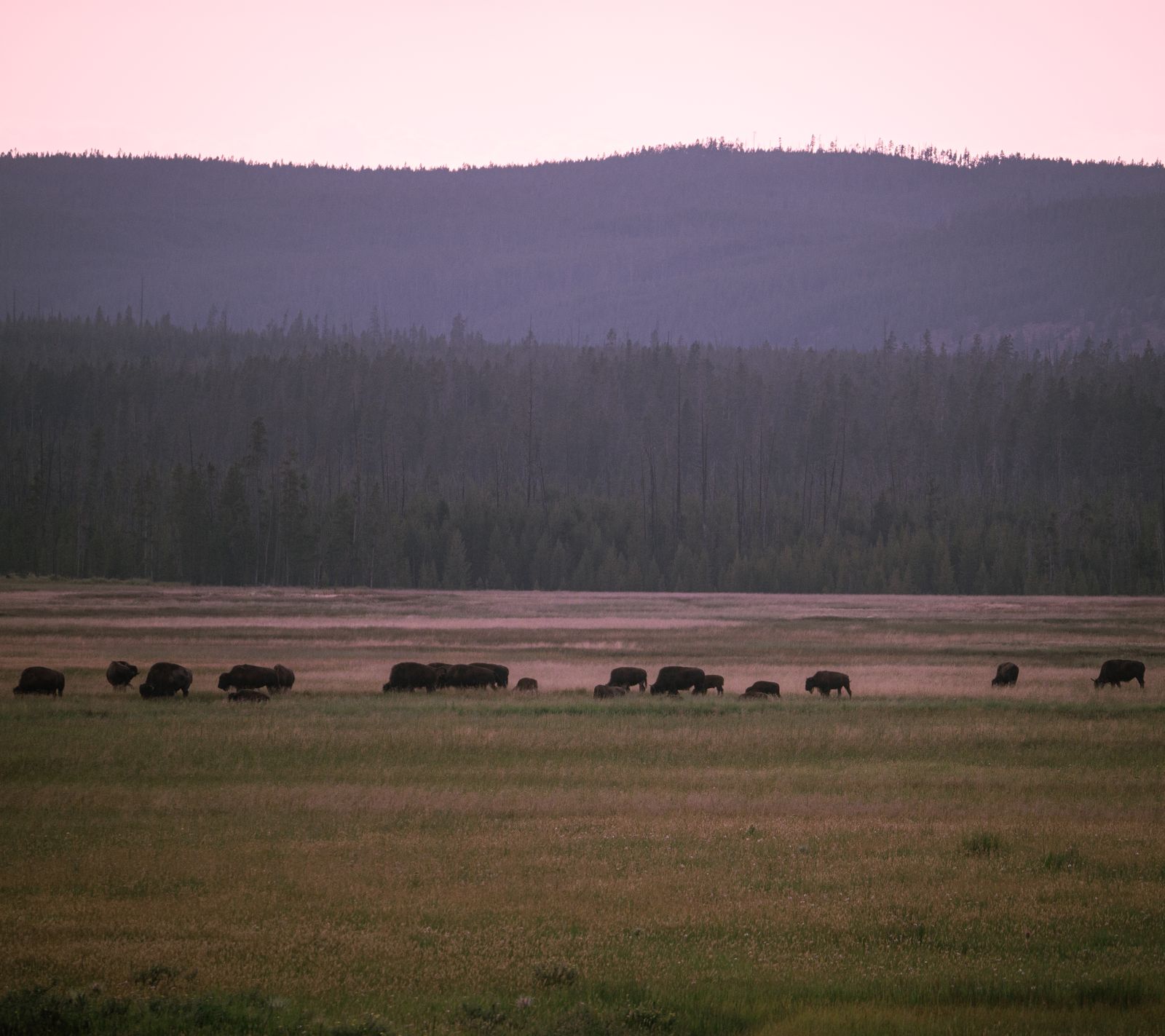
Bison graze on shortgrass prairie ten miles from downtown Denver, on ground where the U.S. Army once loaded sarin into artillery shells. The Rocky Mountain Arsenal National Wildlife Refuge sits in Commerce City, Colorado, and its history runs from mustard gas in World War II to bald eagles roosting in cottonwoods along First Creek. In between came one of the most expensive environmental cleanups in American history.
The Army broke ground on the site in 1942. Within a year, workers were producing mustard agent, lewisite, and chlorine gas on the plains northeast of Denver. After the war, the lines were retooled for sarin, a nerve agent so lethal that a droplet on skin can kill within minutes. Shell Oil leased part of the property and used the same infrastructure to manufacture pesticides, including aldrin and dieldrin.
The most contaminated square mile on Earth
The arsenal’s chemical stockpile was part of a much larger pattern of Cold War secrecy around U.S. chemical weapons production — a pattern that became impossible to keep quiet after a 1968 nerve-agent test at Dugway Proving Ground in Utah killed roughly 6,000 sheep, the incident that finally forced the American public to confront what its military had been building.
The waste went into unlined earthen basins. Basin F held roughly 240 million gallons of liquid chemical waste at its peak — a shallow lake of solvents, pesticides, and byproducts of nerve agent synthesis, sitting open to the sky on the high plains. Groundwater carried the plume off-site. Farmers downgradient reported dying crops in the 1950s. Ducks landing on the basin died within hours.
An EPA field officer once called a stretch of the arsenal the most contaminated square mile on Earth. Whether or not that claim held up against Soviet plutonium towns, the arithmetic on paper was staggering: dozens of chemicals of concern, groundwater contamination reaching residential wells, and buried munitions scattered across thousands of acres of what looked, from a distance, like empty grassland.
Sarin, VX, and a very short list of manufacturers
Only a handful of facilities in world history have manufactured nerve agents at industrial scale. Rocky Mountain Arsenal is on that list, alongside Soviet-era plants and the British facility at Nancekuke.
Sarin production at the arsenal ran from 1953 to 1957 out of Building 1501, whose central manufacturing structure was reportedly built to withstand a nuclear attack. The finished agent was loaded into M34 cluster bombs, and an official Army history of the plant claimed its sarin-related operations were protected by elaborate alarm systems for leak detection — a claim undercut somewhat by the ten Sarin “bomblets” that were unearthed and safely destroyed on the site decades later, in 2000. Rocky Mountain Arsenal also became a storage site for M55 rockets before those weapons were consolidated at depots including Umatilla, Oregon, and Anniston, Alabama.
A separate incident tied the arsenal to the Pacific theater of the Cold War chemical-weapons program. In July 1969, a leaking shell at Okinawa’s Chibana depot exposed American troops to what investigators believed was VX gas. The unit stationed there, the 267th Chemical Platoon, had received its training at Denver’s Rocky Mountain Arsenal before deploying under the Pentagon’s classified Project 112 program.
The lawsuit that started the cleanup
The State of Colorado sued the Army and Shell in the early 1980s. The site went on the National Priorities List in 1987. What followed was a Superfund action that lasted more than two decades and cost roughly $2.1 billion, split between the two responsible parties.
Basin F was drained. Its liquid was evaporated in lined ponds and the residual sludge, along with millions of cubic yards of contaminated soil, was consolidated into two engineered landfills capped with layers of clay, geomembrane, drainage rock, and vegetated topsoil. The larger cap covers 240 acres. Groundwater is still pumped and treated through a system of extraction wells and carbon filters that will run indefinitely.
Buildings came down by the hundreds. The old distillation towers, the sarin production plant, the incinerators — all demolished, their concrete crushed and buried under the caps. A comprehensive management plan developed for the U.S. Fish and Wildlife Service — later honored by the American Society of Landscape Architects — laid out how the reclaimed acreage would be stitched back into a functioning shortgrass ecosystem.
Bison on the shortgrass prairie
Congress designated the arsenal a National Wildlife Refuge in 1992, before the cleanup was even half done. The idea was simple: the perimeter fencing that had kept the public away from the nerve agents had also kept out subdivisions, and what remained inside the wire was one of the largest unbroken pieces of shortgrass prairie on the Front Range.
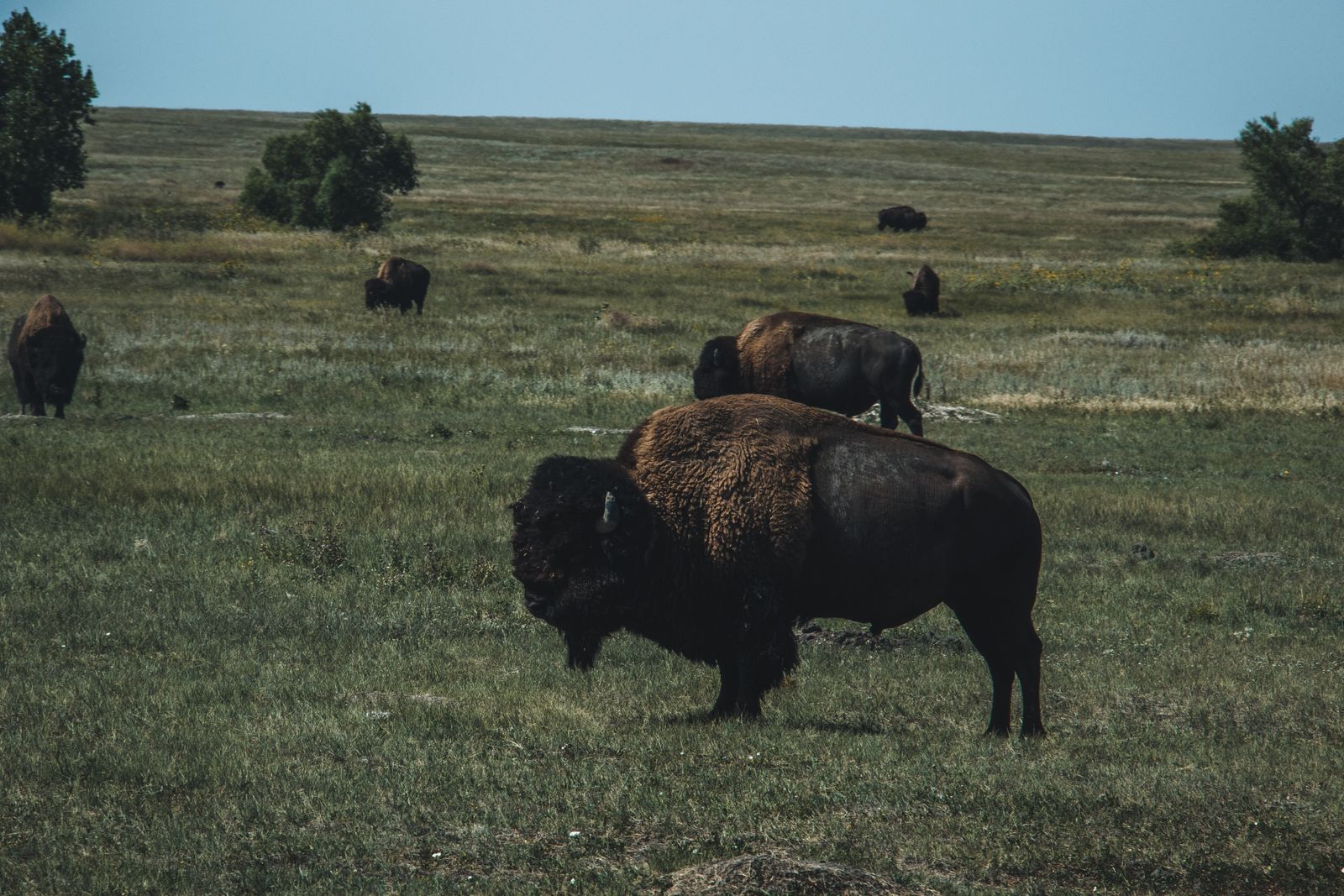
In 2007, bison arrived from the National Bison Range in Montana and were released into an enclosure at the refuge’s northwest corner, an area confirmed to have never been used for weapons manufacture. Summit Daily reported the animals were the first wild bison to walk that ground in more than a hundred years. The herd has grown substantially, and calves are periodically transferred to Tribal nations through the InterTribal Buffalo Council.
The genetics matter. These bison carry little to no cattle DNA, which makes them one of the more valuable conservation herds in North America. A mature bull weighs up to 2,000 pounds. The perimeter fence stands high, with buffers and secondary fencing, and staff carry tranquilizer guns in case an animal tests the boundary.
A prairie dog metropolis
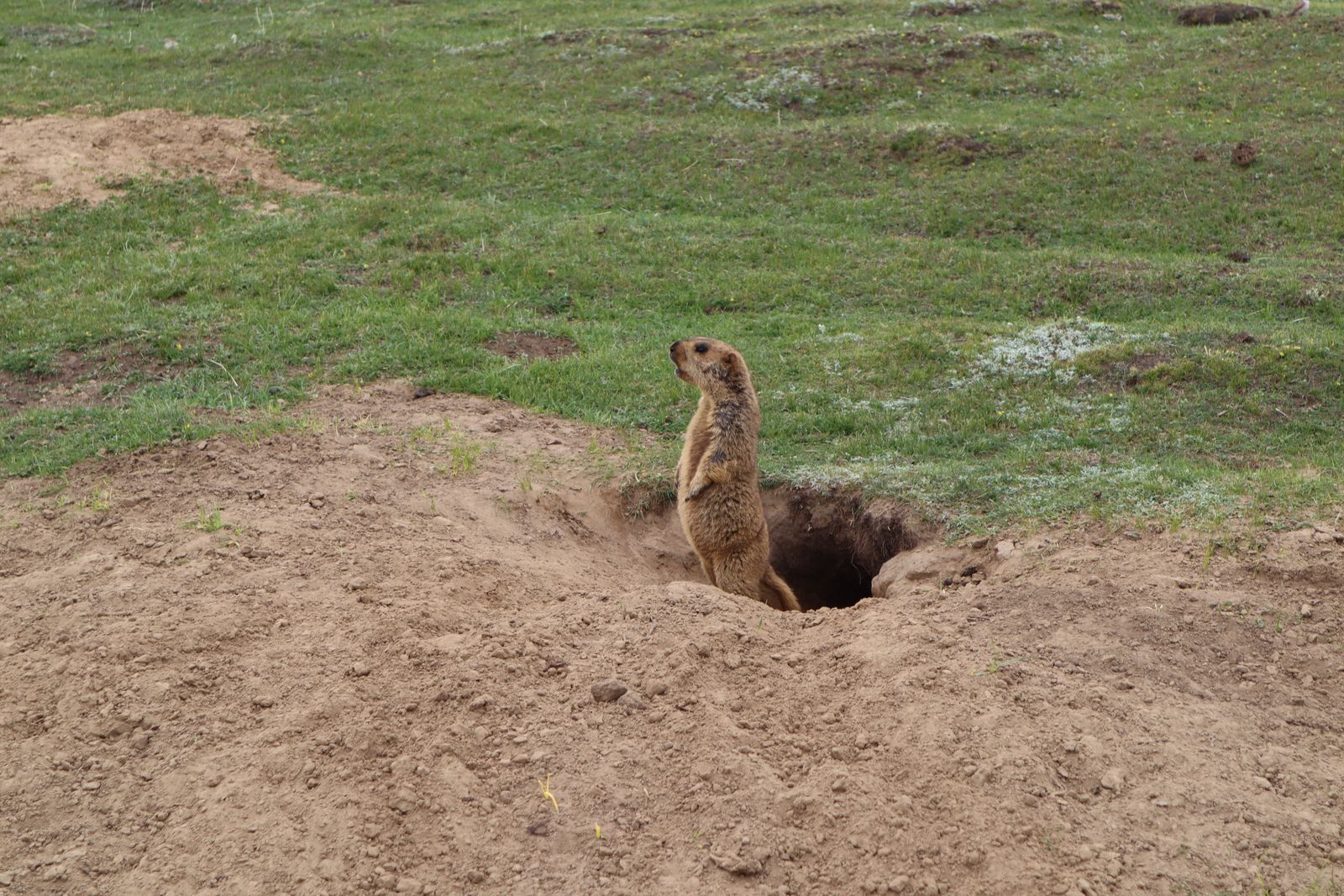
The refuge sits atop one of the largest black-tailed prairie dog colonies in any American city. Aerial surveys have mapped active burrow complexes across several thousand acres of the property. The rodents are the ecological engine of the shortgrass system: their burrows shelter burrowing owls, their clipped vegetation creates habitat for mountain plovers, and their bodies feed ferruginous hawks, golden eagles, coyotes, and the black-footed ferrets that biologists have begun reintroducing on nearby lands.
Bald eagles overwinter along the refuge’s lakes and cottonwood galleries. Deer move through the grass in herds of forty or fifty. Coyotes hunt the prairie dog towns at dusk. Hundreds of species of wildlife have been documented on the site, from tiger salamanders in the wetlands to American white pelicans staging on Lake Ladora during migration.
Volunteers lead weekend tours along the refuge’s wildlife drive and hiking trails, walking visitors past prairie dog mounds within sight of the Denver skyline. Admission is free.
The pattern of the poisoned reserve
Rocky Mountain Arsenal is one of several places in the United States where mid-century military secrecy accidentally preserved ecosystems that suburban development would otherwise have erased. The Hanford Reach in Washington — closed off in 1943 for plutonium production — became a refuge for shrub-steppe habitat that has largely vanished elsewhere in the Columbia Basin. The arsenal transformation follows a similar pattern: thousands of acres of former weapons ground now function as protected habitat.
Recovery stories tend to surprise the ecologists who write the initial prognoses. The Yellowstone fires of 1988 saw lodgepole pines return faster than models predicted, sprouting from serotinous cones that had been sealed shut with resin, waiting for exactly that heat. The Cuyahoga River, which once caught fire in 1969, was dredged, re-oxygenated, and lined with restored wetlands, and dozens of fish species returned to a channel biologists had written off as biologically dead.
What is still buried
The caps at Rocky Mountain Arsenal are not permanent solutions in a geological sense. They are engineered structures with expected service lives measured in decades, monitored by an EPA-mandated program that will continue in perpetuity. Groundwater treatment plants pump around the clock. Fish and Wildlife Service staff walk the caps checking for erosion, burrowing animals, and vegetation loss. Signs warn visitors to stay on designated trails.
The bison herd cannot access the capped areas. Neither can the prairie dog colonies, at least not the ones biologists want to keep alive. The refuge is not a wilderness. It is a landscape under management, its ecology braided with monitoring wells and institutional memory of exactly what is buried and where.
Stand on the observation deck at Lake Ladora on a September morning and the geometry is hard to reconcile. Denver’s downtown towers rise to the southwest. A herd of bison moves through bluestem and buffalograss to the north. Prairie dogs chirp warnings from mounds that stretch to the horizon. Somewhere under the capped acreage to the east sits the residue of four decades of chemical weapons production, sealed under clay and geomembrane and grass, being watched by people who will never stop watching it.