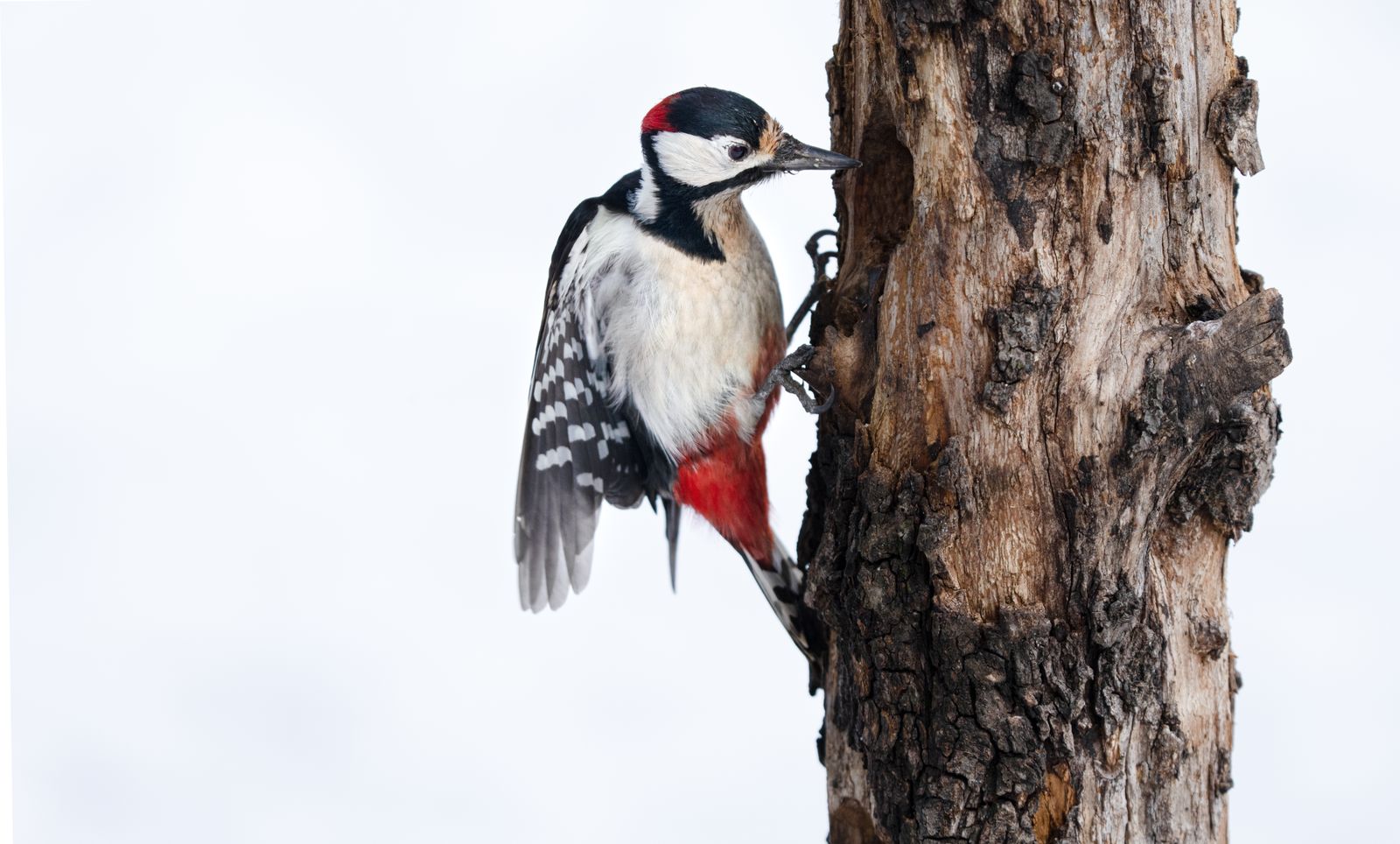
The Avon Park Air Force Range in south-central Florida covers a large expanse of pine flatwoods, cypress swamp and open savannah — and inside its impact zones, where the U.S. Air Force drops inert ordnance and runs live-fire training, dozens of at-risk species make their home. Among them is the red-cockaded woodpecker, a small black-and-white bird with a barely visible smear of red behind the male’s eye, and one of the great quiet comeback stories of the American Endangered Species Act. In October 2024, the U.S. Fish and Wildlife Service downlisted the species from endangered to threatened.
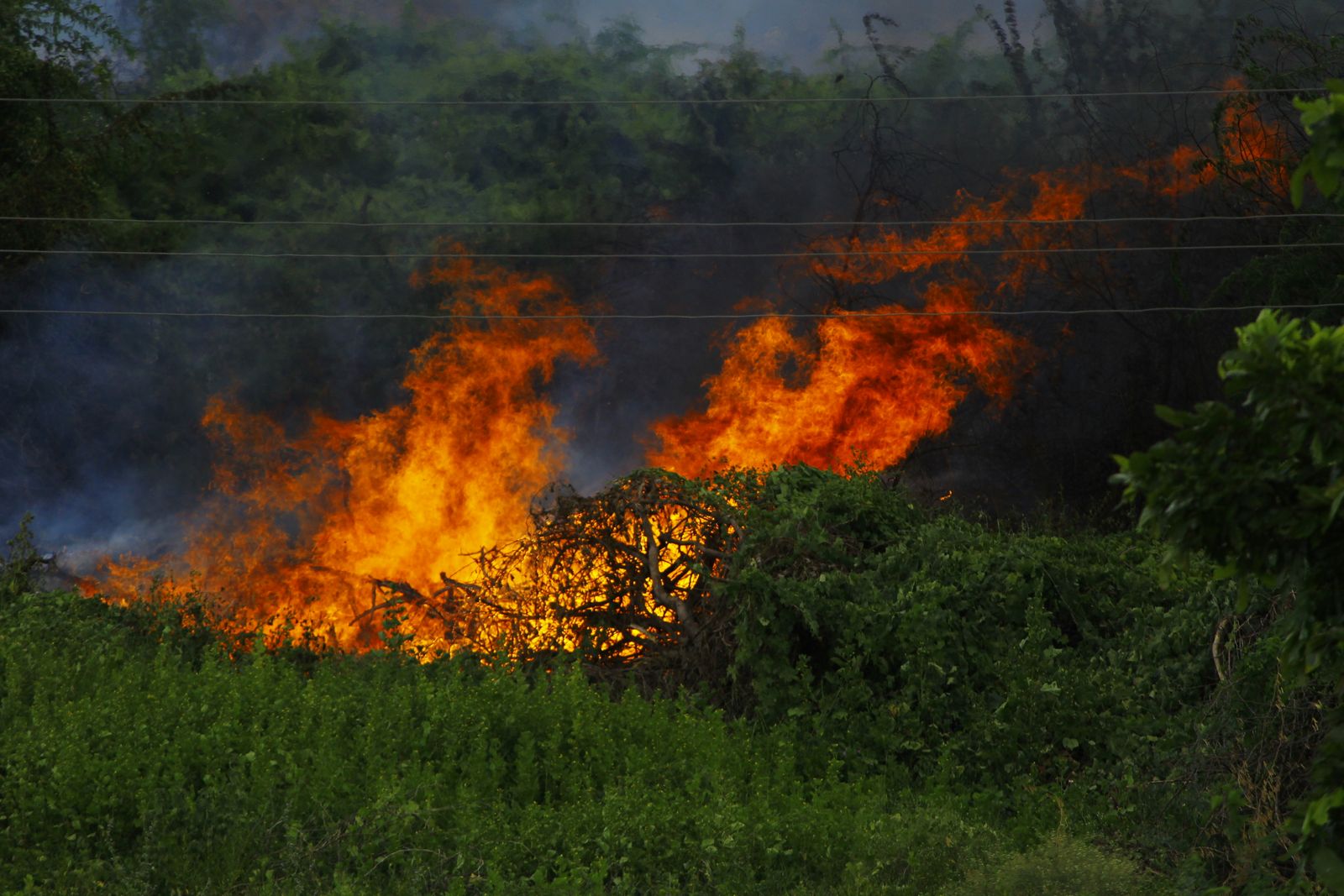
The question in the title has a two-part answer. The Department of Defense range near Avon Park was designated a 106,000-acre national stronghold for the bird because it contains one of the largest intact blocks of longleaf and slash pine savannah left in the Southeast. And the artillery and bombing runs help, indirectly, because the fires those exercises ignite mimic the frequent low-intensity ground fires that longleaf pine ecosystems evolved with and that decades of fire suppression stripped away.
A bird that needs an 80-year-old tree
The red-cockaded woodpecker is the only North American woodpecker that excavates its nest cavity in a living pine. The work is slow. A single bird can spend a year or more chiseling out a cavity, and the tree it prefers is a mature longleaf pine, whose heartwood has been softened by a fungal condition called red heart rot. Younger trees are too hard. Dead trees are useless — the bird wants sap, which oozes from the wounds the woodpecker deliberately keeps open around the cavity entrance and forms a sticky glaze that stops rat snakes from climbing to the eggs.
Groups of these birds live in clusters, cooperatively raising young, with helper birds attending nests. The whole social structure depends on a specific stand of old pines in an open, grassy, park-like forest. Take away any part of that — the age, the openness, the fire — and the cluster collapses.
By the time the species was listed as endangered, longleaf pine had been cut, converted to farmland, replaced with faster-growing loblolly plantations, or simply choked by hardwood understory that fire had once kept in check. Its habitat had shrunk to a small fraction of its historic range from Virginia to Texas.
Why fire is the missing ingredient
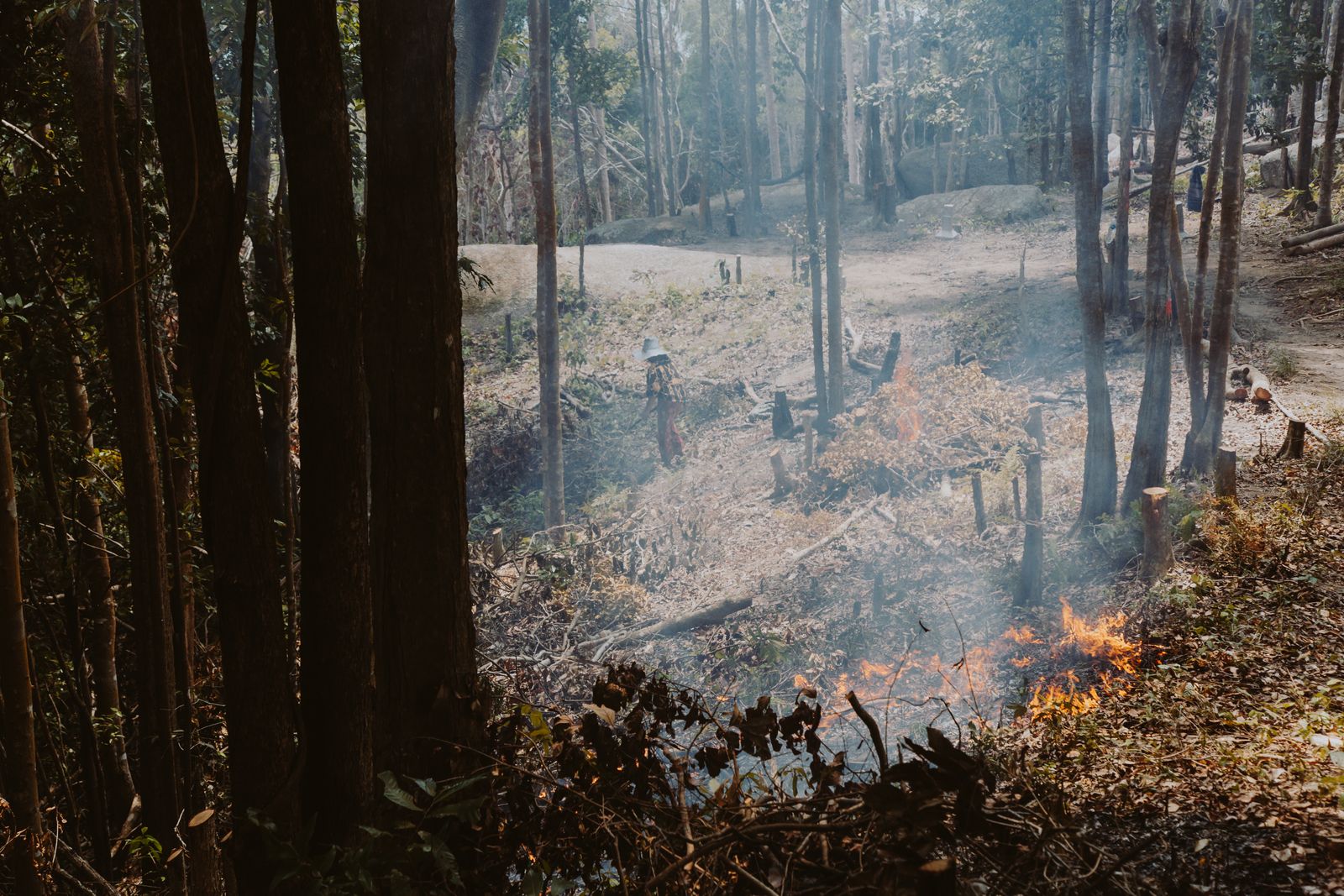
Longleaf pine savannah is a fire ecosystem. Left alone, it is not a place of shady closed canopy but of widely spaced pines standing over knee-high wiregrass, burned every one to three years by lightning strikes rolling off Gulf thunderstorms. Those fires kill hardwood saplings before they can shade out the grass, keep the midstory open so woodpeckers can fly between cavity trees, and expose the mineral soil that longleaf seedlings need to germinate.
When people started suppressing fires in the twentieth century, oaks and other hardwoods filled the understory. Cavity trees became surrounded by dense scrub. Woodpecker clusters that had thrived for generations were abandoned. The North Carolina Wildlife Resources Commission has undertaken extensive prescribed burning for the sake of woodpecker habitat. Nick Shaver, the commission’s coastal eco-region supervisor, told Coastal Review that the red-cockaded woodpecker responds well to active management and will likely relocate to areas where suitable habitat is created.
The accidental refuge inside the impact zone
Bombing ranges and artillery impact areas start fires. Tracer rounds, white phosphorus, high-explosive shells and the friction of metal on dry grass all ignite the very ground fires that fire departments elsewhere are paid to prevent. Because the impact zones are closed to civilians, those fires burn without being suppressed. Because the military needs sightlines and safety buffers, the surrounding land is not developed. The result is that the largest surviving blocks of open, fire-maintained longleaf pine in the country sit inside Department of Defense boundaries — at Fort Bragg in North Carolina, at Fort Stewart in Georgia, at Eglin Air Force Base in the Florida Panhandle, and at Avon Park.
Avon Park is part of the Sentinel Landscapes program, a federal designation that binds Department of Defense installations to state governments, U.S. Fish and Wildlife Service partners and private landowners around a shared conservation and training mission. The live-fire training reservation sits inside this broader footprint, where the compatibility of controlled munitions use and pine savannah management has been treated less as a paradox than as a management tool.
The specific mechanism is worth being precise about. Live-fire training does not directly help the birds. Explosions destroy trees. Shrapnel damages bark. Aircraft noise disturbs nests. What helps is the fire that training ignites in the surrounding buffer, the exclusion of development that the range’s boundaries enforce, and the funding structure that channels Department of Defense conservation dollars into prescribed burns, cavity inserts and translocations.
A high-explosive round landing in dry wiregrass in April will start a ground fire that creeps through the understory, killing oak seedlings a few feet tall while leaving mature pines untouched. Longleaf bark thickens substantially as the tree ages, insulating the living tissue beneath from the brief, intense heat of a grass fire. The tree survives. The scrub does not. The savannah stays open. The woodpecker keeps its home.
Range managers still run prescribed burns on a rotation, typically every two to three years, timed to the growing season when hardwoods are most vulnerable. Training-ignited fires are folded into this rotation when they occur, sometimes reducing the acreage that needs to be burned deliberately. The Air Force at Avon Park has fire crews specifically dedicated to managing these overlaps.
Recent research from the Fitzpatrick Lab at Michigan State University, working with Archbold Biological Station, the U.S. Fish and Wildlife Service and the U.S. Air Force, quantified what had happened at Avon Park over nearly two decades. Between 1998 and 2016, red-cockaded woodpeckers were moved from donor populations into the range’s pine savannahs. About 70 percent of those translocated birds survived after release, and many paired with local birds, injecting genetic diversity into a cluster that had been drifting toward inbreeding.
The translocated birds and their descendants tended to nest for more years than locally hatched ones, and reproductive success tracked closely with total nesting years. Alex Lewanski, the study’s lead author, has said the persistence of these imperiled populations owes directly to the continued collaborations and long-term investment behind them.
Two things made Avon Park suitable for the experiment. The land was protected from development by its military mission. And it was burned often enough — sometimes by prescribed fire, sometimes by the training itself — to keep the pine savannah open.
The pattern repeats across militarized landscapes
The Avon Park story is part of a wider pattern in which land closed off for weapons work has ended up protecting biodiversity by exclusion. Spacewar has explored this before in the case of the Hanford Reach in Washington state, where land fenced off in 1943 to produce plutonium for the Manhattan Project inadvertently preserved shrub-steppe habitat in the Columbia Basin. The mechanism is different — Hanford was preserved by contamination and secrecy, Avon Park by active fire — but the outcome rhymes.
The fire mechanism also connects to a broader principle in ecology: fire-adapted plants that use disturbance to their advantage. The 1988 Yellowstone fires are the textbook case, where lodgepole pine seedlings sprouted from serotinous cones that had been sealed with resin, waiting for exactly that heat. Longleaf pine has its own fire adaptations: seedlings spend years in a grass stage, looking like tufts of green wire, protected by dense needles that shield the terminal bud from ground fire.
The downlisting and its critics
When the Fish and Wildlife Service moved the species from endangered to threatened in October 2024, it applied what regulators call a 4(d) Rule. Protections stay largely in place, but land managers gained latitude to use prescribed fire, thinning and chemical treatments without the paperwork burden that had accompanied endangered status. John Doresky, the agency’s recovery coordinator for the species, told Coastal Review that the improved status allows managers to accept certain short-term risks that weren’t previously acceptable.
Not everyone agreed with the timing. Conservation groups noted that Hurricane Helene destroyed nest cavity trees in Florida in the weeks before the announcement. Two dozen conservation groups had signed a 39-page letter in 2022 asking the service to keep endangered status, arguing the habitat remained too fragmented. Ben Prater of Defenders of Wildlife called the decision “ironic” given the storm damage.
The delisting criteria — full removal from the threatened list — require that populations no longer depend on artificial cavity inserts, the drilled-in wooden boxes that let managers give birds a home in trees not yet old enough to excavate. Roughly half of active clusters still rely on these inserts, which means the true endpoint is decades away and depends on longleaf stands maturing into old growth. Longleaf takes 50 to 60 years to mature.
Reintroductions and the road ahead
The successful management on military lands has become a donor bank for the rest of the Southeast. In October 2025, the Tennessee Wildlife Resources Agency announced a plan to reintroduce red-cockaded woodpeckers to the Savage Gulf State Natural Area, part of an effort the Washington Post described as the return of a rare bird that vanished from the state more than 30 years ago. Birds moved into new sites often come from populations that were themselves rebuilt on military installations.
The PBS series Wild Hope chronicled the parallel effort at the North Carolina base now called Fort Bragg — renamed Fort Liberty in 2023, then renamed back to Fort Bragg in 2025 — where soldiers train amid clusters of cavity trees marked with white bands and where prescribed burn crews work around live-fire schedules. The Department of Defense now manages more red-cockaded woodpecker clusters than any other single landowner in the country.
Thousands of active clusters of red-cockaded woodpeckers now exist across the Southeast, and the population has grown steadily since recovery efforts intensified. Of those, a disproportionate share sit on Department of Defense land. Avon Park’s population has grown steadily since the translocations began. Genetic diversity has improved. The 4(d) Rule has loosened the paperwork.
The counting continues each spring, biologists shimmying up pines to peer into cavity inserts, recording which cluster fledged how many chicks, banding new birds with color combinations that will let them be tracked for years. The oldest longleaf pines at Avon Park were seedlings when Florida was still Spanish territory. Some of the youngest trees in the recovery zones will not host their first woodpecker cluster until the 2080s. The recovery is measured in tree-years, in burn rotations, in artillery calendars — and in the quiet fact that a bird written off half a century ago is now, in the buffer zones of a bombing range, tapping fresh cavities into pines that will still be standing when the next generation of pilots learns to fly.