Conflict, strategy, and defense technology.
Space War Editorial Team
Editorial Team

Space War Editorial Team

Editorial Team

The Space War Editorial Team produces Space War's coverage of military space and defense technology. We report on missile defense and space-based systems, nuclear weapons and arms control, drones and directed-energy weapons, and the great-power competition shaping security beyond Earth. Articles reflect our team's collective editorial process, source verification, drafting, technical review, and editing, rather than a single writer's work. Space War takes editorial responsibility for content under this byline. For more on how we work, see our editorial policy.

Nukewars

In 1961, a Soviet test over Novaya Zemlya detonated a 50-megaton hydrogen bomb called Tsar Bomba whose mushroom cloud reached 64 kilometres into the sky and whose flash was visible from roughly 1,000 kilometres away, still the largest explosion humans have ever produced

On 30 October 1961, the Soviet Union detonated a 50-megaton hydrogen bomb over Novaya Zemlya — a mushroom cloud that climbed 64 kilometres and a flash visible 1,000 kilometres away. More than six decades later, Tsar Bomba is still the largest explosion humans have ever produced.

Nukewars

A tiny jellyfish called Turritopsis dohrnii can revert its adult cells back to a juvenile polyp when injured or starving, effectively restarting its life cycle and making it one of the only known animals with no fixed lifespan

The tiny Mediterranean jellyfish Turritopsis dohrnii can reverse its own life cycle — dissolving its adult body and reassembling as a juvenile polyp when injured or starving. A look at the biology of the only known animal that can, in principle, live forever.

Nukewars

In 1859, a solar storm now called the Carrington Event induced currents so strong in telegraph lines that operators disconnected their batteries and kept sending messages powered by the aurora alone, with sparks jumping from the keys to their fingers

On September 2, 1859, the largest geomagnetic storm ever recorded induced currents so powerful in telegraph lines that operators across North America disconnected their batteries and kept working — powered entirely by the aurora — while sparks leapt from keys to their fingers.

Nukewars

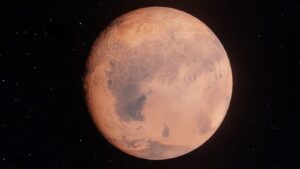
The Soviet Venera 13 probe survived 127 minutes on the surface of Venus in 1982, transmitting colour photographs of orange rock through an atmosphere hot enough to melt lead before the pressure crushed its electronics into silence

In March 1982, the Soviet Venera 13 lander survived 127 minutes on Venus — nearly four times its design life — long enough to return colour panoramas of orange-lit basalt and drill a sample of alkaline rock before the pressure and 855-degree heat killed it.

Nasa

In 1990, after years of lobbying by Carl Sagan, Voyager 1 turned its camera back toward home from about 6 billion kilometres away and photographed Earth as a pale blue speck smaller than a single pixel — an image NASA had repeatedly resisted because it offered little scientific value, but that became one of the most famous photographs ever taken.

A scientist's plea transformed NASA's resistance into humanity's most humbling self-portrait—proof that the greatest discoveries sometimes require looking backward.

Nukewars

At around 30 years old, the human spinal discs begin losing water and compressing under gravity, shortening most people by about 1 centimetre per decade. On the International Space Station, astronauts float free of that load and grow up to 5 centimetres taller within weeks

From about age 30, the water-rich discs between human vertebrae start to dry out, shortening most people by roughly a centimetre per decade. In orbit, freed from gravity, astronauts grow up to 5 centimetres taller — and Russian engineers have to remould their Soyuz landing seats to fit.